Coturnix Quail: The Backyard Egg Quail Explained
Coturnix quail are the small egg quail most US backyard keepers mean when they ask about quail for eggs. They are also sold as Japanese quail, and they earn attention because they grow fast, start laying early and produce many eggs for their size.
The practical questions are not whether the birds are cute. You need to know when a hen starts laying, whether males will crow, how much space a small flock needs and whether your city or state allows quail. This guide keeps those answers at backyard scale, from a handful of birds to a few dozen.
Before you buy, decide what you want from the flock: eggs, a short hatching project, meat from a small space, or birds that live outdoors in a predator proof setup. Coturnix quail can fit several roles, but they are not a single solution for every backyard.
In this guide to Coturnix quail
At a glance: Coturnix quail basics
- Coturnix quail are small, often about 4 to 6 ounces as adults.
- Hens can start laying at 6 to 8 weeks.
- A hen often lays 250 or more eggs a year.
- Coturnix eggs incubate in about 17 to 18 days.
- Quail chicks generally need about 95 degrees Fahrenheit in week one, lowered as they grow.
- Males crow, so a flock of hens only is quieter than a mixed flock.
- Keep a dry, predator proof space with room for feeders, water and movement.
- A common mistake is starting with one bird. Keep a small flock and check permits first.
Why choose Coturnix quail for backyard eggs
Coturnix quail are often chosen because they lay while they are still small and young. That early start is useful if you want an egg flock without waiting a long season.
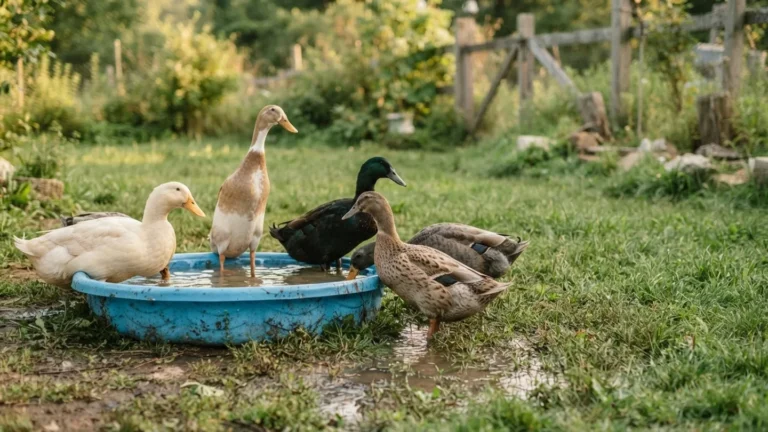
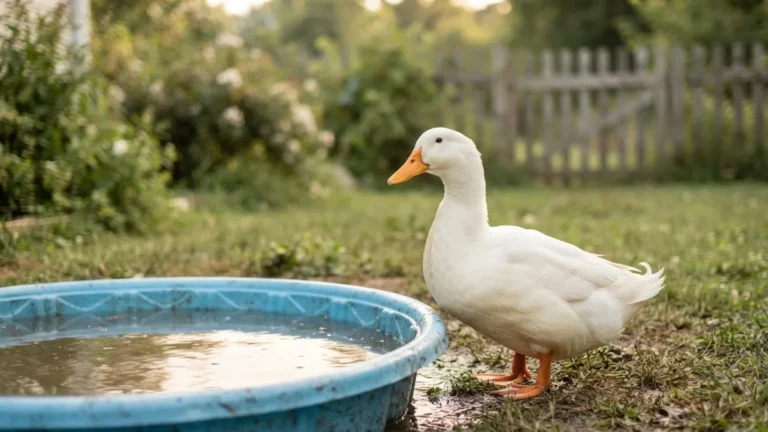
For a backyard, they are also less demanding than ducks in space and water. You do not need a kiddie pool or a large run for them to look clean and comfortable, though they still need good bedding, fresh water and protection.
A hen is a female bird. If you keep hens for eggs, you are keeping the layer side of the flock without needing a male bird unless you want fertile eggs for incubation.
They are not a low effort pet bird. They are production birds in a small body, which means you still need feed, ventilation, predator proofing and a plan for what to do with fertile eggs, crowing males and daily egg collection.
Pros
- Small adult size, often about 4 to 6 ounces
- Egg laying can begin at 6 to 8 weeks
- Often 250 or more eggs a year
- Incubation is about 17 to 18 days
- Smaller space footprint than ducks
- Can be kept as a small flock without a duck pond
Cons
- Males crow and may be heard by close neighbors
- Quail are social, so one bird alone is a bad idea
- They need dry bedding and clean water to avoid mess
- Predators can take them through weak mesh or loose lids
- Local permits and city rules can be stricter than you expect
- Chicks grow fast and need a heated setup ready before they arrive
Temperament, noise and crowing males
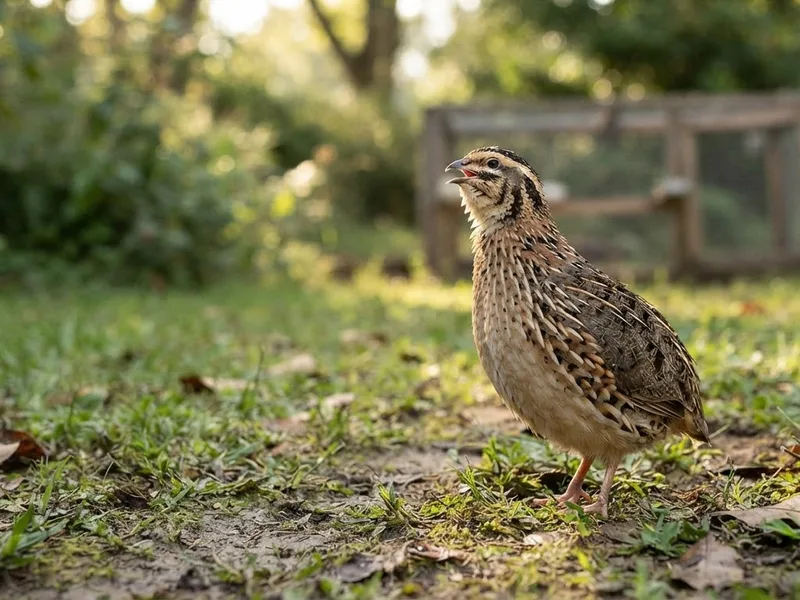
Coturnix quail are usually calm when kept in a steady small flock, but calm does not mean silent. Males crow, often at sunrise and sometimes during the day. The call is not a chicken's full morning crow, but it is clear enough to matter in a suburban yard.
A flock of hens only is the quiet choice. If you keep males for fertile eggs, expect crowing and give birds enough room so they do not crowd feeders or chase one another.
They can startle, so keep visits and handling predictable. A bird that is always flushed is more likely to injure itself or stack in one corner.
If you want Coturnix quail mainly for eggs, you can skip males entirely. You will still get unhatched eggs, but you do not need a rooster for hens to lay. The same basic idea applies to quail: hens lay, and males add fertilization and noise.
What matters by flock goal
What matters if eggs are the goal
If eggs are the goal, keep hens. Coturnix hens can start laying at 6 to 8 weeks and often lay 250 or more eggs a year. Small eggs need frequent collection and careful storage.
What matters if you will incubate eggs
Coturnix eggs incubate in about 17 to 18 days. Have a heated setup for chicks, feed labeled for young birds, clean waterers and bedding ready before the hatch, because chicks grow fast.
What matters in a small backyard
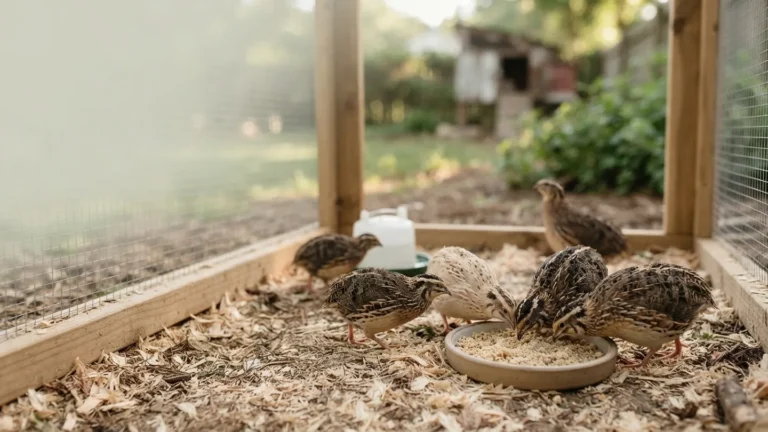
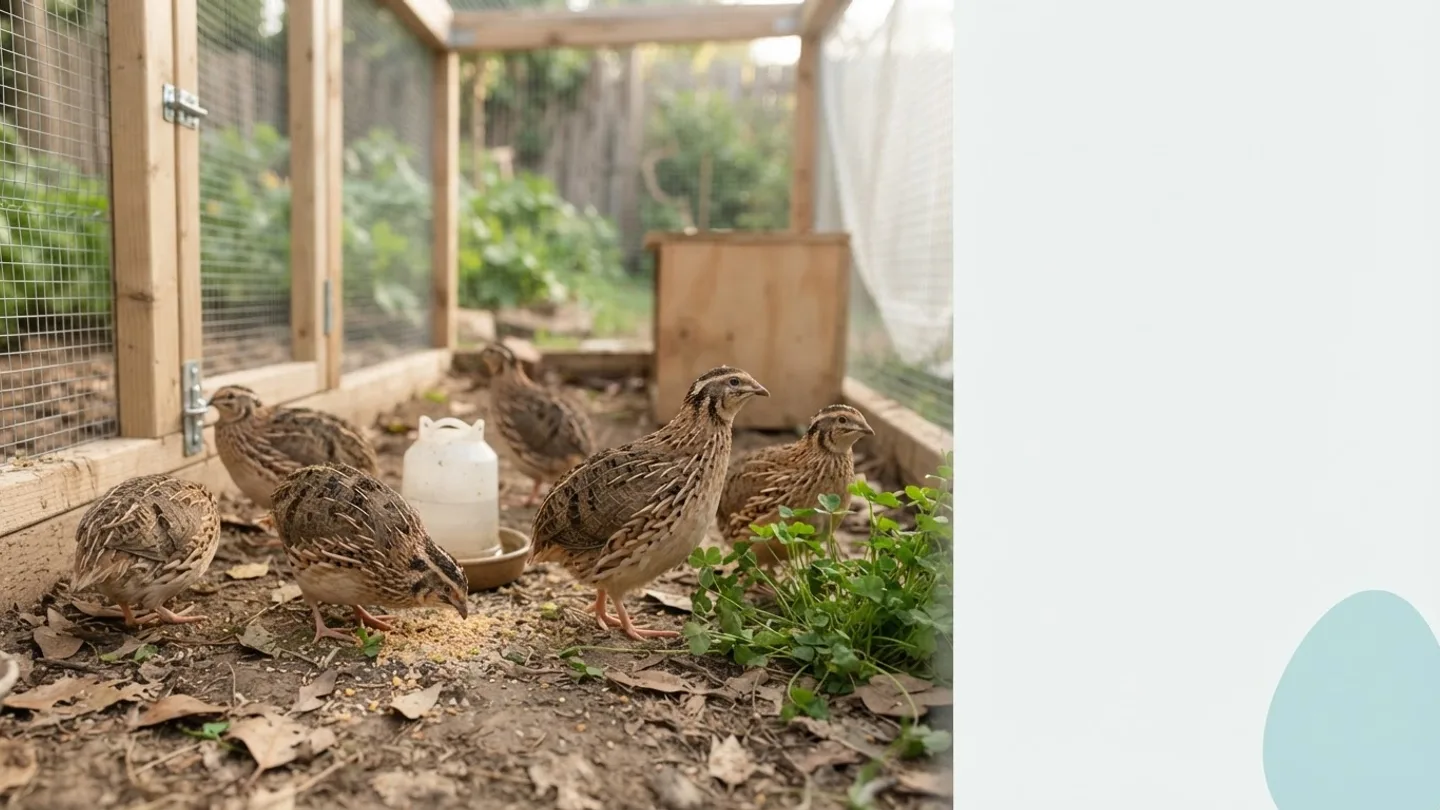
They fit small spaces better than ducks, but space still matters. Each bird needs room to move, feed and drink without being pushed out or crowded under a tight lid.
Space, housing and predator proofing
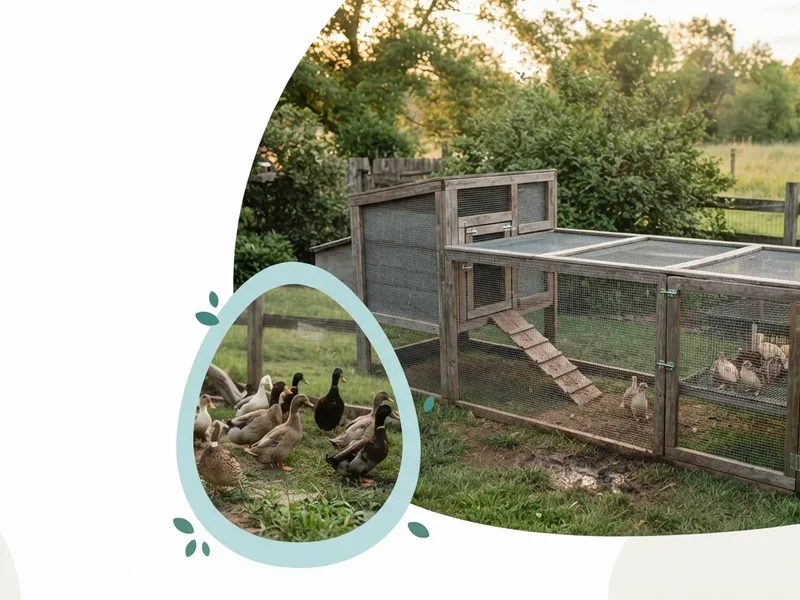
Space for Coturnix quail is less about acreage and more about clean, safe floor area. You need enough room for feeders, water, resting and movement, and enough height so birds are not crammed under a tight lid.
A small indoor storage tote setup can work for chicks if it is ventilated, easy to clean and draft free. A purchased quail cage can be neat and compact, but hardware cloth and a secure lid matter for any outdoor run.
Quail can slip under loose fencing and through weak wire. Raccoons, cats, dogs, foxes and birds of prey all take small birds, so plan a tight enclosure with a solid bottom if predators are a concern.
A cheap storage tote or crate setup can do the job, but it still needs the basics: dry bedding, safe wire, good ventilation and a way to keep food and water clean. Do not buy birds first and scramble for the right cage later.
How many eggs could your Coturnix hens lay?
Baseline eggs per year eggs per year
Incubating Coturnix quail eggs
Coturnix eggs incubate in about 17 to 18 days, which is a short cycle for a bird that lays many eggs. That speed is a good reason people hatch them, but it also means chicks arrive quickly and grow fast.
If you hatch Coturnix eggs, use fertile eggs, which are eggs that can develop into chicks. Follow the incubator directions for temperature, humidity and turning. If you use lockdown, that means the final period when you stop turning eggs and keep the incubator closed as hatching begins.
A brooder is a small, heated enclosure for chicks. Quail chicks grow quickly and need a clean brooder, feed labeled for young quail or game birds and shallow water they cannot drown in.
Too low protein during growth can cause weak birds, poor feathering and more problems later. Follow the age directions on the feed label, and do not feed a laying hen formula to young chicks just because the bag is already open.
A common mistake is buying eggs or chicks on a weekend and not having heat, feed and bedding on hand. That is the kind of impulse that ends with stressed birds and a crowded online ad for unwanted quail.
If chicks or adults look weak, do not guess at medication. Contact an avian vet if you can, or reach out to your state veterinarian for guidance.
Common Coturnix quail questions
How early do Coturnix quail lay eggs?
They can start laying at 6 to 8 weeks.
Do male Coturnix quail crow?
Yes. Males crow, so a hens only flock is quieter if you are close to neighbors.
How many eggs can a Coturnix hen lay?
A hen often lays 250 or more eggs a year. Care, feed, light and health affect the number.
Do Coturnix quail need swimming water?
No. They do not need swimming space like ducks, but they need fresh drinking water and may splash in a shallow dish.
Do I need a permit for Coturnix quail?
Check city hall and your state wildlife agency before buying birds, hatching eggs or keeping them. Rules vary across the US.
Can I keep one Coturnix quail?
No. They are social birds, so keep a small flock rather than a single bird.
How long do Coturnix eggs incubate?
About 17 to 18 days.