
Quack & Covey exists for one reason: raising ducks and quail in a US backyard should not require a veterinary degree, a spreadsheet addiction or a willingness to read forty forum threads that all disagree with each other.
We write practical care guides for small home flocks, from hatching tray to egg basket. That means real numbers in US units, honest advice including the kind that tells you not to do something, and a path through the site that matches how you actually keep birds.
No hype, no stock photos of suspiciously clean ducklings, no pretending mud is not a lifestyle. Just what works at backyard scale, from 3 ducks or 10 quail up to a few dozen birds.
Our mission
Good answers for the flock you have today
Most poultry advice is organized like a textbook. Ours is organized like your life: pick your bird first, duck or quail, then pick the life stage you are in right now. Incubating, brooding, growing, laying, housing, winter. You land on the answer that fits this week, not a general overview that fits no one.
Every care guide opens with an At a glance box. Temperatures in degrees Fahrenheit, square feet per bird, feed type and protein, and the one mistake to avoid. About 90 degrees Fahrenheit in week one for ducklings, 95 for quail chicks. 17 to 18 days of incubation for Coturnix quail, 28 for most duck eggs. The numbers you came for, before anything else.
We also say plainly when something is a bad idea. One duck kept alone is a bad idea. An impulse duckling from the farm store in spring, with no brooder waiting at home, is a bad idea. Too many drakes for your hens is a bad idea that ends in stressed birds. You deserve the advice against, not just the encouragement.
When a question touches health or law, we stay calm and point you to the right human: an avian vet, your state veterinarian, city hall or the HOA. Guessing is free and usually expensive.
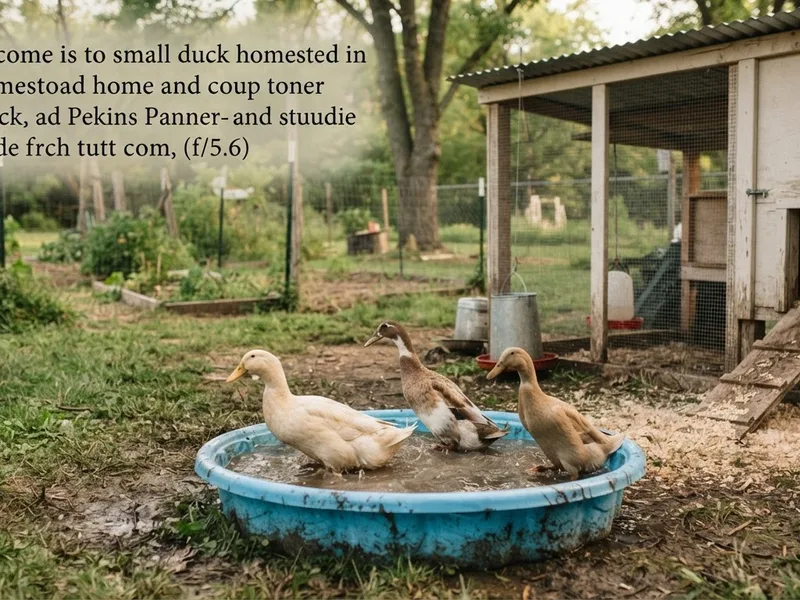
Built for real backyards, not show farms
Our seasonal calendar is split by US region, because March in Georgia is not March in Minnesota, and your brooder setup should know the difference.
We name cheap DIY options next to the products you can buy. A storage-tote brooder works. A kiddie pool works. A hardware cloth run works. If the homemade version is good enough, we say so, and if it is not, we say that too.
Keeper terms get explained the first time they appear. Drake, broody, candling, lockdown, angel wing, bumblefoot. Nobody is born knowing these words, and nobody should have to leave a page to learn them.
What you can count on here
- Guides organized by bird first, then by life stage
- An At a glance box on every care guide: Fahrenheit, square feet, feed and protein
- Honest advice, including clear advice against common mistakes
- Concrete US units, never vague words like warm or spacious
- DIY options named alongside products you can buy
- Health and legal questions pointed to vets and officials, not guesses
Who this is for
If you keep birds at backyard scale, you are in the right place
You might be the family that brought home ducklings from the farm store in spring and needs fast answers on feed, brooder heat, swimming and sexing. You are in good company. That is the core of who reads this site, and we respect the urgency of a box of peeping ducklings in the passenger seat.
You might be a chicken keeper adding ducks and discovering that everything you know about dry, tidy birds is about to become a fond memory. Or a homesteader starting quail from hatching eggs, watching the incubator like it owes you money. Or a parent supervising a 4-H hatching project and doing quiet research at midnight.
All of you get the same treatment: warm, practical, numbers-first guidance, a little wry about the mud, never cutesy. We write like an experienced keeper talking over the fence, because that is the conversation we would want.
How to use the site
Find your answer in four steps
Pick your bird
Start with ducks or quail. The care is different enough that mixing them up causes real problems, like feeding duckling starter to quail chicks that need far more protein.
Pick your life stage
Incubating, brooding, growing, laying, housing or winter. Choose where your flock is today, not where you hope it will be in six months.
Read the At a glance box first
Temperatures in Fahrenheit, square feet per bird, feed type and protein, and the one mistake to avoid. If you are in a hurry, that box is the whole answer.
Check your region and season
Use the seasonal calendar for your US region before you set dates. Timing a hatch or a winter coop build to your climate saves you from learning the hard way.
Questions we have not answered yet?
If your flock has a situation our guides do not cover, or you spotted something we should fix, we want to hear about it. Reader questions shape what we write next.