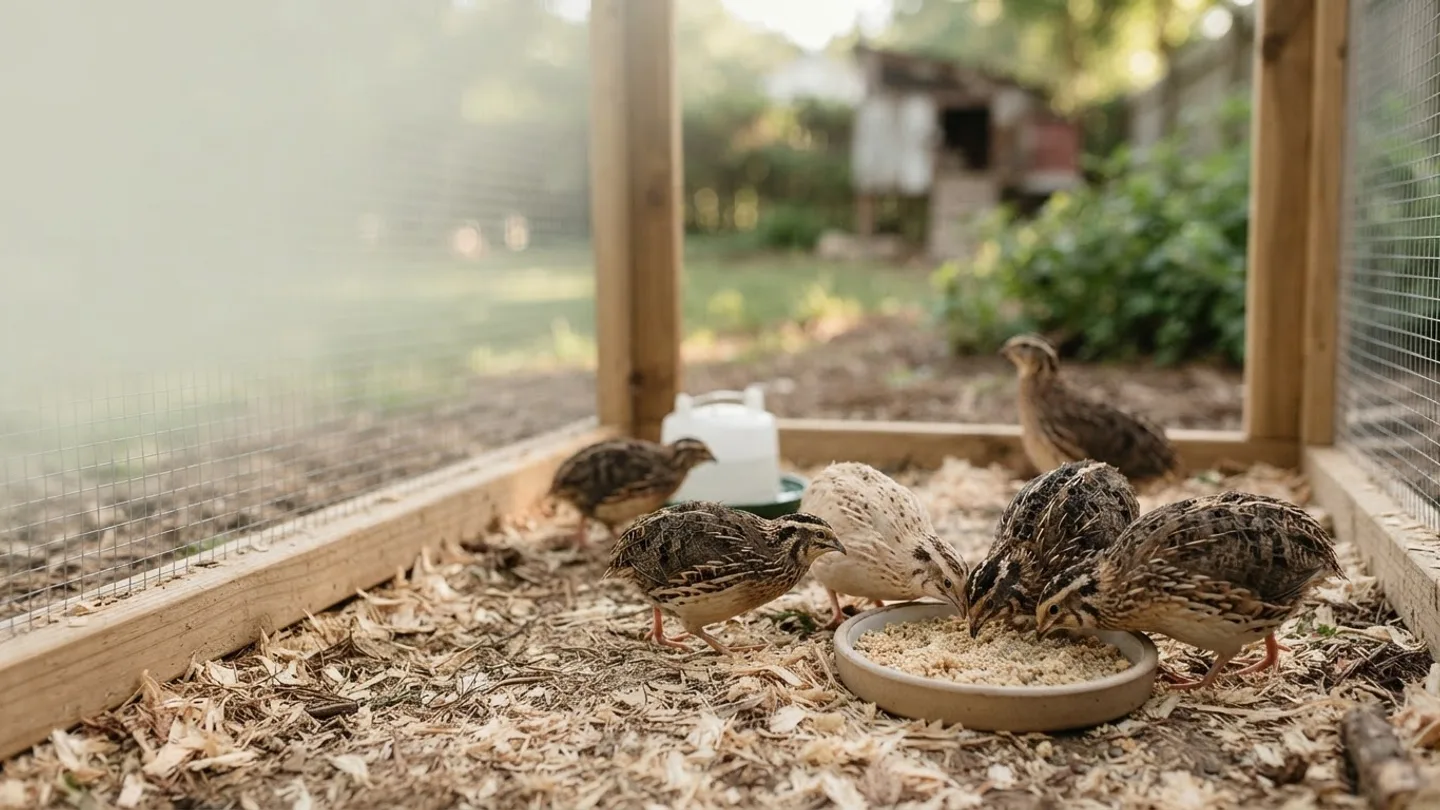
Raising Quail: A Beginner’s Guide to Backyard Coturnix
Coturnix quail are small, fast, and useful. They hatch in about 17 to 18 days, can start laying eggs in a few months, and live in pens that fit a garage corner, a shed, or a covered run. If you want raising quail without taking over the yard, Coturnix is a good place to start.
This guide covers the main decisions: local rules, whether to hatch eggs or buy chicks, brooder heat, housing, feed, eggs, health basics, and realistic costs. Quail are birds, not a tidy decoration, so plan for bedding, noise, predators, and a steady routine. If you are also keeping ducks, start with the duck master guide.
In this guide
Key takeaways
- Coturnix quail suit backyard keepers who want eggs, a small footprint, and a fast life cycle.
- Check city hall, county rules, your HOA, and the state veterinarian before you buy birds or build a run.
- Keep the brooder at about 95 degrees Fahrenheit at chick level in week one.
- Use a game bird starter with about 24 to 28 percent protein for chicks, then a labeled grower or layer feed.
- Avoid keeping one bird alone or buying a dozen without a plan for heat, bedding, feed, and cleaning.
Why Coturnix Quail Work Well in Backyards
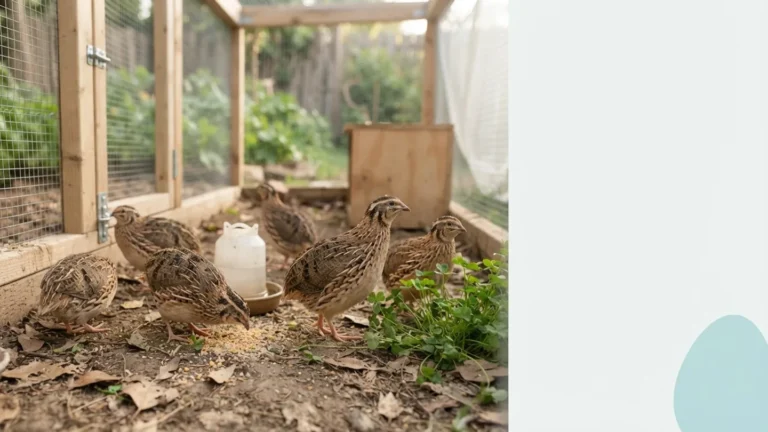
Coturnix is the common name for Japanese quail kept in backyard flocks. They are small, about the size of a large bantam, and usually mature faster than chickens. That speed is the main reason people choose them. You can go from hatching eggs to a laying flock in a few months, not a year.
They use less space than a chicken flock at the same egg count, but not less work. Droppings, bedding, water spillage, and feed storage still add up. Coturnix are generally quieter than a noisy duck flock, but hens can cluck and male birds can be sharp. Do not assume a yard full of quail will be silent.
If you want eggs, choose Coturnix. If you want button quail, know they are often kept as pets in floor pens and are not the same as reliable egg layers.