What Do Ducklings Eat? Feed by Age
Ducklings do best on unmedicated waterfowl starter or an all flock starter with about 18 to 22 percent protein and enough niacin. They also need clean water deep enough to dunk their bills and rinse their faces.
This guide is for backyard flocks from a few ducks up to a few dozen birds. Keep the brooder warm, give room to move, and keep the feed fresh. The one mistake to avoid is letting bread, scraps, or too many extras replace starter.
What to look up in this guide
Answers before the details
- Ducklings need starter feed with about 18 to 22 percent protein, not chick crumbs meant only for chickens.
- Use unmedicated waterfowl starter or all flock starter unless the label clearly says it is safe for ducks.
- Niacin matters. A poor starter can contribute to weak legs and stunted growth.
- Water must be deep enough for ducklings to dunk their bills, with a dry landing place nearby.
- Move from starter to grower as ducklings feather out, and save layer feed for laying hens.
At a glance: what ducklings need
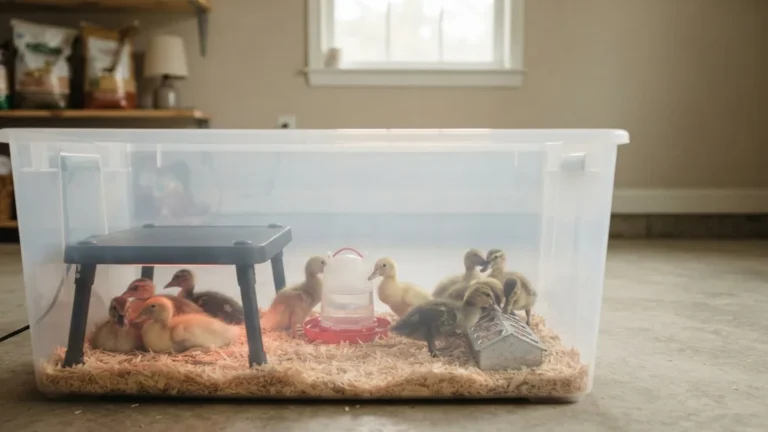
At a glance: feed type is unmedicated waterfowl starter or all flock starter, protein is about 18 to 22 percent, niacin matters, water must be deep enough to dunk, and the brooder should be warm but not packed. In week one, keep the warm zone around 90 degrees Fahrenheit, with a cooler spot so the ducklings can move away.
Space also matters. For a simple brooder plan, use about 1 square foot per young duckling as a starting point, then add space as they grow. A storage tote brooder can work if it has a low lid or wire cover, dry bedding, and a heat source you can adjust. If the birds huddle under the heat, they are cold. If they spread far away and restlessness increases, they are too warm or too crowded.
The feed should stay fresh and dry, but water belongs next to it. Ducklings eat better when they can rinse their bills and swallow clean feed.
| Feed option | Best use | What to check |
|---|---|---|
| Unmedicated waterfowl starter | Ducklings during the starter stage | Look for about 18 to 22 percent protein, adequate niacin, and a label that mentions waterfowl or ducks |
| All flock starter | A mixed duck and chicken group, or easier store access | Check medication status and protein. Choose an unmedicated product unless the label clearly covers ducks |
| Medicated chick starter | Chickens, not ducks, unless the label says it is safe for waterfowl | Do not assume a chicken product works for ducklings |
| Grower feed | After ducklings feather out and move off starter | It is for growing birds, not a shortcut to adult layer feed |
| Layer feed | Hens once they start laying eggs | Not the main diet for ducklings or non laying birds |
| Bread, chips, and table scraps | Not a feed option | They can fill up ducklings with little useful nutrition |
From starter to grower
Ducklings do not eat like grown ducks. The starter phase is about fast growth and feathering, so the feed needs higher protein and niacin than adult maintenance. When they are well feathered and no longer needing that starter, move them to a grower feed. The timing depends on breed and how fast they fill out, so watch the birds rather than a calendar in the corner of the room.
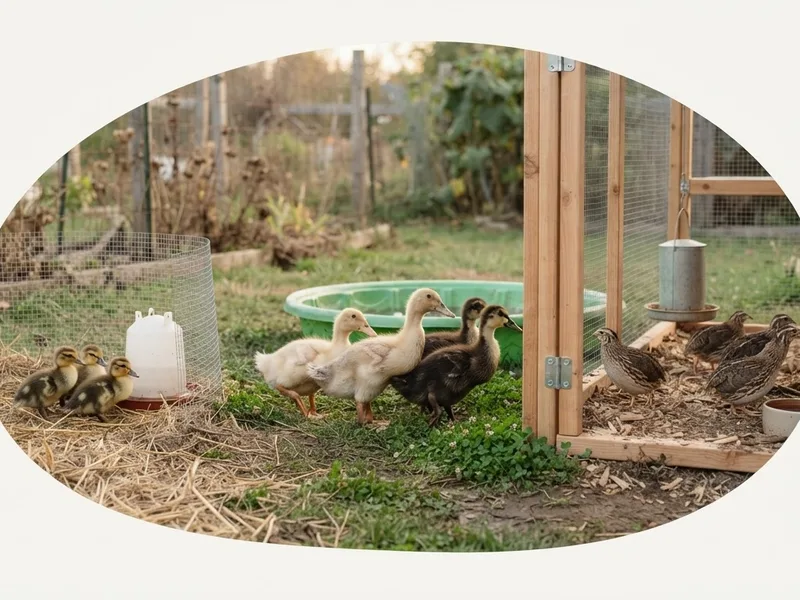
If you keep a mixed group of hens and drakes (male ducks), be careful with layer feed. Layer feed is made for hens that are producing egg shells, and feeding it too early is one of the easy mistakes to make. Keep young ducks on starter or grower until laying has started.
If the label says starter or grower for ducks, use it as the base diet. Treats can come later and should be small. If you are adding ducks to an existing raising backyard ducks setup, think about feed space, water space, and mess before you buy another bag of feed.
Feeding by age
Starter weeks
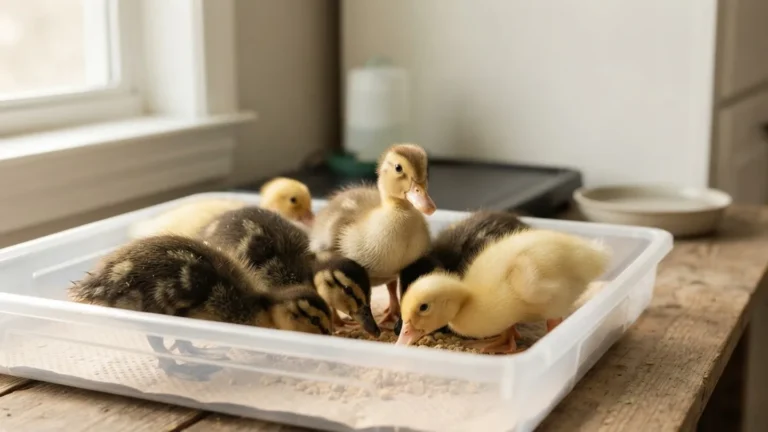
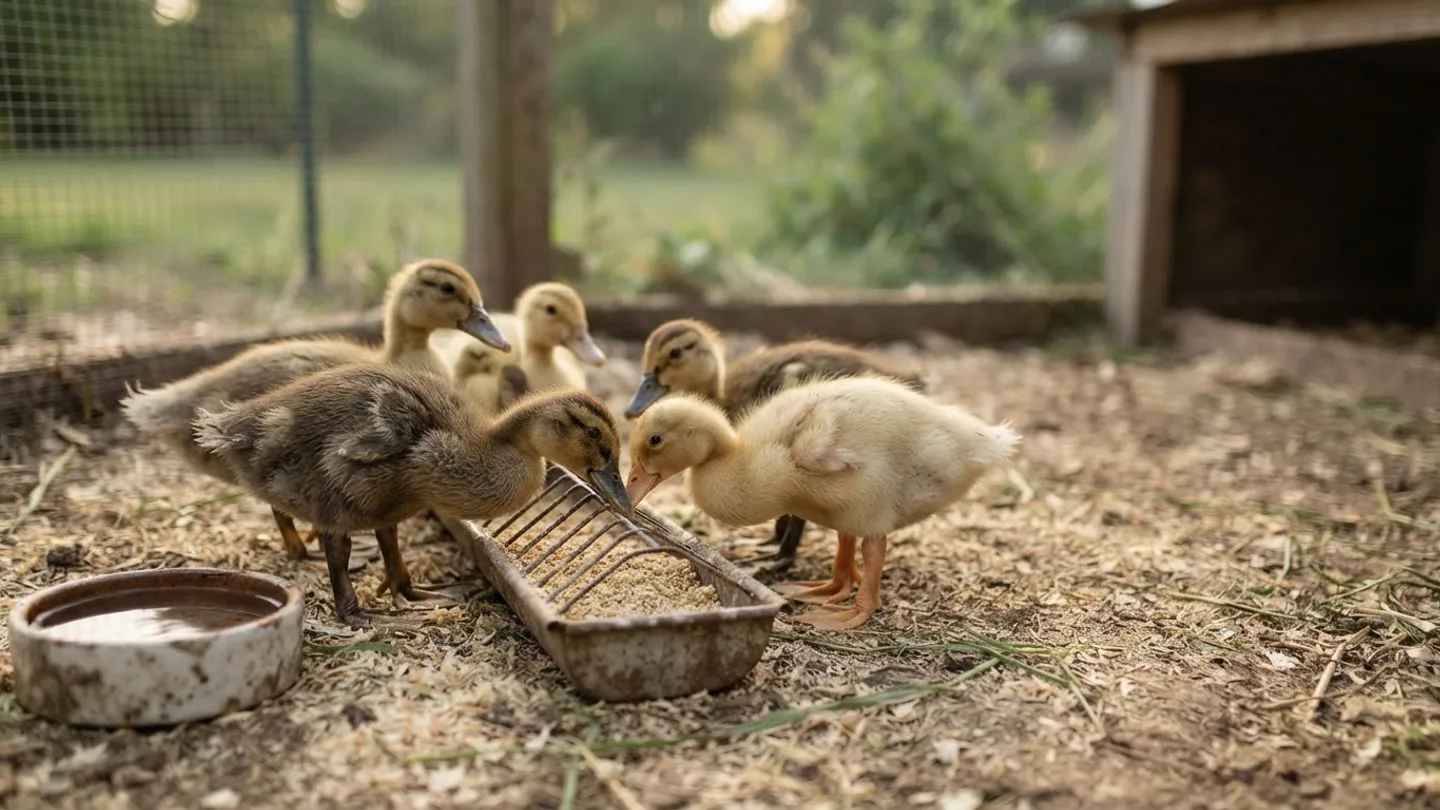
Use unmedicated waterfowl starter or all flock starter as the main diet. Offer it in a feeder that all ducklings can reach, and keep it dry. Do not rely on bread, chips, or table scraps.
If you cannot find waterfowl starter, all flock starter is often easier to get. Still check the protein level, niacin wording, and medication status before you dump a bag into the brooder.
Feathering out
When ducklings are mostly feathered and no longer in the rapid starter phase, move them to grower feed. Watch the birds rather than a fixed date. Keep clean water available at all times.
If you are switching a mixed group, keep ducks on a feed that is right for them and not just leftover chick feed. The goal is steady growth, not a surprise calcium or protein change.
Before lay
Ducklings and young ducks before laying should stay on starter or grower feed. Layer feed is made for hens producing egg shells, not for rapidly growing birds.
If a hen seems close to laying but has not started, do not rush the switch. Check your source for the breed, watch for nesting behavior, and keep feed simple and clean.
Laying ducks
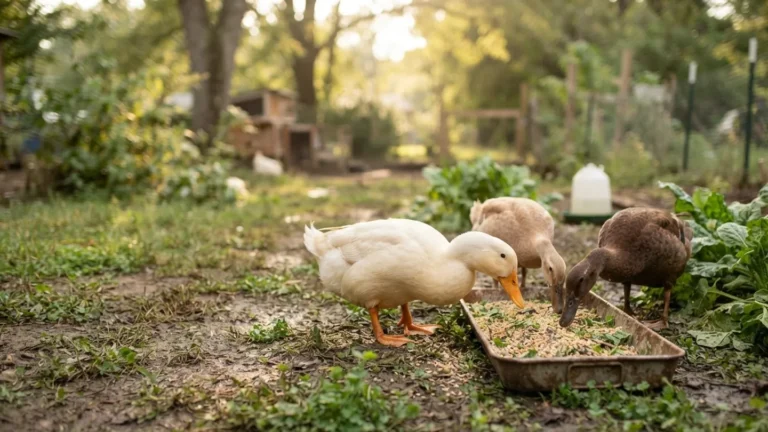
Once hens begin laying, layer feed can become their main diet. Keep drakes on a grower or flock feed if layer feed is too rich for them, and check that every bird can reach its feed.
Laying hens also need constant access to clean water. Egg production can slow down quickly when feed or water is hard to reach, especially in a crowded run.
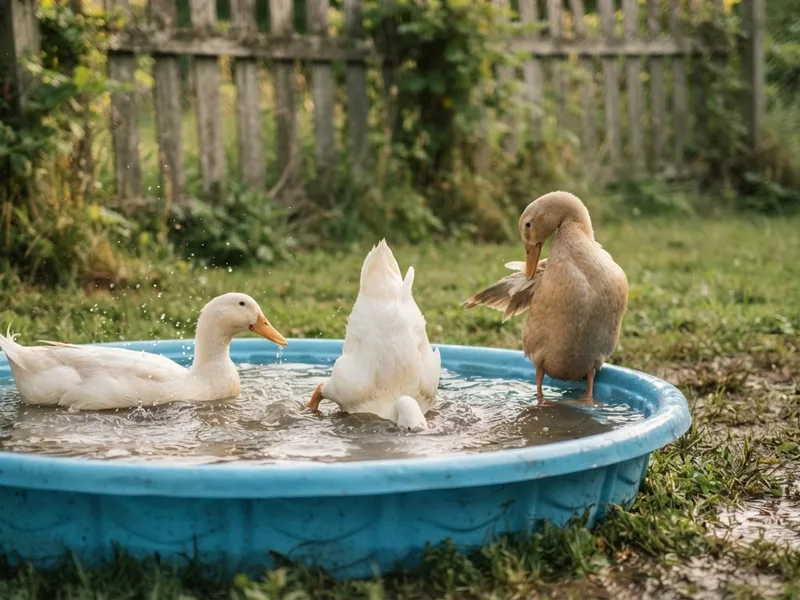
Water deep enough to dunk
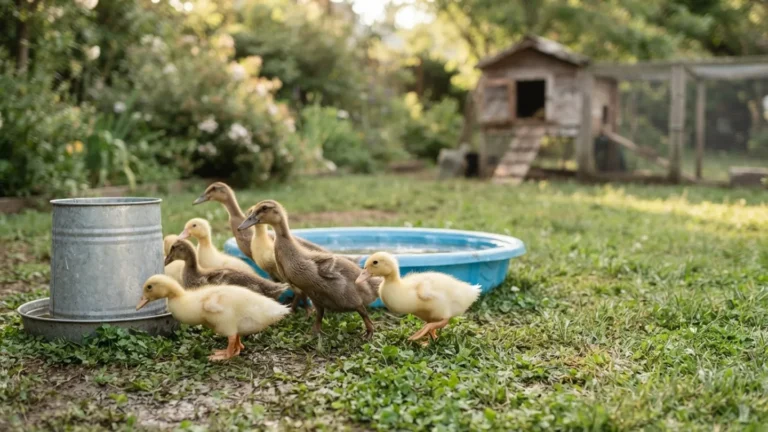
Ducks and ducklings need water deeper than a shallow drip fount. They use their bills and nostrils to keep their faces clean. If the water is too shallow, feed can stick to the bill, the face gets crusty, and the birds drink less. A dish or pan big enough for them to submerge their bills and rinse their faces works. In a small brooder, place a dry mat, brick, or landing strip so they do not stand in water all day.
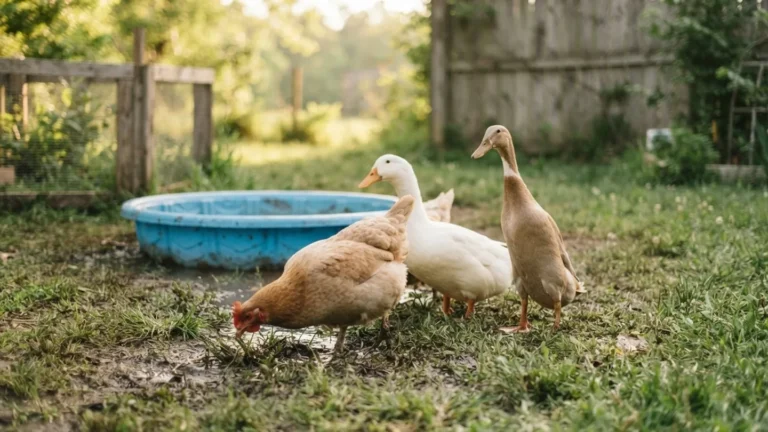
For swimming, a kiddie pool, plastic tub, or wide roasting pan is a cheap option. Do not leave young ducklings alone in deep water. They can get chilled, tired, or stuck against the side. Supervise swim time, keep it short, and dry them off if they look cold. Clean and refill pools often, because ducklings make water dirty quickly.
Pros
- Chopped leafy greens add variety
- Soft peas or cooked vegetable bits can encourage foraging
- Insects such as mealworms can be a useful occasional snack
Cons
- Treats can replace starter and lower protein or niacin intake
- Bread, crackers, and human scraps fill ducklings without good nutrition
- Wet treats can foul the brooder and attract pests
Foods to avoid
Do not make bread the center of the duckling diet. It is easy to find, ducks like it, and it is a poor food. Bread, chips, crackers, and sweet snacks fill ducklings with little useful nutrition. Avoid moldy, sour, or hard damp feed. If a batch smells off or has grown solid in moisture, throw it out and wash the feeder.
Also avoid feeding only scratch grains as a base diet, using adult chicken feed with too little protein, or giving dog and cat food as a shortcut. If you suspect a health problem, fix the feed first, then talk to an avian vet rather than guessing with a new medicine.
Frequently asked questions
Can ducklings eat chicken feed?
If the feed is labeled all flock or waterfowl and is not medicated, it can work during the starter phase. A standard chick starter meant only for chickens is not the best choice, and medicated chick starter needs the label to clearly say it is safe for ducks.
What about niacin?
Niacin is vitamin B3. Young ducks need more than some chicken starter formulas. Use a starter that says waterfowl, all flock, or adequate for ducks, and keep the feed fresh. Weak legs or poor growth may need a feed change and a vet.
Do ducklings need grit?
If they eat crumbles or mash, grit is not usually necessary. If you offer scratch grains or whole seeds, provide small grit so they can grind it. Clean water helps too.
How much should I feed?
Offer clean starter free choice for young ducklings, then adjust when you move to grower. Keep enough feeders that they do not have to fight for a place, and refill with fresh feed rather than topping wet old feed.
When can I stop using waterfowl starter?
Stop when the ducklings are well feathered and no longer in the rapid starter phase. Move them to grower, not layer feed, unless they have started laying.
Can I feed bread to ducks?
A tiny piece as a rare snack is not the same as feeding. For ducklings, skip it, because it takes the place of feed that has protein and niacin.