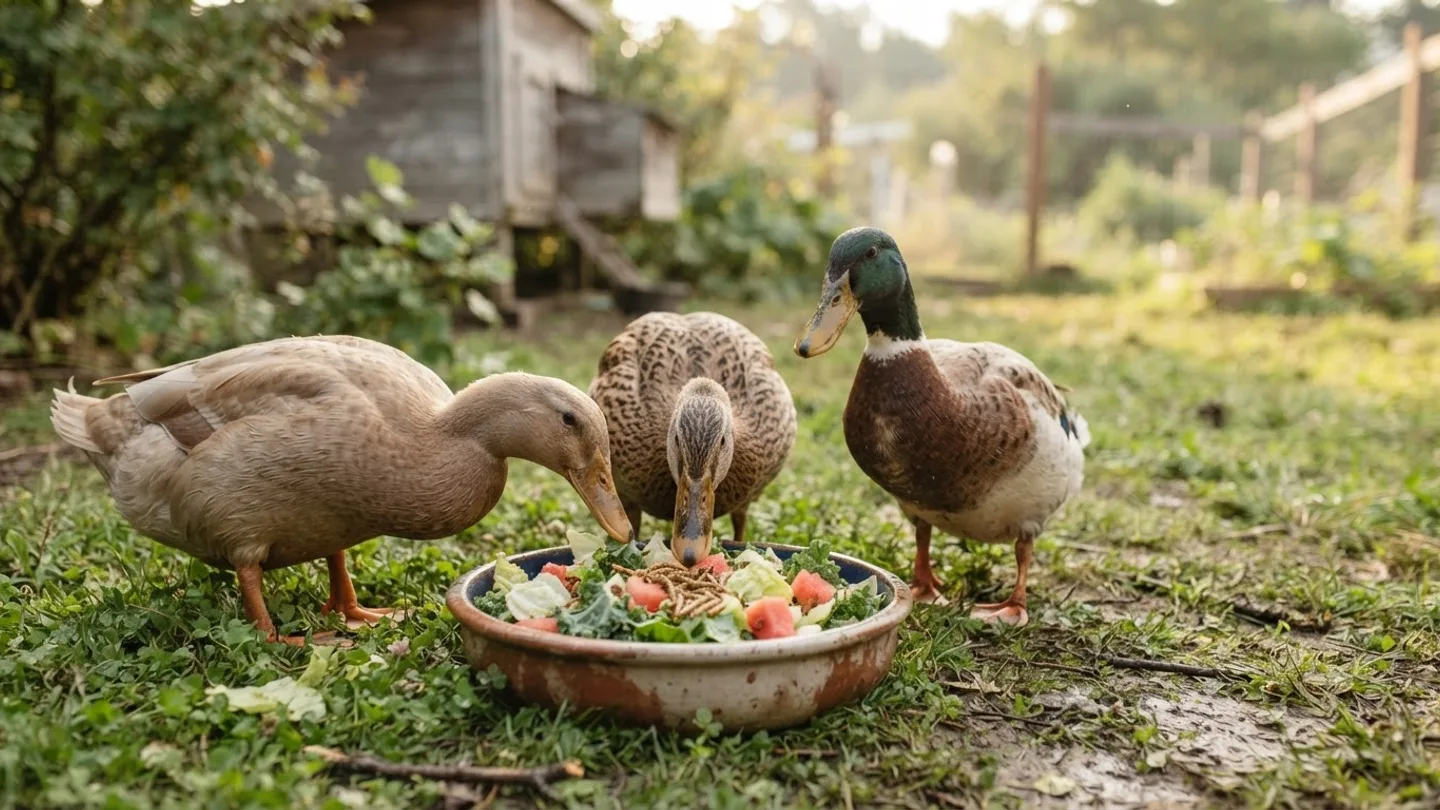
Treats for Ducks: Safe Snacks, Serving Sizes and Foods to Avoid
Treats for ducks are fun for everyone, but they work best when they are small, plain and easy to manage. A good snack makes a short, interesting moment between chores. A bad snack replaces real feed, ruins the run or puts a sick bird in front of an avian vet.
Keep the main ration simple. A complete duck feed should do the heavy lifting, and treats should sit on the side, not become the meal. If you have a small flock, a handful of chopped vegetables can go a long way. If you have too many ducks, the same handful can cause a pileup.
This page is the hub for safe snacks, serving sizes and the clear foods ducks should not eat. Use it as the first stop when you are deciding whether a new kitchen scrap belongs in a duck feeder or in your compost bin.
At a glance
- Treats should stay under about 10 percent of the day's feed.
- Use a complete duck or poultry feed as the main ration.
- Serve fruit, veggies and protein in small pieces, about 1 to 2 inches long, or roughly 1 to 2 tablespoons per adult duck.
- Skip avocado skin and pit, chocolate, caffeine, salty snacks, moldy food, and raw or dried beans.
- Plain cooked beans can be offered in moderation, but only if they are fully cooked and unsalted.
- Call an avian vet if a duck eats a large amount of a food that should be off the list.
How to feed treats without wrecking the main ration
A duck treat is anything you add beyond the complete feed. It can be a pea, a carrot stick, a handful of oats, a worm, a slice of apple, or a tiny bit of cooked egg. The point is to make the main ration work, not to replace it.
Keep treats to a small share of the day. A good backyard rule is under 10 percent of total feed. If you have a few ducks, that means a couple of handfuls of chopped veggies for the whole flock, not a pile for each bird.
Your main ration should be a complete duck or poultry feed matched to the life stage. If you are still sorting out the basics, see what ducks eat.
Offer treats in a dry tray or on clean ground, not in the drinking water. Ducks will drag food into water fast, and you end up with soup, algae and a wet mess that invites foot problems. Keep the pool for swimming and the feeder for feed.
Cut food into pieces that a duck can swallow safely. For an adult duck, aim for pieces about 1 to 2 inches long, soft enough to nibble, and thin enough to swallow without choking. Big chunks, hard shells, sticky balls of cheese, and long strands of grass can turn into a problem.
Watch the flock after feeding. If a bird is hoarding, gorging, or pushing others away, take the treats back. Ducks are very good at making a small snack feel like the last meal on earth.
| Food or snack | Verdict | Serving size for an adult duck | Notes |
|---|---|---|---|
| Apples, seeds removed | Yes | 1 to 2 thin slices per adult duck, cut into 1 inch pieces | Apple seeds contain compounds that can harm birds, so remove the core. |
| Banana, peeled | In moderation | One to two 1/4 inch coins a few times a week | Soft and sweet, so keep the portion small. |
| Blueberries | Yes | Five to eight berries per adult duck | Good small fruit treat. Skip moldy or fermented ones. |
| Cabbage, kale or collard greens | In moderation | Two to three leaf pieces, 2 to 3 inches, chopped | Strong greens are okay, but they can taint eggs or water if fed heavily. |
| Carrots | Yes | One 1 inch carrot stick, grated, cooked soft, or raw thin shreds | Carrots are sturdy, so serve them in small pieces. |
| Cooked beans, plain | In moderation | One to two tablespoons per adult duck | Only fully cooked, no salt, no oil, no seasoning. |
| Corn, fresh or frozen and thawed | In moderation | Two to three kernels per adult duck | A cheap snack, but high in carbohydrate. Never feed corn that is sour or moldy. |
| Cucumber | Yes | Two to three slices, 1/4 inch thick | Mostly water, so it is easy on the main feed. |
| Earthworms or clean insects from unsprayed ground | Yes | A few worms or bugs as a snack | Only feed insects from areas without pesticide use. |
| Lettuce or romaine | In moderation | A small chopped handful for a small flock | Leafy, wet, and easy to turn the ground into mud. |
| Oats, plain rolled or soaked | Yes | One to two tablespoons per adult duck | A good filler snack. Do not feed sweetened cereal. |
| Peas, fresh or frozen and thawed | Yes | One to two tablespoons per adult duck | Peas go down well. Avoid large frozen clumps. |
| Plain cooked eggs | In moderation | One to two tablespoons, cooled and chopped | Use eggs from your own flock or cooked eggs. No salt, no butter, no seasoning. |
| Plain, air popped popcorn | In moderation | Three to five fully popped pieces per adult duck | Only plain, no butter, no salt, no sugar. Remove unpopped kernels. |
| Avocado skin, seed or pit | No | None | Keep the whole fruit away from ducks. The skin, seed and pit contain persin, a toxin that can harm birds. |
| Chocolate, candy, cakes or baked goods | No | None | Chocolate contains stimulants, and many sweets have sugar, fat, salt or artificial flavors that ducks should not eat. |
| Coffee, tea, soda or energy drink residue | No | None | Do not offer caffeinated drinks. Keep lids, mugs and puddles away from the flock. |
| Salty human snacks, including chips, crackers and pretzels | No | None | Too much sodium can make birds sick, even if the snack seems tiny. |
| Moldy, spoiled or freezer burned food | No | None | Moldy food can contain toxins. Do not feed scraps from your compost pile. |
| Raw or dried beans | No | None | Raw and dried beans contain compounds that can be toxic. Feed only beans that are fully cooked. |
Clear foods that are not duck treats
The most dangerous snacks are the ones that seem harmless because people eat them or because a duck will gobble them. The no list is short, but it matters.
Avocado, chocolate and caffeine are the top trio. Do not assume a small lick is safe. If you see a duck eating a large amount, call an avian vet or a vet clinic that handles birds. An avian vet is a veterinarian who focuses on birds. Do not try to guess the dose.
Salty snacks, cured meat, bread from the table, and human leftovers are not snacks for ducks. They add sodium, fat and junk calories without adding what a duck needs. A pretzel is not a treat; it is a health test.
Moldy food is a hard no. Ducks will eat spoiled grain, but mold can make them very sick. If a bag of corn, oats or pellets smells sour, looks fuzzy, or has been sitting in a wet corner, keep it away from the flock.
Raw and dried beans also belong in the no column. Cooked plain beans can be a small treat, but raw or dried beans contain lectins, compounds that can interfere with digestion and nutrition. This is a food safety rule that applies to people too.
If a duck nibbles a small piece of something on the no list, do not panic and do not feed home remedies. Check how much it may have eaten, remove the source, call an avian vet, and watch for drooping, vomiting, trembling, trouble walking, or very watery droppings.
Frequently asked questions
Can ducks eat bread?
Plain stale bread can be offered rarely if it is not moldy, but it is a weak treat. Bread fills them up without giving the nutrition they need. If you offer it, soak it lightly and remove leftovers before it turns to mush. A snack that adds no value is still a snack you do not need.
Can ducklings eat treats?
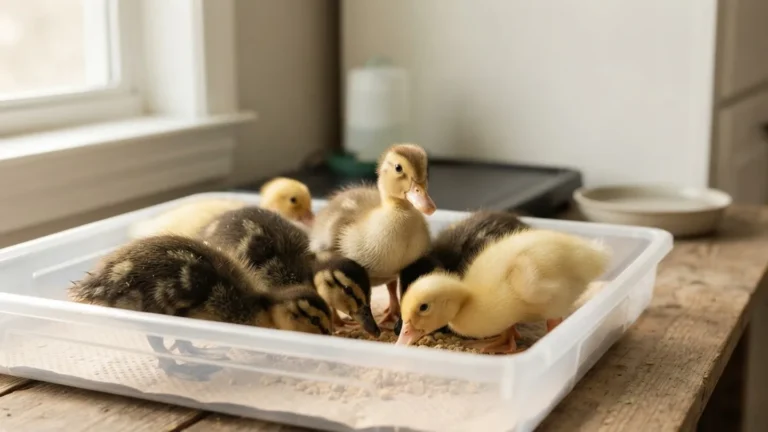
Wait until they are feathered and eating complete starter feed confidently. For very young ducklings under 3 weeks, skip treats. If you give an older duckling a snack, use tiny chopped greens, soaked starter feed, or a few soft mealworms. Keep the main feed available at all times. See [what do ducklings eat](what-do-ducklings-eat) and [how to care for ducklings](how-to-care-for-ducklings).
How many treats can I give ducks?
Treats should not change how much complete feed the ducks eat. Use a small amount spread across the flock, not a separate pile for each bird. If the ducks start turning their beaks up at the main ration, you are overdoing it.
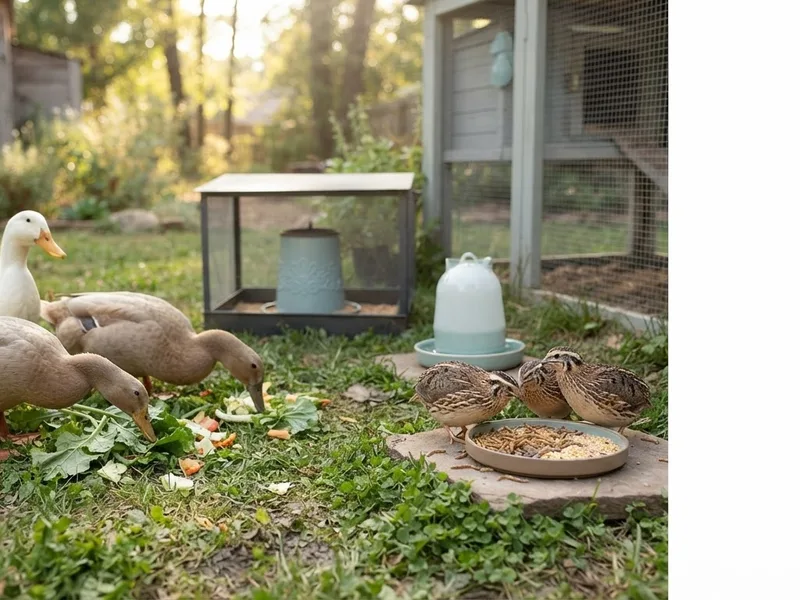
Can quail eat duck treats?
Most safe duck treats are also safe for Coturnix quail in smaller pieces. A quail gets about the size of a pea, not a spoonful. Button quail are pets more than egg layers, so keep their diet simple and watch their tiny size. If a quail seems weak or off balance, ask an avian vet.
Do treats make ducks lay more eggs?
No. If the main feed is balanced, treats should not change egg numbers. If laying drops, first look at the ration, light, water, stress and season, not a new snack. If a young hen has not reached point of lay, the time to wait, not the time to treat. Point of lay is the age when hens begin laying eggs.
How do I store duck treats?
Keep dry snacks in sealed bins away from rodents. Chop fresh treats and use them the same day. If they get slimy or sour, throw them in a covered waste bin. A treat bag left on the deck is an invitation to raccoons, rats and ants.