How Often Do Ducks Lay Eggs?
If you ask how often do ducks lay eggs, the short answer is that a healthy laying duck can put an egg into the nest almost daily in season. Most eggs come in the morning, often within a few hours after dawn. If your duck stops for a few days, do not panic. Laying speed is not a fixed hourly job like a factory line.
Domestic ducks vary a lot. A Khaki Campbell and a heavy meat breed can have very different egg years. Age, molting, daylight, feed, water, stress, and housing all push the pace up or down. A duck does not need a drake, which is a male duck, to lay an egg, but those eggs will not hatch unless a drake is with her.
For backyard keepers, the useful goal is not maximum eggs for their own sake. It is a steady supply from hens that are healthy enough to keep laying. That means knowing what is normal for your breed and your season. It also means spotting when the cause is simple, like short days or a dirty nest, and when it is time to adjust care.
In this guide
At a glance
- A good laying duck can lay almost daily in season, usually from early morning to late morning.
- Many backyard breeds give 150 to 300 eggs in a strong laying year, but that is an estimate, not a promise.
- Short daylight, molting, age, stress, thin shells, and poor feed or water can slow or stop laying.
- Heavy breeds usually lay less than light laying breeds.
- A duck can lay without a drake. Eggs from a hen kept without a drake are not fertile.
- The one mistake to avoid: buying a random spring duckling and assuming she will be a steady egg layer for years.
A normal laying duck works by daylight, not by a clock
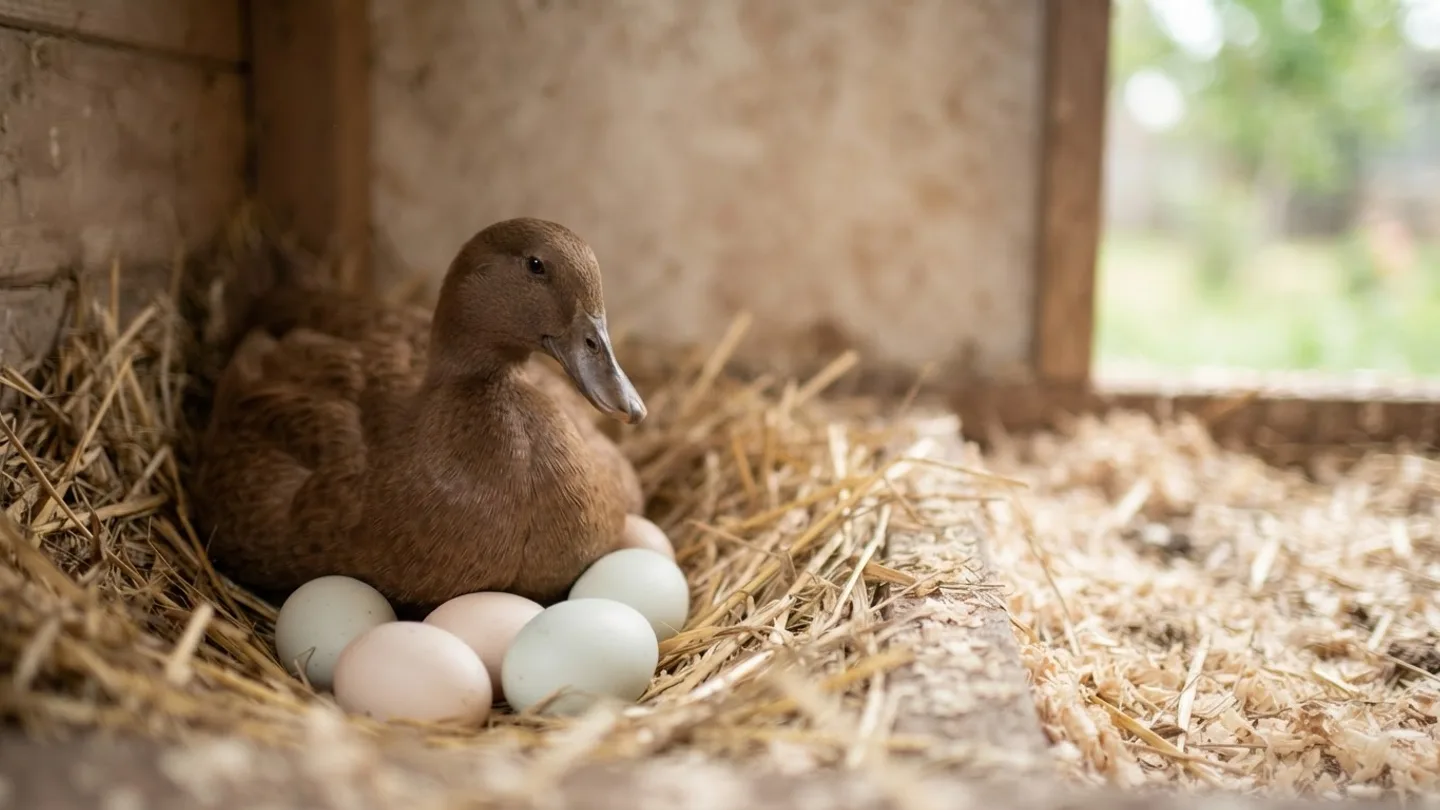
In spring and early summer, a good layer may give an egg every day or every other day. Eggs often appear between sunrise and noon. Collecting in the morning helps you find cleaner eggs and avoids leaving a pile for a hen to sit on.
In late summer and fall, laying often fades. The duck may still be in good shape. She is just changing feathers or responding to shorter days.
In winter, some keepers get eggs from light breeds under added light. Without light, many ducks take a real break. A pause in winter is not automatically a problem.
Ducks do not all follow one schedule. A hen that laid daily in May may give two eggs in one week in November. Judge her against her own season, breed, and age.
| Breed or group | Backyard eggs per year | Laying character | Practical note |
|---|---|---|---|
| Khaki Campbell | about 250 to 300 | Strong layer | Good if you want egg volume and can manage feed, space, and mess |
| Indian Runner | about 200 to 300 | Active layer | Good for yards where she can patrol, not always a lap duck |
| Pekin | about 150 to 250 | Heavy dual purpose | Good eggs, but feed bills and mud can be bigger |
| Muscovy | about 80 to 150 | Seasonal and often broody | Quieter, may raise ducklings, but not a daily egg machine |
| Rouen | about 100 to 200 | Steady medium layer | Good backyard all purpose duck with pleasant eggs |
| Welsh Harlequin | about 150 to 250 | Small laying breed | Often calmer than runners, good for a small flock |
| Other heavy breeds | about 100 to 180 | Slow to modest layer | Choose them for size, color, or meat, not a packed egg basket |
| Mixed barnyard ducks | about 120 to 250 | Unpredictable | Fun for a family flock, but not ideal if you want a dependable egg count |
What changes the pace
Age and the start of laying
A hen near point of lay, the age when she starts laying, may be inconsistent at first. Early eggs can be small, odd shaped, or double yolked. That is often normal.
After a first strong season, many ducks slow a little with age. The first laying season is often the best for egg numbers. Older hens may still give eggs, but not at the same pace.
If you are starting from spring ducklings, give it time. For the first weeks and months of egg production, see when ducks start laying.
Molting can pause the egg box
Molting is when a duck drops and regrows feathers. It usually takes energy, calcium, and time. Many hens stop laying or lay much less during molt.
If she looks scruffy, has bald patches, or leaves feather dust around the nest, do not assume she is sick. Give good feed, fresh water, and quiet.
After feathers come back, laying often restarts when daylight is decent. A molting duck is not always a lazy duck. She is busy rebuilding.
Daylight, heat, cold, and winter eggs
Ducks lay more when days are long. Spring daylight can push laying hard. Short winter days can slow it.
Some keepers add light to a coop or run, but that is not a free lunch. Too much light, poor ventilation, wet bedding, or a crowded nest can cause trouble. For housing checks, see duck coop.
If you keep eggs for home use, decide whether a winter pause is acceptable. A small, steady flock with decent housing may still give enough eggs without trying to force year round laying.
Feed, water, and a nest that works
A laying hen needs enough protein and calcium, plus clean water. If eggs have thin shells or you find broken eggs, check feed and nest size.
A nest too small will crush eggs. A nest too wet will ruin them. Ducks can be messy, so a dry, clean nest matters.
For the basics on what to feed them, see what ducks eat. Treats should not push real feed out of the ration.
Checklist when a duck stops laying unexpectedly
Check the calendar, not just the nest
Short days, late summer, and molt season can all cause pauses. If the duck is bright, eating, and walking normally, give it a few days.
Count how long the pause lasts
A day or two with no egg is common. A stretch of two or three weeks in season is worth a closer look. If you need exact egg counts, keep a simple chart by hen.
Look at daylight and coop setup
Are the days short? Is the coop dark, damp, or crowded? Make sure there is dry bedding, clean nests, and enough space. A duck in a wet run is often a grumpy duck.
Review feed and water
Is there fresh clean water all day? Is your feed suitable for laying ducks? Too many treats can push out real feed. If eggshells look weak, review the ration.
Check for broody behavior
A broody duck sits on eggs and may fluff up, hide a nest, and get grumpy when disturbed. Broodiness means she wants to hatch eggs, not keep filling the basket.
Send to the right person if something seems off
If the duck has a swollen belly, trouble walking, breathing changes, repeated soft eggs, or looks dull, do not keep guessing. Contact an avian vet. For local flock limits, check city hall or your HOA.
Questions backyard keepers ask about duck egg laying
Do ducks lay more than one egg a day?
Sometimes, but it is not the normal plan. One hen may occasionally lay two eggs in one day, often as a double yolk or a fluke. A steady daily pace is more realistic than multiple eggs every day.
Do all ducks lay eggs?
No. Only hens lay eggs, and drakes do not. Sexing ducklings is not perfect, and farm store groups can include males. If you bought a spring box, expect some surprises before the laying rhythm is clear.
Do ducks need a drake to lay eggs?
No. A hen can lay without a male. Those eggs are not fertile, so they will not hatch. If you want ducklings, you need a hen that has been with a drake, or fertile eggs that have been stored and incubated properly.
Why did my duck stop laying suddenly?
The common reasons are molt, short days, stress, age, poor feed or water, dirty nests, predator pressure, or illness. If she looks healthy, check the calendar first. If she looks off, get an avian vet.
Do ducks lay eggs in winter?
Some do. Light breeds with good daylight management may keep laying. Heavy breeds and ducks without enough light often slow down or stop. Winter eggs are possible, but they are not automatic.
How many eggs can I expect from one duck?
It depends on breed, age, and season. A light laying duck may give nearly daily eggs in spring. A heavier duck may give fewer. Judge over a week or month, not by one morning.