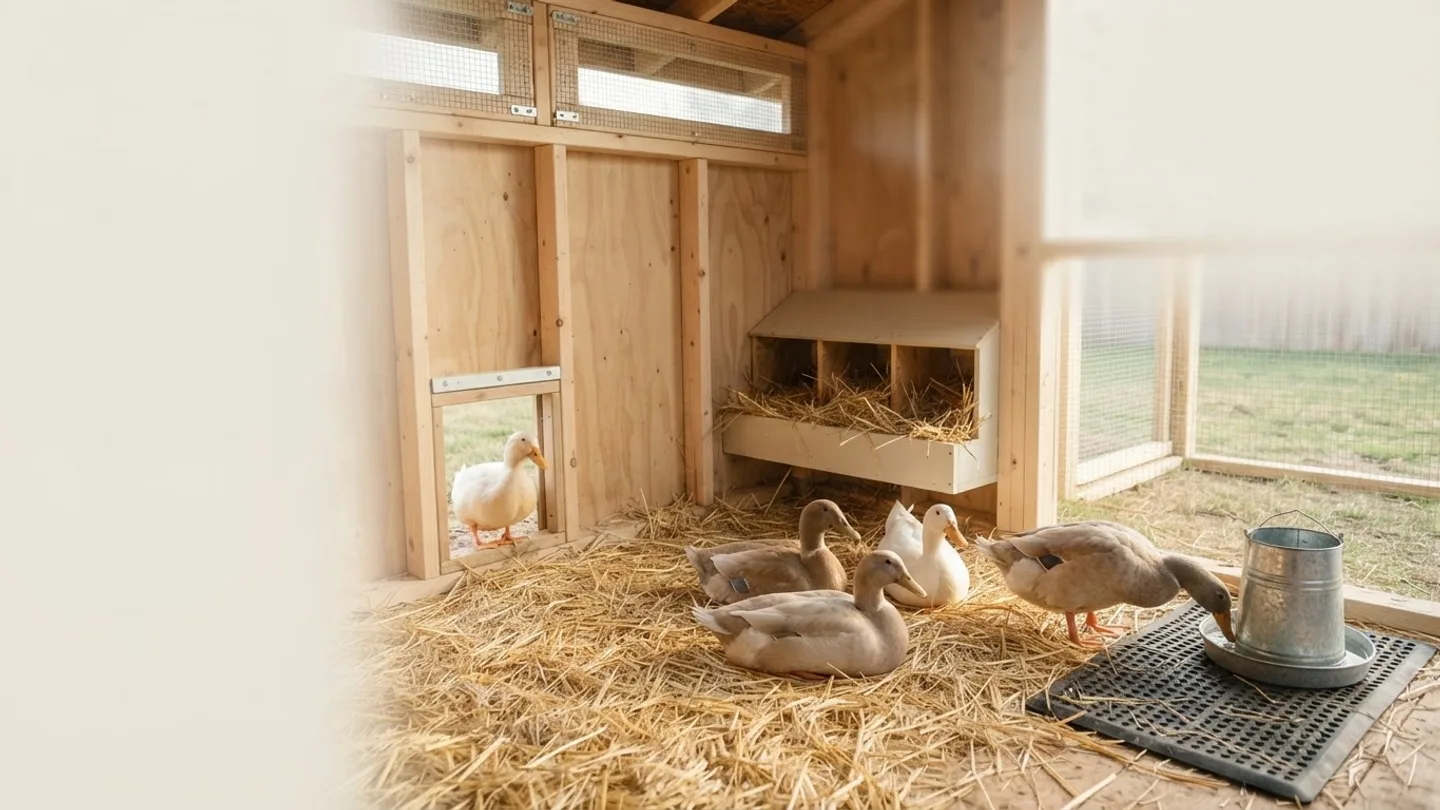
Duck Coop Guide: What Ducks Need in a House
A duck coop is the house where ducks sleep, nest, and keep dry when weather turns. It does not need the same layout as a chicken coop. If you have kept chickens, the easiest change is to give up roosts and think low, wide, dry, and easy to clean. If you are starting your first flock, build around water, bedding, and a door that lets a heavy duck move in without turning sideways.
For a wider start, see raising backyard ducks.
At a glance
- Plan on about 4 square feet of indoor floor area per adult duck.
- No roosts. Ducks need flat, dry floor space.
- Use a low, wide door and floor level nesting.
- Ventilate strongly so moisture and ammonia can leave, even in cold weather.
- Make cleaning simple with hosing, scraping, or removable bedding.
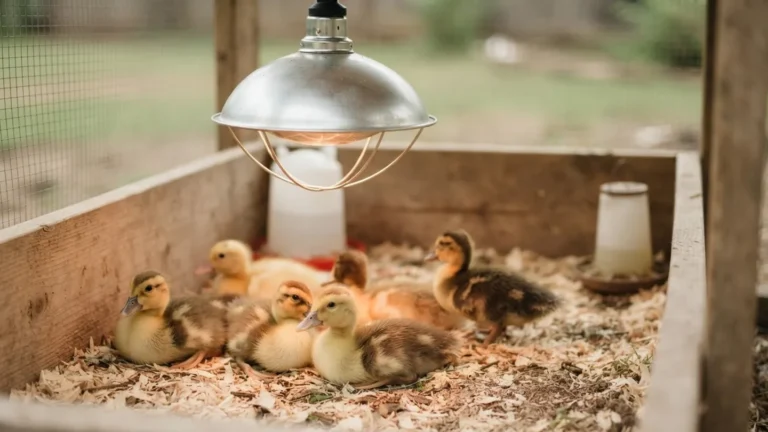
- For ducklings in a brooder, week one heat is about 90 degrees Fahrenheit. A duck coop is not a brooder.
- Avoid the common mistake: building a chicken coop, adding roosts, and calling it a duck coop.
How a duck house differs from a chicken coop
A chicken coop usually assumes birds will roost high, lay in raised boxes, and move through a narrow door. A duck house does the opposite. Ducks are heavier on the ground, they do not naturally perch like chickens, and their water habits turn litter into damp quickly. If you copy a chicken coop layout, you end up with high nest boxes that ducks ignore, roosts that collect wet droppings, and a floor that stays soggy.
Keep the house open and low. The best duck coop floor is flat, dry, and easy to reach with a rake, shovel, or hose. You want light to enter, but not so much shade that you miss wet spots. If your birds are heavy, meaty ducks such as Pekins, remember that they take more room and may need a wider door than light breeds. See duck breeds for size differences.
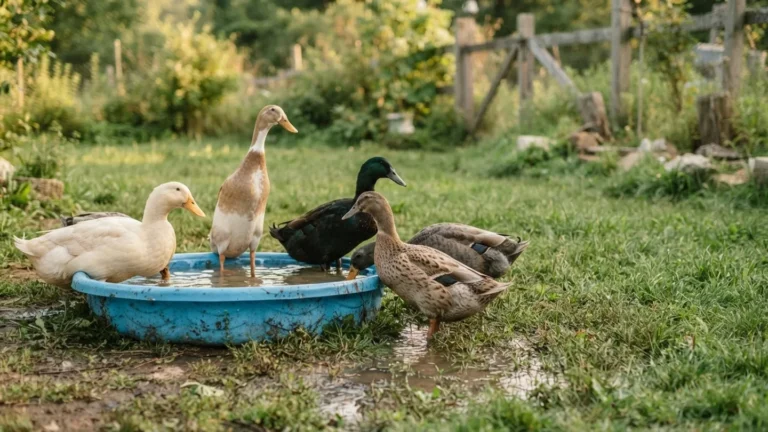
Ducks also drink with more mess. They dunk, splash, and dribble. The house does not have to hold all that water. Keep drinking water just outside or near a door you can clean, and keep bedding dry. A dry duck house is more about drainage and airflow than about a fancy roof.
| Feature | Duck house | Chicken coop |
|---|---|---|
| Roosts | No roosts; flat floor space is better | High perches are expected |
| Nesting | Floor nesting or low boxes in a quiet corner | Raised nest boxes are common |
| Door | Low, wide, and easy for a broad body to enter | Often narrow doors and steep access |
| Cleaning | Built for scraping, raking, and hosing | Built for droppings boards and dust baths |
| Water | Kept outside or near a cleanable entry to protect bedding | Usually inside, but still needs spill control |
| Airflow | Strong ventilation carries moisture away from the floor and nest | Ventilation matters, but drafts near perches are less welcome |
Space, floor area and layout
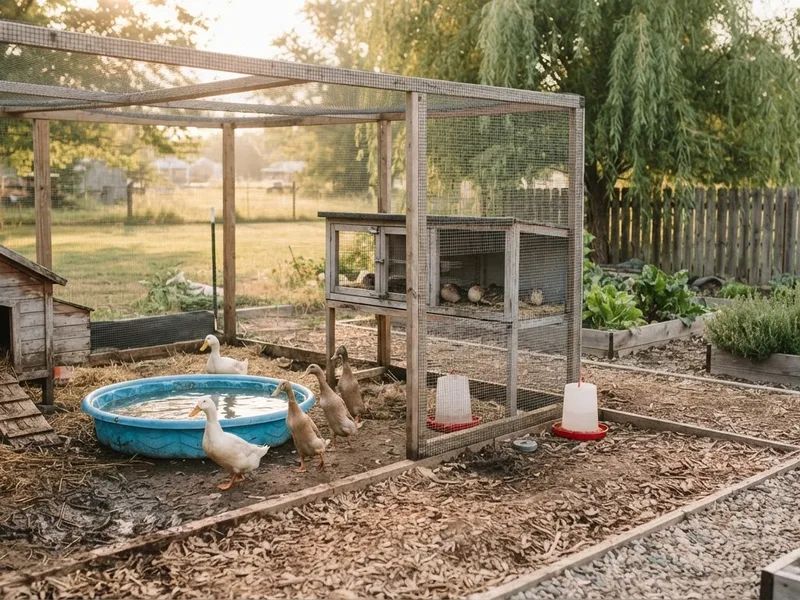
About 4 square feet of indoor floor area per duck is a practical starting point for a small backyard flock. That is the house, not the run. If your ducks live in a run most of the day, the house becomes a night shelter and nest room, so it can be modest. If they spend a lot of time inside because of weather, predators, or your schedule, give them more room.
Think like a keeper, not a builder. You need clear floor to scrape, a dry corner for nesting, and a path from the door to the nest that does not trap water. Ducks are not fancy about the view. They care about a dry place to sleep, a clean place to lay, and a way out that does not make them wait.
Heavier breeds and drakes need more room. A drake is a male duck, and males often have broader bodies and rougher manners than hens. If you keep a drake, plan a little extra space so the hens have room to move away. Too many drakes for too few hens is a flock problem, not a coop size problem, but a cramped house makes it worse.
Use the floor area before you buy lumber or a shed. Measure your birds, count them, and leave space for feeders, waterers, and cleaning tools if they will live inside. If water and feed stay inside, they will eat the bedding and make cleaning harder.
Duck coop floor area calculator
Use this to check the house floor area, not the run. The default uses about 4 square feet per adult duck.
Estimated indoor floor area square feet
Doors, ventilation and nesting
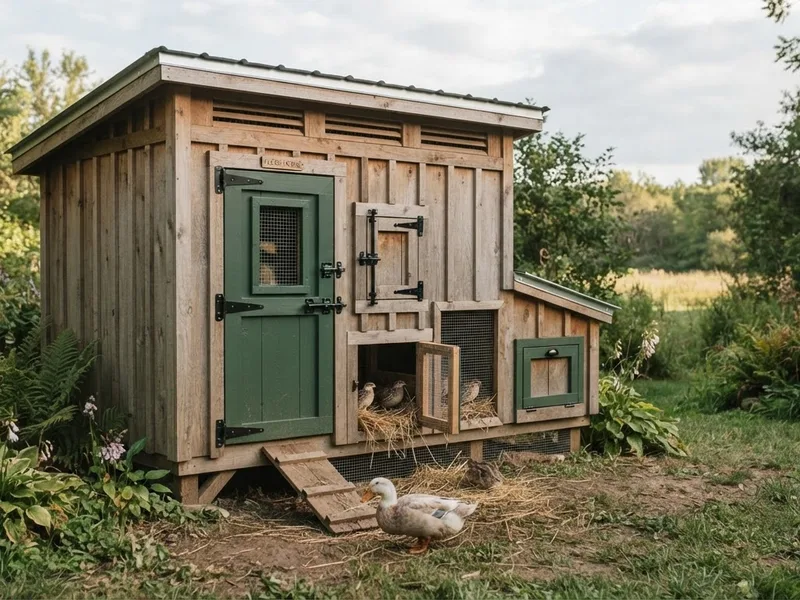
The door should be low and wide. A duck coop door does not need the height of a chicken roost access, but it does need width. A heavy duck can turn into a narrow doorway and get stuck. Make it wide enough for the largest bird, then add a bit more room so two birds can pass on a busy morning.
Ventilation is not the same as leaving the door open. Ducks produce moisture from their bodies, their wet feet, and their water habits. In cold weather, that moisture can settle under a tight roof and make the house damp even when the floor looks dry. Put vents or screened openings high enough to keep rain out, yet low enough that you can see dampness and scrape it away. Keep fresh air moving through the house, but avoid a direct cold draft across the nest.
Nesting should be on the floor or at ground level. Ducks often lay low, especially when young or in a small flock. You can use a ground level nest box, a corner of the house lined with bedding, or a simple open box with the front low. If a hen goes broody, which means she wants to sit on eggs, you can move her to a quiet nest area, but do not build a maze of high boxes.
Build or convert a shed for a duck coop
Count the birds and set the floor area
Use about 4 square feet per adult duck as a starting point for the house.
Choose a dry site
Avoid a low spot where rain or snowmelt pools. Good drainage keeps bedding dry.
Plan the door on the run side
Make it low, wide, and easy to clean around. A wide door beats a tall but narrow one.
Add floor nesting and a separate water area
Put waterers outside the house if possible. Keep nest areas quiet, dry, and low.
Install ventilation
Place vents high enough to keep rain out, and screen them against predators.
Leave a way to hose or scrape the floor
A smooth floor, a drain, or removable bedding all work better than a sealed box you cannot reach.
Cheap shed conversions that work
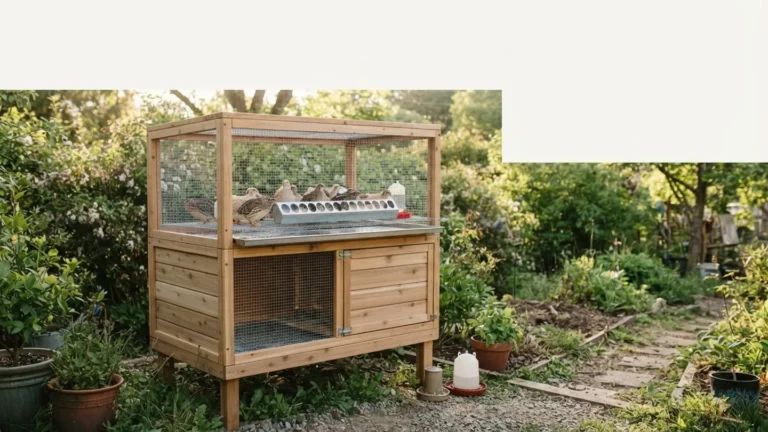
The cheapest duck coop is often a small shed you already own. A garden shed, a used plywood structure, or a sturdy plastic storage building can become a duck house if you change a few things. Add a wide low door, lift or remove roosts, place floor nests, and keep water outside.
Before you cut anything, check city hall or your HOA about sheds, fences, and poultry. Rules vary by town, and a small coop can still need a permit or a setback.
A storage tote brooder is for ducklings, not a permanent duck house. Do not keep adult ducks in a tote. For adults, a cheap shed gives more room, better airflow, and a place to scrape wet bedding. If the shed has a wooden floor, protect it from water and wear with removable boards, rubber matting, or a thick bedding layer you can rake out.
You can also convert a chicken tractor or a portable coop if it has enough floor area and a low door. If it was built for chickens, remove the roosts. If it is too small for the flock, do not treat it as a rescue coop for winter. Cramped, wet housing turns into more work for you and more trouble for the birds. Keep feed and water near the door, not deep inside the nest area. See what do ducks eat for feeding by age.
Pros
- Uses a structure you already own or can buy secondhand
- Large floor area is easier to keep dry than a small box
- A shed roof protects nests and bedding from rain
- Modifications can be simple: add a low door, remove roosts, and add ventilation
- A shed can be moved or reworked if your flock changes
Cons
- A tight shed may hold ammonia if ventilation is weak
- Wood floors rot when ducks splash and drink inside
- A narrow original door may need widening
- Predators can exploit weak walls, vents, or ground edges
- Cheap plywood may not last through many wet cleanings
Common questions about a duck coop
Can I use a chicken coop for ducks?
You can, but you should change it. Remove roosts, lower or widen the door, move nest boxes to floor level, improve ventilation, and keep water out of the living area. A chicken coop often becomes a better duck coop after some simple edits.
Do ducks need a high nest box?
No. Most backyard ducks will lay on the floor or in a low, quiet nest. High boxes are more likely to stay unused.
How much indoor space does a duck need?
Plan on about 4 square feet per adult duck in the house, plus enough outdoor room for your weather and flock size. Give heavier ducks and drakes more space.
Should a duck coop have water inside?
It is easier to clean if water is outside or at the door. Ducks splash, and wet bedding makes a duck coop smell and stay damp.
What is the biggest duck coop mistake?
Building a chicken coop and calling it a duck coop. The usual signs are roosts, high nests, narrow doors, poor airflow, and water sitting inside the bedding area.