Incubating Duck Eggs: Temperature, Humidity and Turning
Incubating duck eggs can be manageable. Duck eggs are not tiny chicken eggs. They hold more water, they often need stronger light for candling, and the hatch can run over a day if humidity is wrong.
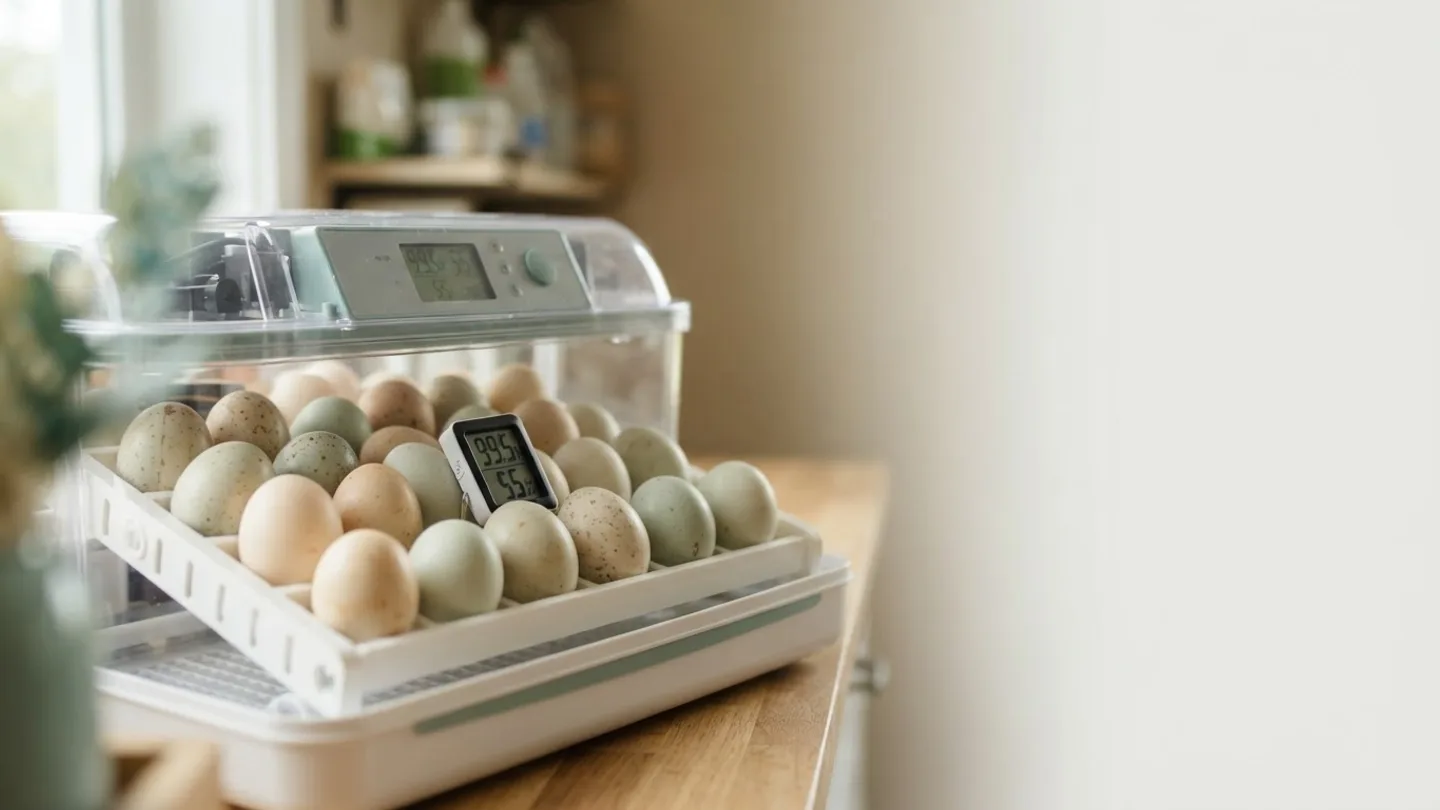
You need steady heat, turning, and humidity. A forced-air incubator at 99.5°F, daily turning, and a plan to stop turning three days before hatch will get you close. The rest is patience and clean shells.
This guide covers incubating duck eggs, including Muscovy eggs, which run closer to 35 days. If you are new to keeping ducks, start with the raising backyard ducks guide before you buy an incubator. A spring hatch is easy to regret if you have no brooder, no feed, and nowhere to keep the flock.
At a glance: incubating duck eggs
- Set a forced-air incubator at 99.5°F and keep it steady.
- Duck eggs usually take about 28 days, and Muscovy eggs take about 35 days.
- Turn the eggs daily until lockdown, three days before hatch.
- Keep humidity near 50% during early incubation, then raise toward lockdown without soaking the eggs.
- After hatch, ducklings need about 90°F in week one, duckling starter feed with about 18% to 20% protein, and square feet per bird that grow as the flock grows.
- Space: many backyard brooders start with about 2 to 3 square feet per duckling, then add area before bedding stays wet.
- Mistake to avoid: do not set eggs unless you can house a flock and plan for drakes, too. A lone duck gets lonely, and too many drakes around hens causes trouble.
Choose eggs that have a chance
The best eggs for incubating duck eggs come from a healthy flock, not from a carton you bought at the grocery store. Store eggs are usually washed, refrigerated, and rarely fertile. If your own ducks are laying and you have a drake, collect eggs daily. A drake is a male duck, and hens usually lay fertile eggs when one is active in the flock.
Select clean, normal-shaped eggs. Duck shells can be thicker and more opaque than chicken shells, so candling may be harder. Avoid cracked, soft-shelled, very large or very small eggs. Double yolks and misshapen eggs may hatch, but they are less predictable. If you want laying breeds with dependable flock behavior, see duck breeds.
If eggs are muddy, do not scrub them. Brush off loose debris and incubate quickly. Washing can remove the bloom, the natural coating that helps slow bacteria from entering through pores. If you must wash, use warm water, not cold, and set the eggs right away.
Store eggs before setting with the blunt end slightly up, at cool room temperature, and turn them daily if storage goes past a day or two. Do not store very old eggs. The longer they sit, the more likely weak embryos and failed hatches.
Set the incubator before you load eggs
Run the incubator empty
Give the unit 24 hours to hold temperature, respond to water, and show whether the turning mechanism moves the tray smoothly.
Place sensors where eggs live
Put your thermometer and hygrometer near the eggs, not against a wall, not touching the heat source, and not buried under feathers or cloth.
Start humidity early
If your incubator has a water tray, fill it with warm water before loading. Do not guess humidity. Use the sensor and watch the trend for the first few hours.
Set temperature for your unit
For a forced-air incubator, set the common backyard target at 99.5°F. For a still-air unit, follow the maker's guide and keep the lid closed as much as possible.
Load eggs so they can turn
Blunt end up is common in tray incubators. Make sure eggs are not touching each other so airflow and turning work.
Write the hatch date on the lid
For most duck eggs, count about 28 days. For Muscovy eggs, count about 35 days.
Temperature for duck eggs
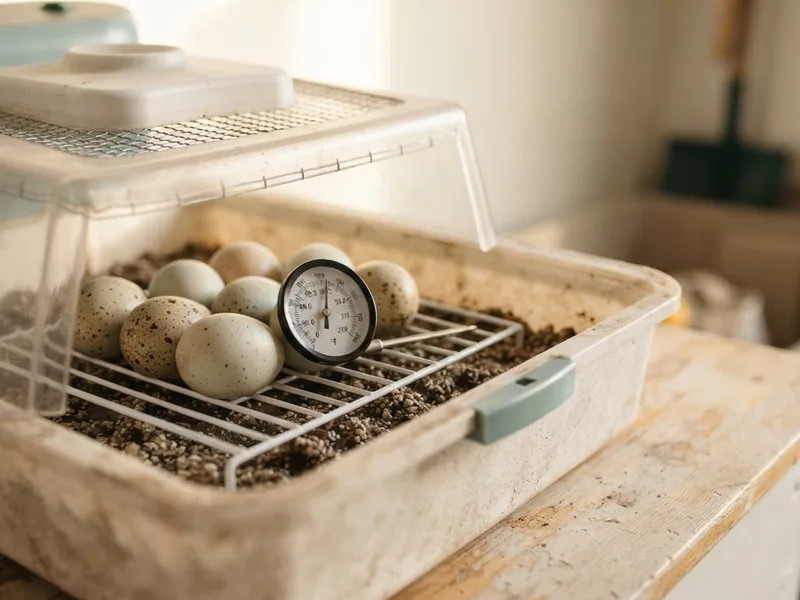
Incubating duck eggs is mostly a temperature problem with a humidity problem next door. In a forced-air incubator, 99.5°F is the usual backyard target. Small swings matter less than a steady, slightly hot or slightly cool trend.
Too much heat can speed development, cause weak pipping, or kill embryos late. Too little heat slows the clock and may lead to late hatch or leg problems. If your unit drifts, fix the room draft, lid seal, water tray placement, or thermometer location before blaming the eggs.
Still-air incubators are not the same. Because there is no fan moving air, temperature can change with egg height and thermometer position. Use the manufacturer's settings, but expect to watch more closely. In many homes, a forced-air unit is the easier way to get consistent results.
| Feature | Forced-air | Still-air |
|---|---|---|
| Temperature target | Common backyard target is 99.5°F for duck eggs. | Follow the maker's guide. Readings can vary by tray position. |
| Air movement | A fan spreads heat and humidity more evenly. | Heat settles. The lid, room temperature, and tray level matter more. |
| Humidity | More stable, but a hygrometer is still worth using. | More affected by small openings, water trays, and room drafts. |
| Turning | Many models turn automatically or with a simple motor. | Manual turning is common, so you need a steady routine. |
| Best fit | Good for backyard keepers who want steadier results. | Good if you will check often and keep the unit draft-free. |
Humidity by stage
Duck eggs hold more water than chicken eggs, and their shells can be thicker. Humidity controls how much water evaporates through the pores. Too little drying and the duckling may have trouble moving through the inner membrane. Too much drying and the egg can lose too much water and pip poorly.
During the first stage, a common backyard target is relative humidity around 45% to 60%. Pick a number that your incubator can hold, keep it steady, and judge the air cell at candling rather than chasing every reading on the screen.
At lockdown, three days before hatch, raise humidity. Many duck keepers move into the 65% to 75% range, especially with Muscovy eggs or thick shells. If your unit cannot hold humidity, add water in a small tray or sponge, but do not make condensation drip onto the eggs.
A clean hatch usually happens when the shell is damp enough to work with but not so wet that the pores are blocked. If eggs are very dry, pips are slow and membranes may dry. If the room is wet and eggs do not dry enough, ducklings may become stuck after hatching.
If you are keeping quail too, do not assume the same numbers work for every species. See the separate raising quail guide before you incubate Coturnix eggs.
Reasons to mist duck eggs at lockdown
- Misting can help when air is very dry and the pipping area has dried out.
- Light spray may soften the shell and reduce tight membranes.
- It can give a weak pipper a better chance to work around.
- Some Muscovy and thick-shell duck eggs hatch more easily when humidity is supported with a quick mist.
Reasons to skip misting
- Cold water can drop temperature and shock eggs.
- Standing water can block pores or invite bacteria.
- Too much mist can leave ducklings soaking wet and unable to dry.
- Misting is a bandage, not a cure for wrong humidity or poor incubation.
Candling, lockdown and hatch calendar
- Day 0Set eggsPlace the eggs in the incubator, record the date, start turning, and bring humidity to target.
- Day 7First candlingCandling means shining a bright light through the egg. Look for a network of veins and a dark embryo. Clear eggs may be infertile, but wait a few days if unsure.
- Day 14Second candlingDuck eggs are often more opaque than chicken eggs, so a strong light in a dark room helps. The air cell should look larger and the embryo area should look dense.
- Day 25Lockdown for ordinary duck eggsLockdown means stop turning and raise humidity. Mark the expected hatch date and leave the eggs alone as much as possible.
- Day 28Hatch window for ordinary duck eggsThe first pipping may be a tiny crack. Do not open the lid to help. Ducklings need to work, rest, and dry inside the incubator.
- Day 32Lockdown for Muscovy eggsIf Muscovy eggs are still closed, stop turning now and raise humidity for the final days.
- Day 35Muscovy hatch windowLate hatches can happen with cooler temperature, older eggs, or wrong humidity. Keep the incubator closed until progress is clear.
What to do on hatch day
The duckling pips when it makes the first break in the shell. Then it works its way around, rests, and often hatches over many hours. Do not pull the shell off a wet, active pipping. It still needs to absorb yolk and dry its legs.
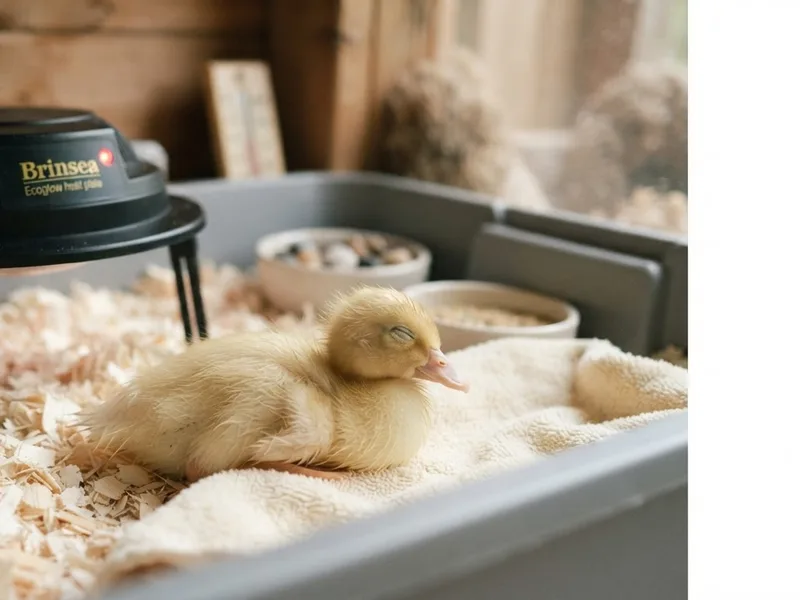
Leave eggs in the incubator until the ducklings are fluffy and dry. Moving a half-dry duckling into a brooder can chill it. A brooder is a warm, enclosed setup for young birds. When they are dry, move them to the brooder.
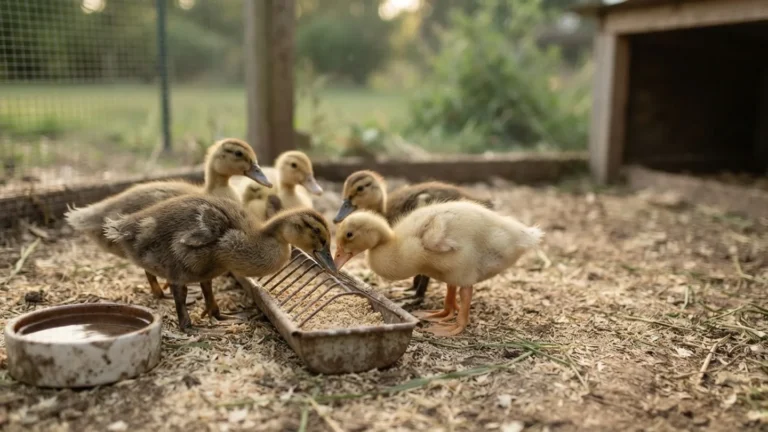
After hatch, ducklings need warmth near 90°F in week one, water they can reach safely, and duckling starter feed with about 18% to 20% protein. Ducklings make wet mess faster than chicks, so add space as soon as bedding turns soggy. For week by week care, use how to care for ducklings.
Clean the incubator only after all hatching is done or between batches. Duck debris can turn wet, so remove wet shells and dead embryos carefully to reduce bacteria. If a duckling has a wet navel, the belly button area, or a swollen joint, do not treat it with home remedies. An avian vet or a state poultry laboratory is the right call for a sick bird or a pattern of deaths.
Hatch day basics in six moves
Preheat the brooder
Warm the space before the first pip, not after the first duckling starts calling.
Keep the incubator closed
Do not open for every crack. A small loss of heat and humidity can turn a good hatch into a messy one.
Move only dry ducklings
Wait until they are fluffy, upright, and active. A soaking wet bird is not ready for the brooder yet.
Use safe water
Shallow water is best for day-old ducklings. Many keepers start with marbles or stones in the pan so a duckling cannot drown.
Feed, watch, and add space
Offer starter feed, keep bedding dry, and increase floor area before the birds are crowded.
Clean after the hatch
Remove wet shells and sanitize the unit only after the hatch window has finished or between batches.
Common duck incubation questions
How long do duck eggs take to hatch?
Most duck eggs take about 28 days. Muscovy eggs take about 35 days. Late hatches can happen with cooler temperature, older eggs, or wrong humidity.
Can I use store-bought duck eggs?
Usually no. Store eggs are often washed, refrigerated, and not from a fertile flock. If you need fertile eggs, buy directly from a healthy flock or use eggs from your own ducks.
Do I need to candle every egg?
No, but candling around day 7 and day 14 helps you remove clear eggs before they rot and fill the incubator. Duck eggs are harder to read than chicken eggs, so a strong light and dark room help.
Why did my duck eggs not hatch?
Common reasons are wrong temperature, poor humidity, not turning, dirty eggs, old eggs, low fertility, or too much opening. Fix the incubator settings before blaming the flock.
Can I help a duckling out of the shell?
Only if it has pipped, made little progress for many hours, and is drying out. If unsure, ask an experienced keeper or avian vet. Pulling too early leaves wet membranes and weaklings.
What if I end up with too many drakes?
Ducks can be fun, but too many male ducks around hens causes injury, stress, and noisy mess. Keep a sensible drake-to-hen ratio, plan extra space, and have homes ready before the hatch.