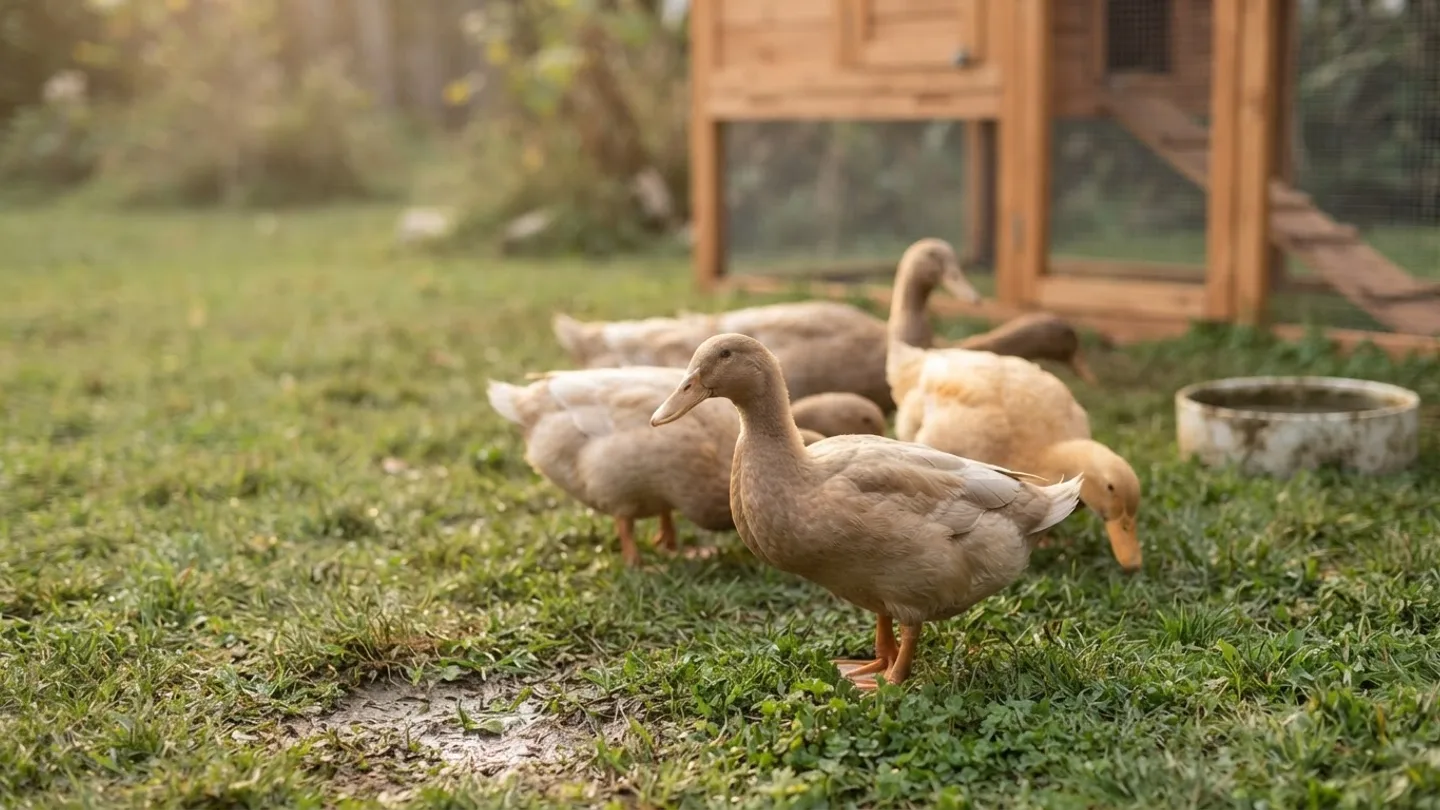
When Do Ducks Start Laying Eggs?
Most backyard ducks start laying eggs at about 16 to 24 weeks of age. That is the short answer to when do ducks start laying eggs. A light laying breed can begin near the early end. A heavy breed or a Muscovy may take longer. A fall-hatched bird may wait for spring even if she has hit the usual weeks.
Do not let the week number bully you. A duck is not a switch, and a calendar is only a guess. Body size, health, light, feed, water, nest space and whether she is a hen all move the date. If you have a drake, he will never lay, no matter how good the nesting box is.
Use this guide to spot the signs before the first egg, understand why early eggs can look odd and know when to wait instead of panicking. If you are starting your flock from scratch, keep the whole raising backyard ducks guide nearby for housing, water and feeding.
Key takeaways
- Most ducks start laying eggs at about 16 to 24 weeks.
- Laying breeds tend to begin sooner, while heavy breeds and Muscovies often take longer.
- Fall-hatched ducks may wait for increasing daylight in spring.
- Point of lay, the stage when a young hen first begins to lay, often shows as squatting, nest searching and new focus.
- Odd first eggs can be normal, but a duck that seems to be struggling needs veterinary advice.
Quick Answer: Most Ducks Start at 16 to 24 Weeks
The plain answer is that most backyard ducks start laying eggs between 16 and 24 weeks. In many US flocks, that means a spring-hatched pullet may lay by late summer. A pullet is a young female duck who has not started laying yet.
That window is not a promise. It is a reasonable range for many common domestic breeds. A small egg type may surprise you early. A large, slow-growing bird may not surprise you until week 20, week 24 or a little later.
Before you blame the age chart, ask a simpler question: do you actually have hens? A drake is a male duck, and he does not lay eggs. If you bought ducklings and no one sexed them well, you may have males sitting in a flock that cannot answer your egg question. If you are still sorting out typical breed traits, duck breeds can help you know what each type tends to do.
If you want eggs by fall, start with spring-hatched pullets from a laying type and keep their routine boring. Clean water, safe cover, dry nesting spots and steady feed matter more than chasing a perfect week count.
How to Spot Point of Lay
Watch her body language
A hen nearing point of lay may squat when you approach. That is a flat crouch with her back lowering and her tail coming up. It is a classic sign that laying is close.
Look for nest seeking
She may carry material, peek into boxes, hide in corners or try to lay somewhere unexpected. First-time layers often experiment before they settle.
Notice behavior shifts
A duck about to start laying may become more vocal, more focused, more interested in quiet spots, or oddly busy compared to earlier weeks.
Check her condition, not just the calendar
She should have good feather, appetite, clean legs and normal energy. If she seems ill, do not wait for the egg count to catch up.
Give her private, dry nesting spots
Ducks like quiet cover. A bright, shared run can make a first-time layer avoid laying until she finds a safe corner.

First Eggs Are Often Odd
A duck's first egg is often weird. It may be small, long, narrow, pale, crinkled, soft or missing shell in spots. It may have a double yolk, a blood spot, or an odd shape that makes you wonder if the bird is wrong. In many cases, the bird is just learning how to build an egg.
Give a first-time layer a few days before you worry. The oviduct, the internal tube where the egg is formed, is adjusting. Calcium and protein use are shifting, and she may be stressed by heat, predators, water loss or a new run.
But watch for real trouble. If she strains, has a swollen belly, stops eating, lies hunched, or keeps laying shellless or blood-heavy eggs, get veterinary advice. An avian vet is the right person for bird health problems. Do not try to pull a stuck egg at home.
| Duck group | Usual timing | What to expect |
|---|---|---|
| Laying breeds | Often early to middle of the 16 to 24 week range | They are built to make eggs, so they may start earlier. Keep feed and water steady so she does not stall over stress. |
| Heavy breeds | Often middle to later, and sometimes beyond | A bigger bird may grow slowly and put on condition before laying. Look at body shape, feather and behavior, not just weeks. |
| Muscovies | Often later than many common breeds | Do not panic if the date slides. Once they begin, they can lay well, but they often need more time. |
| Spring hatched | Often follow the standard range | Longer days help, and a warm summer can make them look early. Mud and wet nesting boxes are the usual troublemakers. |
| Fall hatched | Often delayed until spring | Short days can pause the start. The week number may look late, but light and season are saying not yet. |
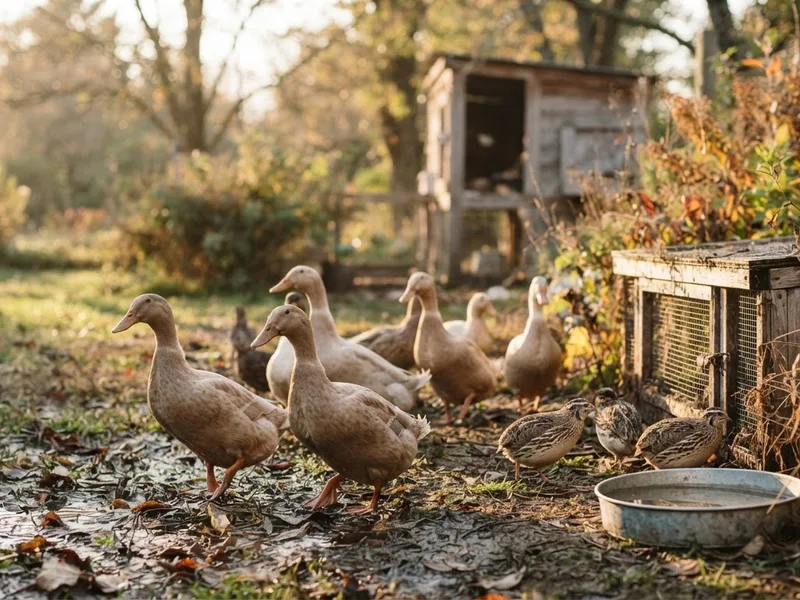
Daylight and Season Matter More Than You Think
Ducks do not read month names. They react to total light, which means daylight plus any artificial light near the coop. As days lengthen in spring, many pullets wake up to laying season. As days shorten in fall and winter, even good layers may slow down or stop.
Many backyard keepers use a timer to keep total light near about 14 to 16 hours during the laying season. More is not always better. A light schedule that is harsh, sudden or too long can stress birds and does not fix a young bird that is not ready.
If you have a fall-hatched pullet, her delay may simply be season. She may grow well and look fine, but her body is not receiving the spring signal. If you have a spring-hatched layer and eggs stop in winter, light and feed can help. If you suspect illness, talk to an avian vet.
Common Questions About When Ducks Start Laying Eggs
My duck is 18 weeks old and not laying yet. What should I check?
First confirm she is a hen. Then check breed, body condition, daylight, stress, water and nesting space. Heavy breeds and Muscovies often start later. A normal young hen may still be on schedule.
Can I add light to make her start?
You can use light to support the laying season, but it is not a switch. Aim for about 14 to 16 hours of total light if she is mature and healthy. Too much light can be confusing or stressful.
Is a fall-hatched duck too old?
No. It may simply be waiting for longer days. Fall-hatched birds often look late by week count because short light tells their body to wait.
Why did the first egg have no shell?
Sometimes the shell has not formed fully before the egg is laid. A single odd first egg can happen. If shellless eggs repeat, or the bird strains, stops eating or looks ill, get veterinary help.
Do ducks stop laying in winter?
Many ducks lay less when daylight is short. Some slow down and some stop. Feed, water, health, cold and breed all shape what happens.
When is a duck too old to start?
If she is past the normal range by a wide margin, check whether she is a hen, whether she is already laying somewhere secret, and whether she is healthy. If she has not laid by the time she is clearly mature, get veterinary advice.