Quail Cages and Hutches: Space and Setup
A quail cage can be simple, but it needs to solve four jobs: enough floor area, a low enough ceiling to stop head bumps, a floor you can clean, and shade or weather cover. Coturnix quail are small, but they still need room to move, drink, dust, and recover from a startled jump.
If you came from chicken housing, shrink everything. A chicken coop that looks cramped for ducks can feel large to quail, yet quail panic upward. That means the cage can be short and still work, but it must be built like a lid that keeps a startled bird from hitting a hard top.
The best design depends on whether you want eggs, meat, display birds, or a small backyard hutch. The At a glance box gives the starting numbers, then the comparison table puts the options side by side.
On this page
At a glance
- Floor area: Plan about 1 square foot per adult Coturnix quail for a small cage, and give more space if you keep birds for meat, in hot weather, or without daily cleaning.
- Ceiling height: Keep the jumping space between 10 and 12 inches in most cages. A panicked quail can hit its head on a high solid lid or a tall wire top.
- Floors: Wire lets droppings fall through and makes tray cleaning easier. Solid floors are gentler on feet and eggs but need litter and more scraping.
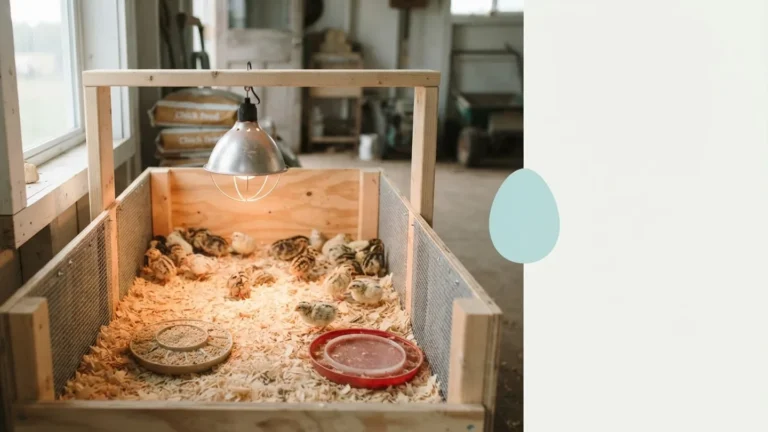
- Heat: Quail chicks need 95 degrees Fahrenheit under the brooder, the heated box where chicks start, in week one. Adults need a dry, shaded, draft free shelter, not a heated wire cage by default.
- Feed: Use feed labeled for quail or game birds. A common protein target is 24 to 28 percent for young birds and 20 to 24 percent for laying adults.
- One mistake to avoid: Do not buy a tall rabbit hutch and assume quail need flight room. Limit the height and give them safe cover instead.
What a quail cage needs
Start with the bird, not the product. If you are keeping Coturnix quail for eggs, you need a setup that holds the birds safely, keeps droppings away from feed, and lets you reach every bird without a contortionist move. The raising quail guide covers breed basics, but the cage question gets specific fast.
Floor area is the easiest number to measure. A cage that is 2 feet long by 2 feet wide has 4 square feet. For most adult Coturnix, that is room for about 4 birds, and that is the starting point, not the goal. More space makes the litter dry, the water cleaner, and the birds easier to read.
Ceiling height is the number most buyers miss. Quail do not roam like chickens. They sit, flutter, and then jump when something frightens them. If the lid is too high, the bird has room to build speed, then it hits a hard top. A low cage is not a kindness; it is injury control.
A brooder is the heated box where chicks start. If you are moving chicks from the brooder to a grow out cage, keep the same floor idea: dry bedding, no gaps for legs, and a roof that stops a jump. The duckling brooder setup page has the heat and water basics, but quail chicks are smaller and more nervous.
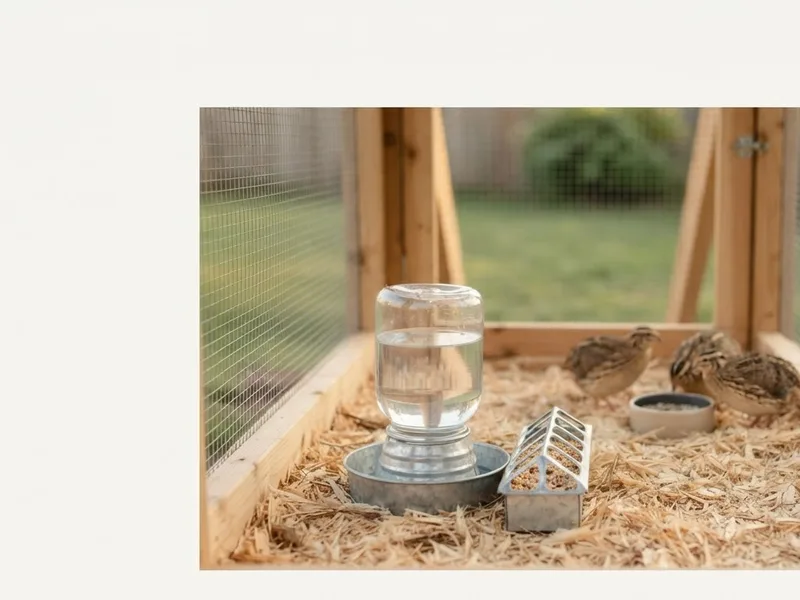
Water and feed belong above the floor or in guarded trays. Quail knock over shallow containers. Put the waterer where droppings cannot fall into it, and check that the feeder does not spill into the litter.
| Option | Floor area per adult quail | Ceiling or cover height | Floor type | Cleaning | Best fit |
|---|---|---|---|---|---|
| Wire cage | About 1 square foot | 10 to 12 inches of usable height | Wire floor with a tray below | Droppings fall to the tray. Check for rust, sharp edges, and a mesh size that will not trap a leg. | Small laying flocks where eggs and manure need daily attention |
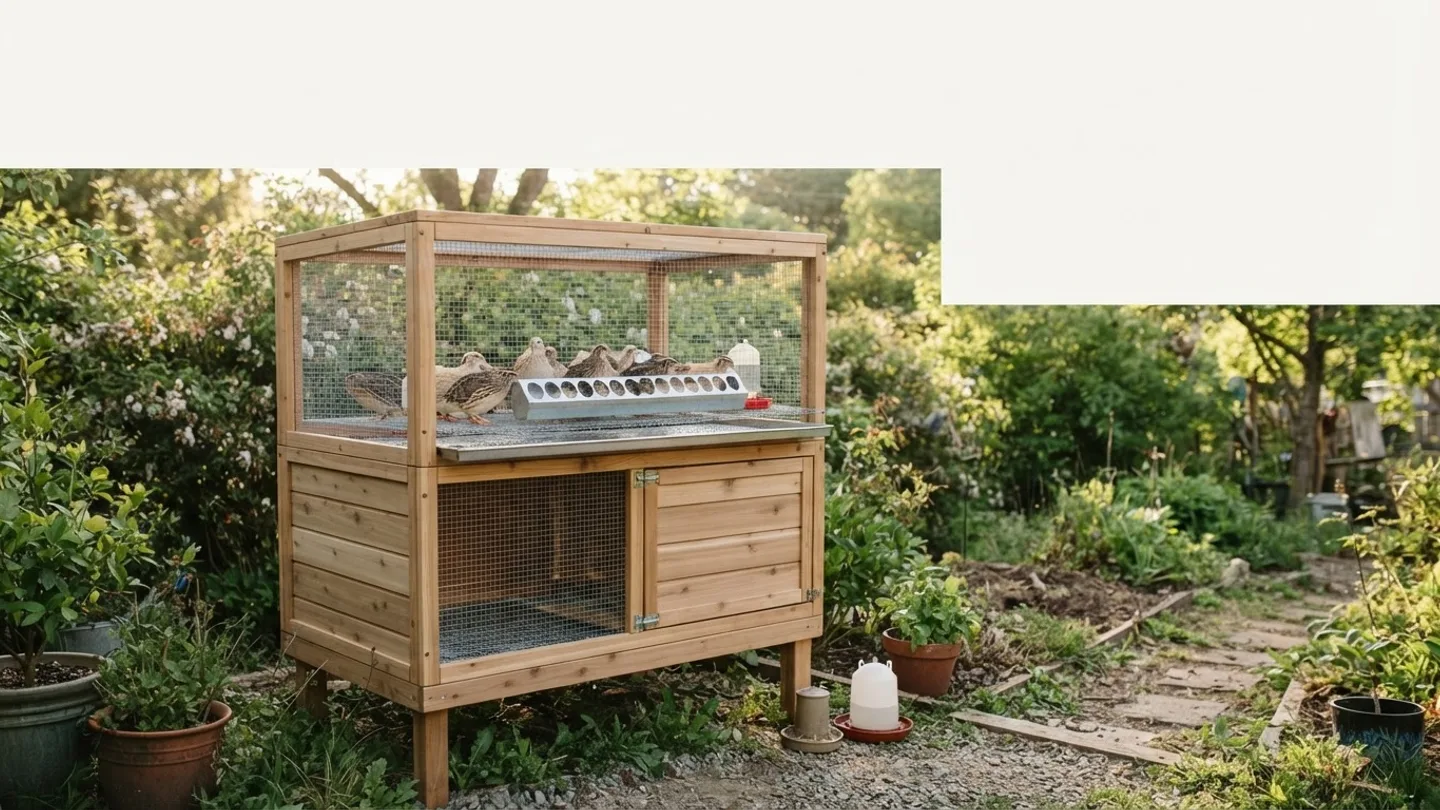
| Wood and wire hutch | About 1 square foot | 12 to 16 inches, with a solid or soft top | Wire, solid litter, or a shallow tray | Wire is quick to scrape. Solid floors need fresh litter before ammonia builds. | Backyard keepers who want weather cover and a quieter cage |
| Aviary | At least 2 square feet | Keep the top area covered and bounded, with no hard wire left open for a panic jump | Solid floor with litter, or a large tray | More floor area means more droppings to clean. Rotate litter and check shade. | Display birds, enrichment, and keepers who can spend time on floor upkeep |
| Ground pen | At least 3 square feet | Top cover or fence high enough to stop escape, usually at least 24 inches | Soil, grass, or deep litter | Needs moving, raking, or replacement litter. Wet ground is a health problem. | Small acreages with mild weather and strong predator proofing |
Wire floors versus solid floors
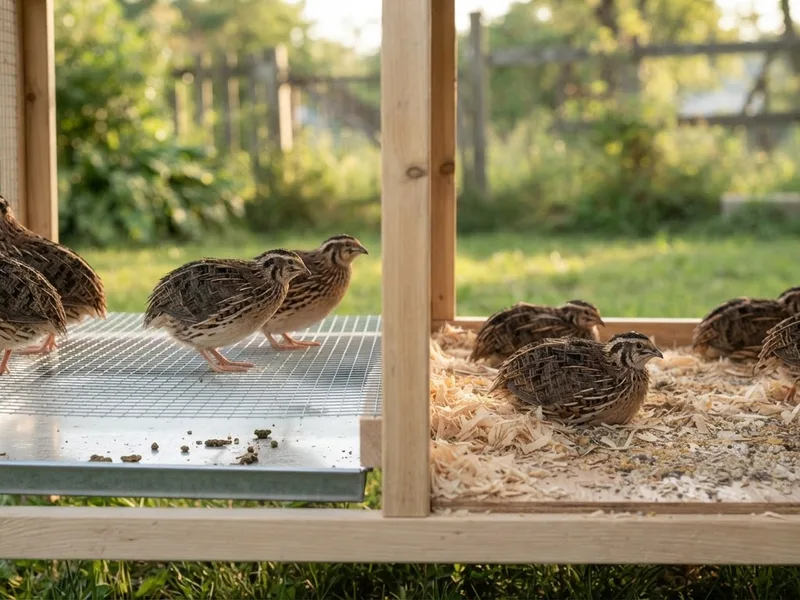
Wire floors are the workhorse choice for a quail cage because the droppings do not sit with the bird. A tray you pull out under a wire floor turns daily cleaning into a slide, dump, rinse habit. That is good for egg flocks, good for summer, and good for anyone who hates litter. The tradeoff is that the floor is not soft.
Solid floors are gentler on feet and can hold eggs better. They also show moisture quickly. When litter gets damp, bacteria and flies follow. If you use a solid floor, give the birds a dry resting ledge and scoop or replace litter as soon as it turns clumpy.
Half inch by one inch wire is a common backyard compromise. It is large enough to let droppings through, small enough for many adult feet to clear without slipping through, but it still needs a level slope and a tray that does not wobble.
If a bird has sore feet or bumblefoot, a foot infection, get help from an avian vet, a bird specialist. Changing the floor after an injury is helpful, but it is not a substitute for proper care.
Floor space calculator
Floor area needed
A cheap DIY quail cage
Start with a box or crate
Use a sturdy storage tote, a small animal cage, or a wood crate. Drill or cut openings for ventilation, then cover every opening with hardware cloth, the welded wire mesh that is stronger than chicken wire.
Set the ceiling before the birds move in
Keep the usable jumping space around 10 to 12 inches. If the box is taller, add a solid lid or a soft cover high enough to stop a jump, but low enough that a bird cannot hit a hard edge at speed.
Choose a floor you can clean
For a wire floor, use half inch by one inch hardware cloth or small animal cage wire with a tray below. For a solid floor, line the bottom with a litter pan and keep the feeder and waterer off the wettest spot.
Build the door big enough to reach
A hinged front with latches is better than a tiny flap. You need to remove the tray, refill water, and catch a nervous bird without breaking the top.
Check for the quiet mistakes
Look for rust, splinters, sharp mesh edges, gaps around the lid, and drafts that blow across the litter. Before adding quail, run water over the tray, wipe the floor, and test that nothing wobbles.
Common quail cage questions
How many quail can fit in a 2 by 2 foot cage?
A 2 by 2 foot cage has 4 square feet. For adult Coturnix, that is about 4 birds as a starting number. If you plan to keep them longer than a few weeks, add space or use a floor tray you can clean daily.
Can I use a rabbit hutch?
Yes, but treat it as a frame, not a finished quail cage. Check the mesh size, add a low cover inside if the hutch is tall, and make sure droppings do not pile around the birds. A rabbit hutch may need a new tray or floor insert.
Do quail need a nest box?
Laying hens will often lay on the floor. A small nest area can make egg collection tidier, but a solid box with litter is enough. If the floor is wire, a covered nest corner helps keep eggs from bouncing through the mesh.
Should I keep quail outside?
Only if the pen or hutch is dry, shaded, storm safe, and predator proof. Quail are small, so predators do not need a big opening. Check local rules with city hall or your HOA before building a permanent outside setup.
What should I do if the floor smells like ammonia?
Clean it now. Damp litter, poor ventilation, and droppings under waterers are the usual causes. If the air still burns your eyes or the birds look weak, remove them to a dry place and consult an avian vet, a bird specialist, or your state veterinarian.