How to Predator-Proof a Duck Coop and Run
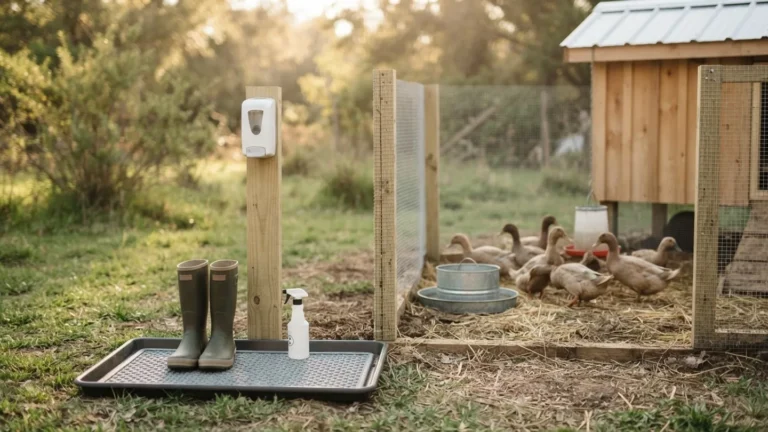
Most duck losses are boring, preventable failures: chicken wire, an unlatched door, a run with no top cover, or a flap that raccoons learned by watching you open it. Ducks can sleep, swim, and keep laying for years if their house and run are built to stop the animals that share your yard. This guide puts the build rules first, then the cheap fixes you can do this weekend.
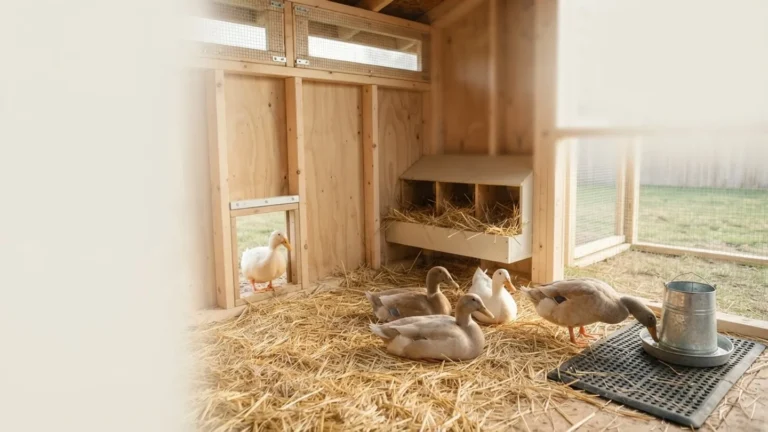
You may already have a duck coop that works for weather, or a brooder outside for young birds. Predators do not care how cute your Pekin is or whether your quail are for eggs or meat. They care about easy entry, weak latches, and soft ground under a fence. If you are adding ducks to an existing chicken setup, expect different mess and water habits.
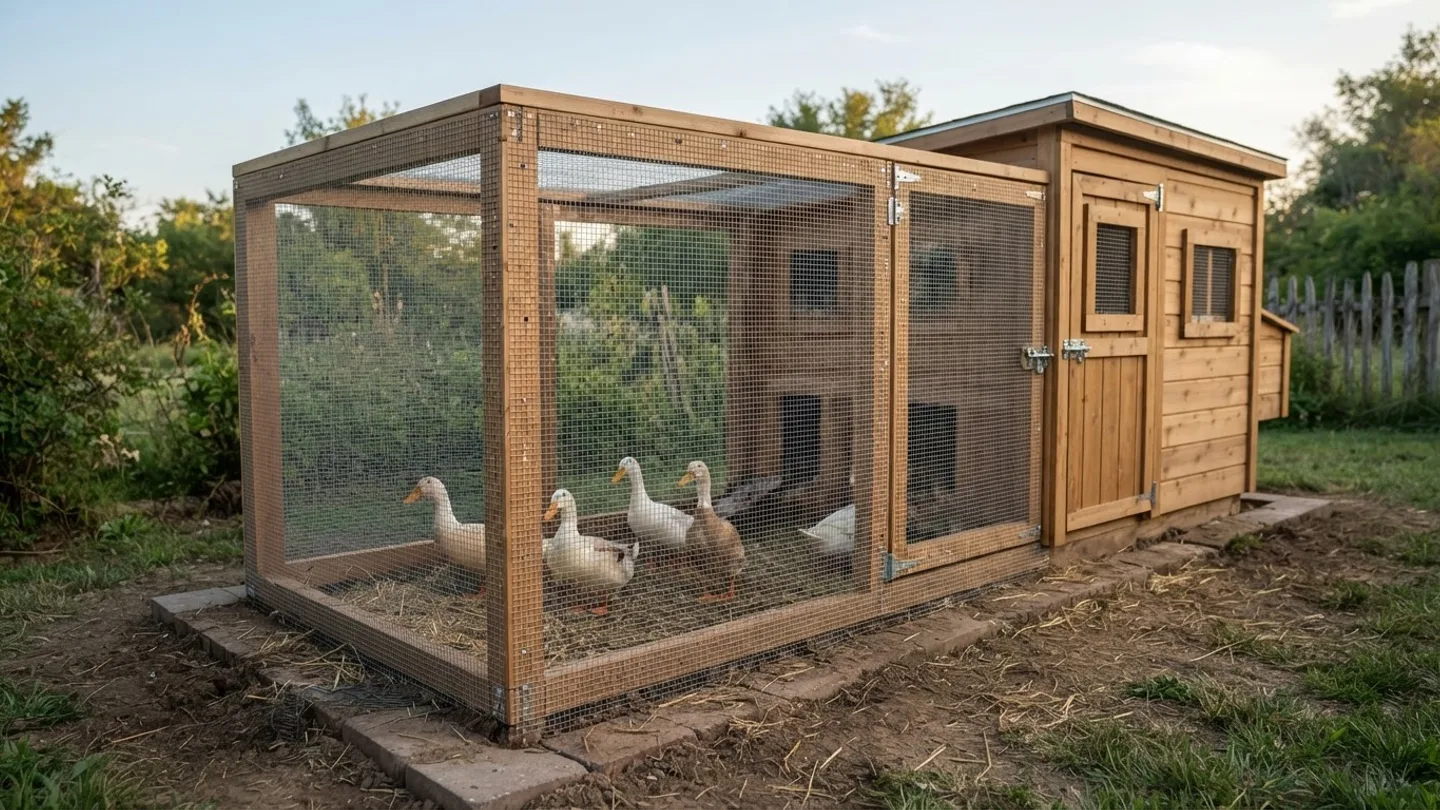
Read the rules before buying. A 1/2-inch hardware cloth fence, a buried or weighed apron about 12 inches out, strong latches, covered run space, and nightly lock-up cover most backyard duck problems. If you need to improvise, choose the fix that closes the gap the animal uses.
In this guide: how to predator proof a duck coop and run, from fence cloth and aprons to latches, run cover, and nightly lock-up fixes
The rules before the build
- Replace chicken wire with 1/2-inch hardware cloth on fences, sides, vents, and run cover.
- Add an apron about 12 inches out along the fence base. Bury it if you can dig, or weigh it if you cannot.
- Use raccoon-proof latches. Two simple latches are better than one, and a carabiner over a staple helps.
- Cover the run from above, but leave some shaded roofed space for the ducks.
- Lock birds in every night, and make closing the coop as routine as feeding.
- Remove cover and spillage. Tall grass, brush piles, spilled feed, and wet mud attract rats and the predators that follow them.
What a duck predator problem usually looks like
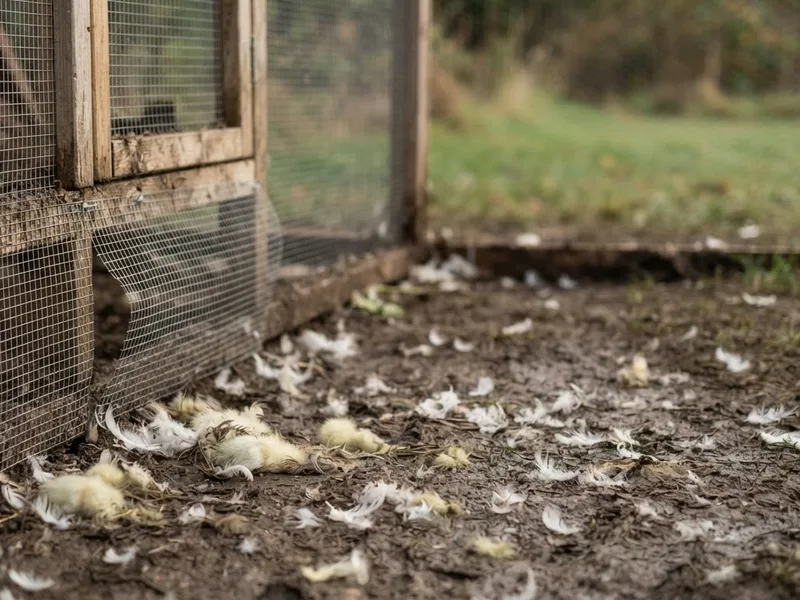
Ducks are not always the quiet, easy bird people expect. They can fly, waddle, splash, and sleep wherever it feels safe. That means a predator can find weak points you never planned for: the gap between boards, a door that closes but does not latch, a wire fence with holes big enough for a raccoon to pull apart, or the ground line where fox and dog can dig.
Raccoons are the most common latch problem. A raccoon that has learned your coop can be patient. It does not need super strength. It needs a flap that opens, a slide bolt that lifts, a door that is only hooked, or wire it can bend. Foxes and coyotes often exploit the fence base. A dog may simply tear through flimsy wire, especially if it knows birds are inside.
Hawks and crows are more of a daytime nuisance for small ducks and ducklings. A duckling brooder near the edge of a yard can be picked off if it has no solid cover. Muscovy can be more wary and may perch, so they can reach ledges, roof edges, and weak wire that ground birds never touch. See Muscovy Ducks for how their habits change the build.
Your job is not to make the yard beautiful or perfect. It is to make the coop and run less interesting than the rest of the property. A duck house that is boring to a raccoon and hard for a fox is a duck house that works.
Build rules that stop most backyard losses
Use 1/2-inch hardware cloth, not chicken wire
Chicken wire is not a predator barrier. It is light, floppy, and has holes big enough for many animals to grab or chew through. Use 1/2-inch hardware cloth on the fence, coop vents, run sides, and any opening that birds or predators could reach. Staple or screw it with fender washers so it stays flat. If a predator can pull it apart, it is still a gap.
Make an apron about 12 inches out
The bottom line of a fence is where digging animals win. Run a strip of hardware cloth about 12 inches out from the base, either buried in shallow ground or held with rocks, pavers, or a weighted channel. The point is simple: a fox or dog hits wire before it gets dirt. If you cannot dig, weight it instead.
Lock the run from above
A covered run is not optional. Raccoons climb, dogs can jump, and birds of prey come down. Cover the whole run with solid roof, sturdy hardware cloth, or a netting frame that predators cannot reach from outside. If you use netting, keep it tight and off the ground so a dog cannot tear it.
Put latches where raccoons cannot solve them
Use a latch a raccoon cannot lift or slide with its front paws. A carabiner clipped over the staple and latch handle helps. A second simple latch at the opposite end is cheap insurance. Do not trust a door that closes by weight alone.
Close up vents, gaps, and old wire
Walk the coop with the birds out, crouched low, and look for daylight. Close vents with hardware cloth, not mesh that a raccoon can tear. Seal gaps around boards, under roofs, and where the floor meets the wall. If you see the world through the coop, a predator may see the ducks.
Lock birds in every night
The best fence fails if the birds are outside at dark. Herd or guide ducks into the coop before dusk, then close the pop door and run gates. If you are away, a dependable automatic door or someone you know should close the door. Do not leave ducklings in a flimsy brooder outside unattended.
| Problem | Cheap fix | How it works | Watch out |
|---|---|---|---|
| Chicken wire fence | Add 1/2-inch hardware cloth over it | Stops claws, pulling, and easy tearing | Attach with washers or screws so the cloth stays tight |
| Digging under the fence | Run an apron about 12 inches out | Forces the animal to hit wire at ground level | Use pavers, blocks, or a weighted channel if burial is not possible |
| Raccoon opening the latch | Use a carabiner plus a second latch | Makes the latch less obvious and harder to lift | Do not make the door so complicated that you skip using it |
| Open run top | Cover with solid roof or taut hardware cloth | Blocks climbing animals and overhead attack | Keep enough shade so ducks are not cooking in summer |
| Tall grass and brush piles | Mow and clear cover near the coop | Removes ambush spots and hiding places | This helps, but it is not a replacement for strong wire |
| Spilled feed and wet mud | Keep feed stored under a tight lid and dry the spill zone | Reduces rats, mice, and the predators they attract | Check bins and waterers often. Ducks can move feed and water around fast |
Run layout, water, and habits that matter
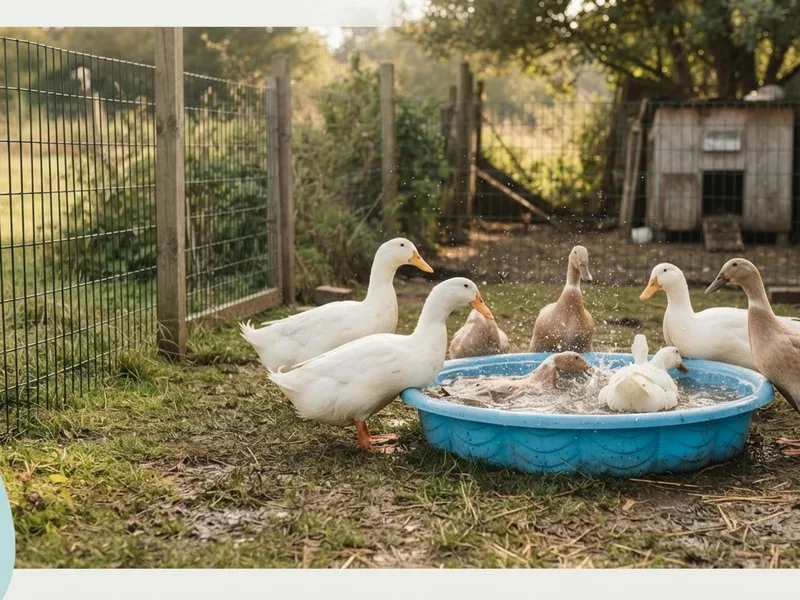
Duck runs get wet. That is not a flaw to argue with, it is a feature of keeping ducks. A predator fence that runs through constantly muddy ground will sag, rust, and settle if it is not supported at the base. Keep the main walking path, feeder, and waterer on the driest side of the run. Use deep litter or gravel where water spreads.
Water attracts predators indirectly by bringing rats and small rodents. It also gives ducks a place to splash, which is good. The trick is to put the water where you can clean it, not where it turns the fence line into soup. If your waterer spills onto hardware cloth near the ground, the mesh can be weighed down or pulled away by mud and ice.
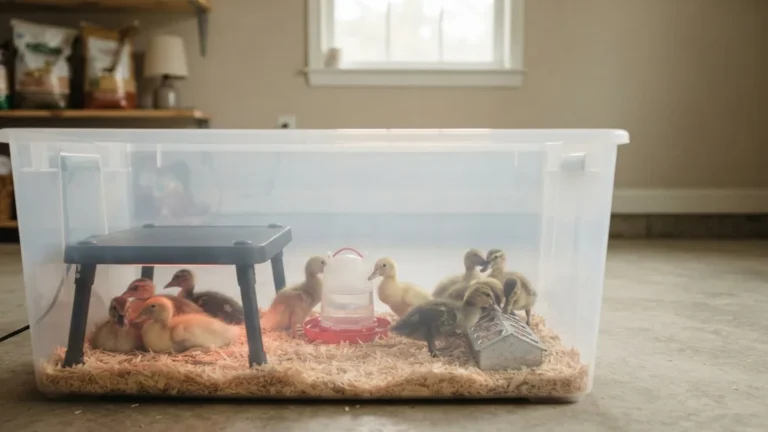
If you use a kiddie pool or a low tub, place it away from the fence. If you use a storage tote brooder for ducklings, keep it shaded, dry, and inside a predator-safe box or run until the birds are large enough for the main flock. A brooder on the ground can be tipped, chewed, or reached by a cat through a lid that is only laid on.
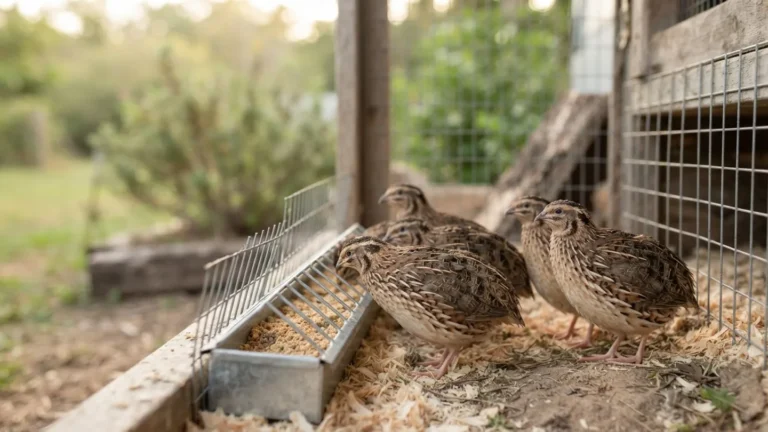
For quail, the same idea applies, but the space is smaller and the birds are easier to overlook. If you are keeping a quail flock, use quail cages and hutches with secure wire and covered floor openings.
Questions from new duck keepers
Do I still need a predator-proof run if my ducks free-range?
Yes, if the ducks are left outside at night. Free-ranging by day does not protect them after dark. If you bring them into a secure coop every night, the run can be simpler, but the coop and fence base still need hardware cloth and good latches.
Can a duck coop be too covered?
A fully solid roof can get hot in summer and can trap ammonia if ventilation is poor. Use a covered run with some open-sided ventilation or shaded, roofed space. The goal is predator cover, not a sealed box.
What is the cheapest way to fix a weak wire fence?
Overlay it with 1/2-inch hardware cloth and run an apron about 12 inches out along the base. That is usually more effective than trying to patch holes or bend old wire back.
What if a predator attacks?
Move healthy birds to a secure location first. Check injured birds gently, and contact an avian vet for wounds or signs of infection. If many birds are dying or you suspect disease, contact your state veterinarian or a local poultry resource for advice.
Are traps or electric fencing allowed?
Rules vary by city, county, and HOA. Before using traps, bait, or electric fencing, check local regulations with your city hall, county office, or HOA. Do not use methods that risk ducks, pets, children, or wildlife you did not plan to catch.
How do I stop rats without harming the ducks?
Store feed under a tight lid, clean spilled grain, keep water spillage away from fence lines, and check the coop for old feed or bedding that rats can use. If you need stronger control, follow local guidance and keep bait away from ducks and pets.