How to Tell If Ducks Are Male or Female
You want to know which ducks are drakes and which are hens before you plan a flock, buy feed by type or decide whether a bird might lay eggs. A drake is an adult male duck, and a hen is an adult female duck. The honest answer is that there is no single magic feather. You get more reliable results by comparing voice, tail curl, bill color and breed-specific plumage.
If your ducks are young or white, expect uncertainty. Many mixed white breeds look the same until they start to vocalize, grow a curled tail or deepen in bill color. If you need certainty for a breeding pen, a hatchery claim, or a local rule that limits drakes, contact an experienced sexer, your hatchery or an avian vet instead of making a guess at the coop.
Keep this in the coop, not in the shopping cart. If you are thinking about adding another duck because one bird seems different, read ducks as pets first. Ducks are flock birds, and adding birds can turn a small guessing problem into a bigger care problem.
Key takeaways
- Adult ducks are best sexed by combining clues: voice, tail curl, bill color and breed-specific plumage.
- Hens usually quack loudly. Drakes often rasp, but some drakes are loud and some hens are soft.
- A curled drake tail feather is useful, but not reliable by itself, especially in young birds or white breeds.
- Bill color helps in some breeds and misleads in others, so check the breed before trusting it.
- If the answer affects local rules, breeding plans or a purchase guarantee, get a professional opinion instead of guessing.
Female ducks quack, drakes rasp, but listen for the breed difference
When you are trying to tell if ducks are male or female, the voice is often the easiest adult clue to trust. A hen usually gives a loud, repeated quack that can carry across a yard. A drake often has a quieter rasp, wheeze or breathy sound. Some drakes are very loud, and some hens are softer, so compare birds side by side when you can.
Listen after the flock has settled, not when one duck is barking for food at the door. Stand a few feet away and let the birds talk. If one bird makes a low raspy sound while others answer with clean quacks, you may have a drake. If one bird quacks loudly while others give softer sounds, that bird may be a hen. Both behaviors can be breed-specific.
For Mallard-derived breeds such as Pekin, Khaki Campbell, Indian Runner, Rouen and Swedish Blue, voice clues usually become useful around 16 to 20 weeks. Muscovy ducks can be noisier than you expect, so use voice with size, tail and face clues. If your flock is too young to talk much, wait. You can still use plumage and behavior clues, but they are weaker.
A simple check order
Wait until the birds are near adult
Most adult clues are unreliable before 16 to 24 weeks, especially in young ducklings.
Listen when the flock is calm
Give yourself 5 to 10 minutes and hear what the birds sound like without food or noise competing with them.
Watch the tail and bill
Check for a curled tail feather and note bill color, but only after confirming that your breed can show those clues.
Compare two or three clues before calling it
If the clues disagree, call the bird uncertain and keep a record instead of forcing an answer.
| Breed | Strongest adult clues | Common confusion |
|---|---|---|
| Pekin | Hens usually quack loudly. Drakes often rasp, show a curled tail and may have a deeper orange-yellow bill. | All white hides head and body color differences, and young drakes may not have a tail curl yet. |
| Mallard | Drakes often have a green head, yellow bill and curled tail. Hens usually show mottled brown plumage. | Young drakes can be drab, and some hens have bright bill spots. |
| Khaki Campbell | Hens usually have a loud quack. Drakes may show a faint green head sheen, a darker bill or a tail curl. | Both sexes can look khaki brown from a distance, so voice is often the best clue. |
| Indian Runner | Drakes often rasp and may show a curled tail. Hens usually quack more strongly. | Upright posture is not a sex clue, and bill color may be subtle. |
| Swedish Blue | Drakes may have a greener head sheen, a larger bill or a curled tail. Hens often have a louder quack. | Solid blue plumage can look similar, especially before the birds are fully colored. |
| Buff | Tail curl and bill color can help. Voice is usually the more useful clue. | Both sexes can be buff, and a messy tail does not prove sex. |
| Muscovy | Drakes are usually larger, have fleshy face bumps called caruncles and often show a broad curled tail. Hens are smaller with less face decoration. | Both sexes can be noisy, and some females look scruffy. |
| Rouen | Drakes may have a green head, yellow bill and tail curl. Hens usually have mallard-like brown plumage. | Young drakes can be drab, and some hens have darker bill spots. |
The tail, bill and plumage clues need a breed check
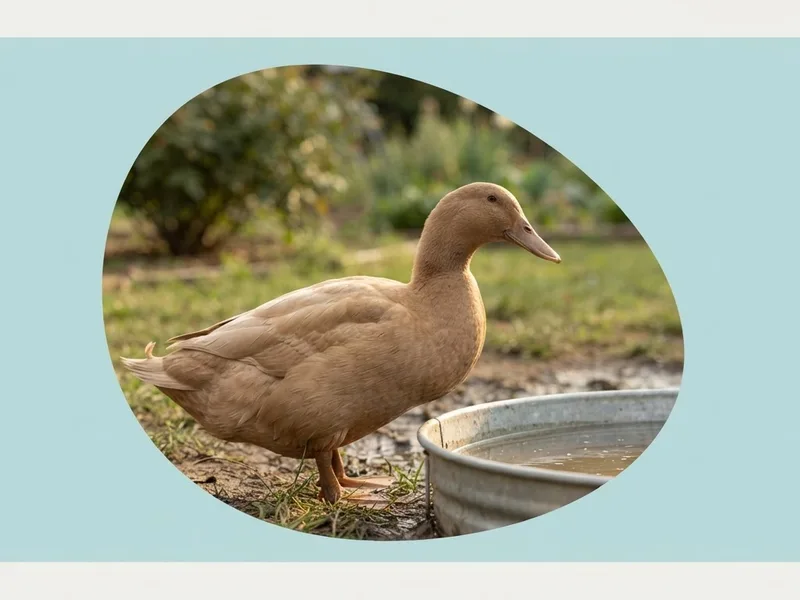
A curled tail feather is a classic drake sign in many breeds. It is a long, curved central tail feather or feathers. You can see it better when the duck stands straight or preens. The problem is that some hens have rough tail feathers, some young drakes do not have a curl yet, and some breeds never show the curl as clearly as a Mallard does. A tail curl is a clue, not a certificate.
Bill color can help in some breeds and mislead in others. In many Pekins, a drake may have a deeper orange-yellow bill while a hen has a paler yellow bill. In Mallards, drakes often have a bright yellow bill, while hens may have an orange or spotted bill. In Khaki Campbells and Buffs, the bill difference can be subtle. In Muscovies, face and bill features matter more because both sexes can be large and colorful.
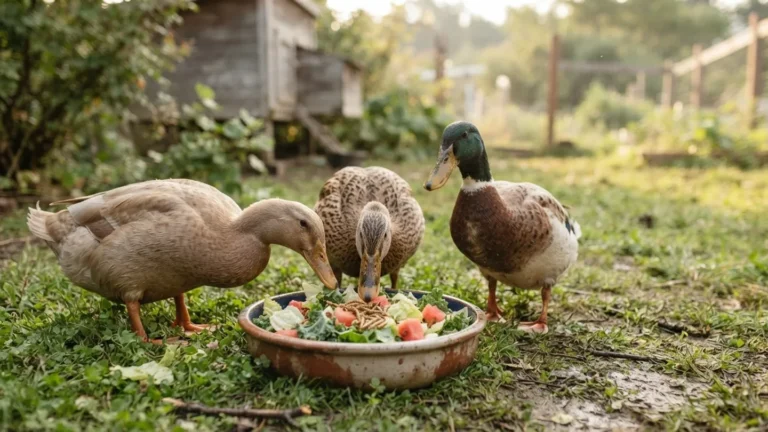
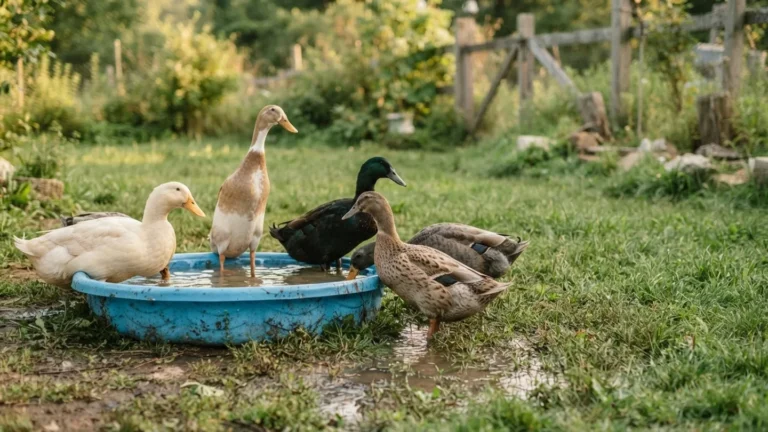
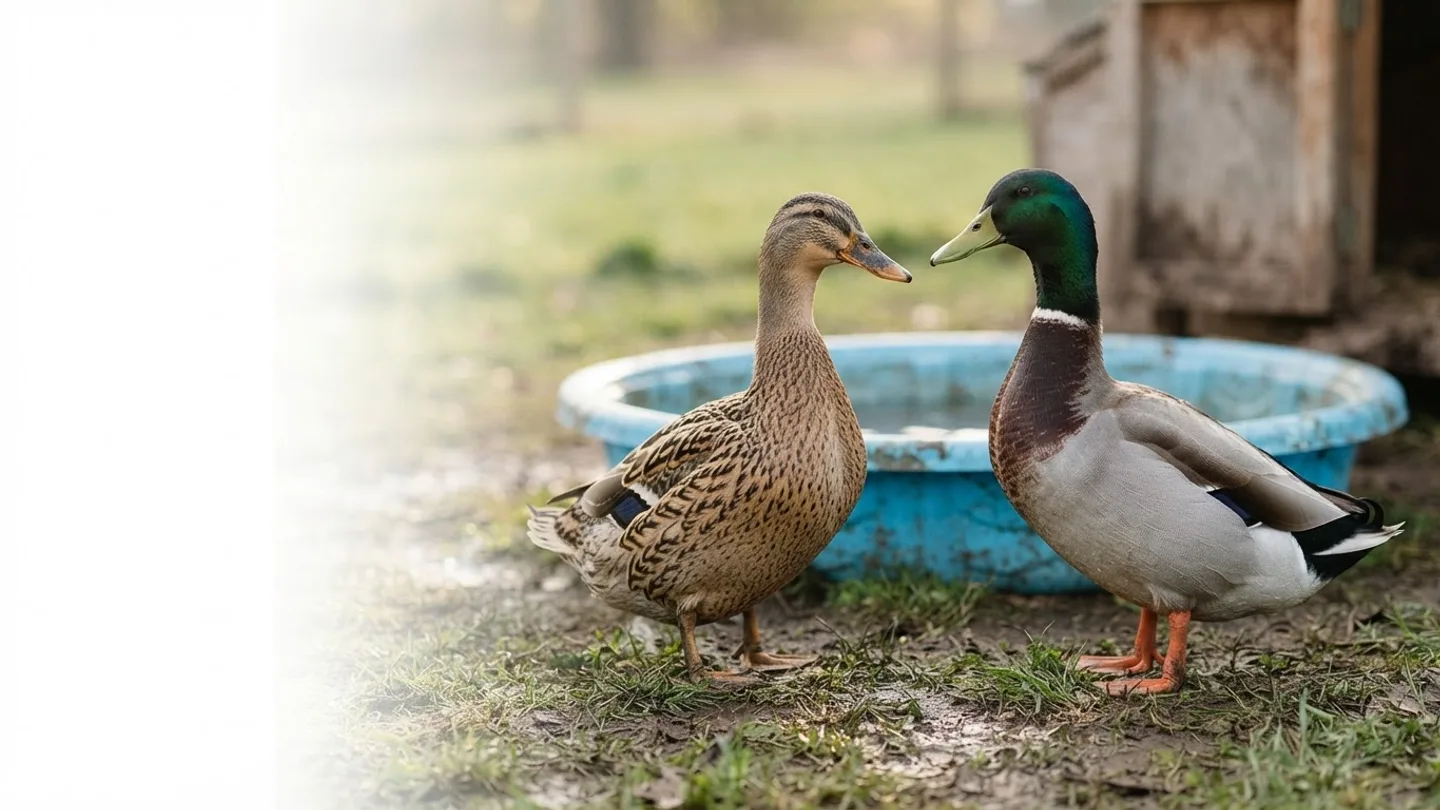
Plumage is easiest in breeds with visible differences. A Mallard drake shows a green head, and the hen shows mottled brown. A Rouen drake may look more colorful than the hen. In white or solid colored breeds, plumage may say nothing. Use the breed table before you assume a color means male or female.
Behavior can support the answer, but it does not replace it. A drake may mount hens, chase them, or look more assertive. Too many drakes for the number of hens causes trouble, especially around breeding season. A good working ratio is about one drake to four to five hens if you want to keep stress manageable. If one bird looks lonely, remember ducks are flock birds. One duck kept alone is a bad idea.
Common questions about telling ducks apart
Can you sex ducklings at home?
Not reliably. Vent sexing is a hatchery technique that looks at the opening near the vent. It is not a beginner backyard task. If you bought ducklings, wait for voice, tail curl and adult coloring.
How early can you tell if a duck is male or female?
Many backyard keepers start seeing useful voice clues around 16 to 20 weeks. Tail curl, bill color and adult plumage may continue developing through 24 to 28 weeks, depending on the breed.
Can a drake lay eggs?
No. Only hens lay eggs. If you want eggs, you need hens. A drake may make eggs fertile if hens are present, but it does not turn the drake into a layer.
Why do my white ducks look identical?
Many white breeds hide visual clues. Use voice, tail curl and bill color, then compare several birds before making a call.
Is it okay to keep three ducks together?
Three ducks can work if they get along. If two are drakes and one is a hen, the drakes may stress her. If you cannot tell the sex, keep them together for now, watch behavior and correct the record when a clue becomes obvious.
What if my city rules say drakes are not allowed?
Check your city ordinance, state rules or HOA language before you make a decision. If the rule depends on sex, get a professional opinion or ask the seller. Do not rely only on a backyard voice test, because hens can be loud too.
Use the answer before you buy another bird
Once you have a working answer, write it down. Mark the bird with a safe leg band, zip tie or flock record. If you are wrong, correct the record. Ducks are not like small impulse pet purchases; a mislabeled duck can live for years, and a guessing game can turn an egg plan into a pet plan.
If the result matters to your local rules, ask an avian vet, an experienced breeder or the person who sold the birds for a second opinion. If a drake is noisy, a noisy hen may still be the loudest bird. If a rule names drakes, do not rely on a backyard voice test.
If you still have young birds, follow how to care for ducklings week by week and give them time to grow. For color and breed expectations, see duck breeds. If you keep birds for eggs, you need hens. If you keep birds for pest control and fun, drakes can be fine, but they may be louder or more pushy than you planned. A bigger flock is not a smaller problem.