Duck Niacin: How Much Ducklings Need and How to Add It
Duck niacin is one of those small nutrition details that can decide whether a spring duckling grows steady or stumbles. Niacin is vitamin B3, a nutrient poultry need for healthy metabolism, growth, and strong legs. When the diet is short, ducklings may get weak in their legs before you notice anything else.
Most folks who brought home a box of ducklings are told to feed chick starter. That advice came from chicken logic, and ducklings are not small chickens. They need feed that fits their growth and their legs. A duckling bought on impulse in spring is still a bird that will need months of care, and a muddy brooder makes it easier to miss a leg problem.
This page explains what to look for on a starter feed, how brewer's yeast is used, and when a weak duckling needs an avian vet instead of another scoop of yeast.
What this covers: Duck Niacin: How Much Ducklings Need and How to Add It
At a glance: Duck Niacin: How Much Ducklings Need and How to Add It
- Ducklings need a reliable source of niacin, vitamin B3, because fast growth puts stress on their legs.
- Starter is the first complete feed for young birds, and a duck starter should be formulated for growth and niacin.
- A feed labeled for ducks or waterfowl is a safer starting point than plain chick starter.
- Brewer's yeast can be used only at a rate from the feed label, a state university extension office, or a vet.
- The main mistake to avoid is using plain chick starter as the only feed for ducklings and waiting to see if legs get worse.
- A duckling with leg weakness that cannot stand needs an avian vet, not more guesswork.
Why ducklings need more niacin than chicks
Chicks need niacin too, but ducklings tend to grow fast and carry more body weight early. A diet that barely works for a chick may not support a growing duck as well. Niacin matters because the legs are doing a lot of work, and a short supply can show up as weakness before you see a clean feather or two.
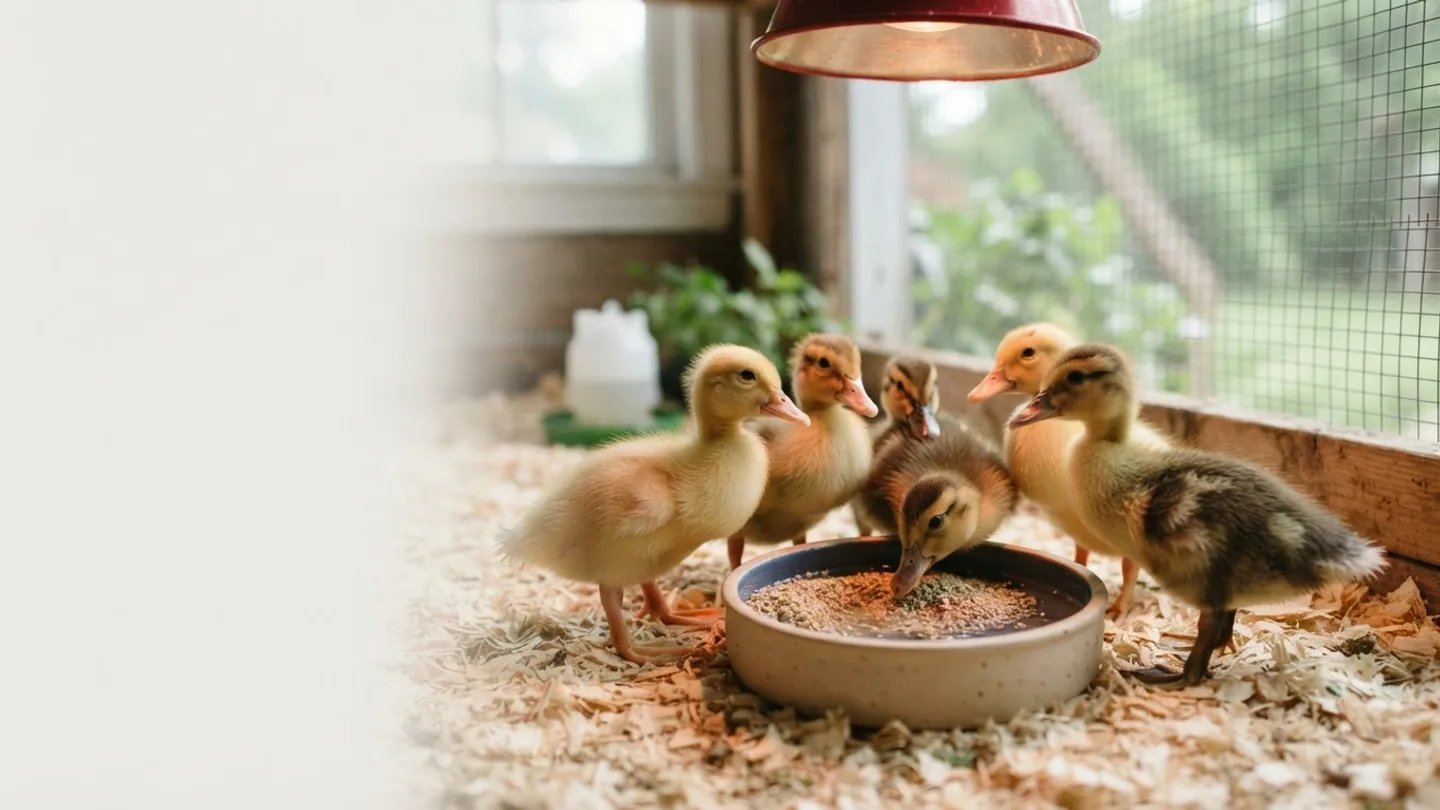
Ducklings also spend much of their day in a brooder, which is a warm indoor box with heat and bedding. If the floor is slick, feed is poor, or the brooder is too warm or cramped, you may blame nutrition first. Good duck niacin practice starts with a balanced starter feed and a safe brooder, then uses supplements only when the label or a vet tells you to.
For the bigger feeding picture, see the guide to what do ducklings eat. It covers feed change from starter to grower, and the difference between feeding for growth and feeding for laying.
| Option | Best for | What to check | Be cautious |
|---|---|---|---|
| Chick starter | Growing chickens | Whether the bag says ducklings may eat it | Do not assume it meets duck niacin needs |
| Duck or waterfowl starter | Growing ducklings | A statement that it is complete for ducklings and a nutrient panel that includes niacin | Still follow storage and feed change directions |
| All flock feed | Mixed flocks, only if the label supports ducks | Whether ducks, geese, or waterfowl are named | Do not assume chickens and ducks need the same nutrient levels |
| Home mixed ration | Only with guidance from a vet or state university extension source | A complete formula with stated vitamin amounts | Guessing can create both shortage and excess |
How to tell if a starter feed already supplies enough
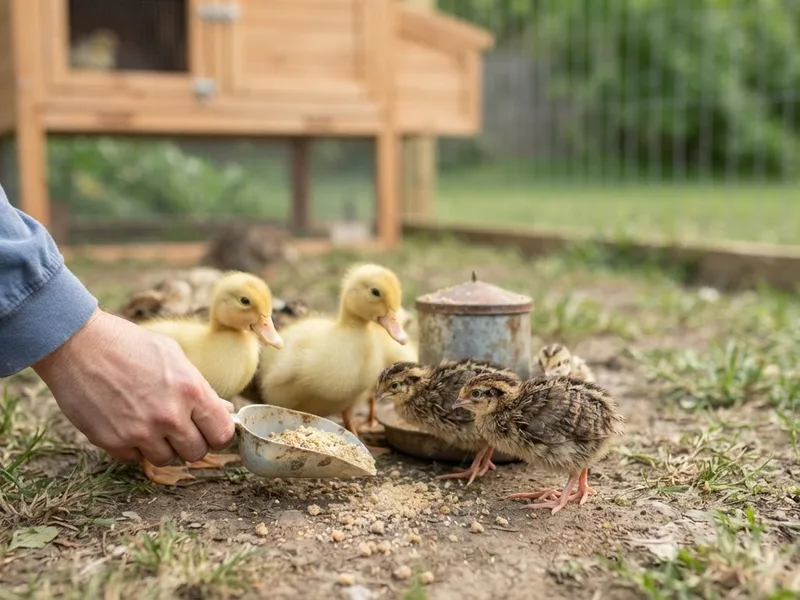
The easiest answer is to choose a feed made for ducks, not a feed made for chickens and hope. Look for waterfowl starter or duck starter. That tells you the feed company designed the bag for growing ducks, even if the bag does not highlight niacin in big letters.
On the bag, find the guaranteed analysis, the panel that lists nutrients such as protein, fiber, fat, and vitamins. If niacin is listed there, you have a stronger case that the feed is complete for ducklings. If it is not listed, do not panic, but ask the feed supplier whether the starter is safe for ducklings without an added supplement.
If your local farm store sells chick starter and duck starter, choose the duck starter. If you already bought a chick starter for chickens and now added ducks, switch the ducks to a duck starter as soon as the feed supply allows. For ducks and chickens together, feeding the same bag can be a compromise, and a duck-specific feed is usually the safer way to keep legs strong.
Safe way to add brewer's yeast for ducklings: find a rate, weigh feed, mix evenly, watch legs, and call a vet if the duckling cannot stand.
Find a rate before you start
Use the brewer's yeast bag, the starter feed company, a state university extension office, or an avian vet. If no rate is given, do not add it by feel.
Weigh the feed you will mix today
Use a kitchen scale and measure in pounds, not scoops, because scoop sizes vary and a small duckling ration is easy to overmix.
Calculate the amount
If your chosen rate is 5 percent of feed weight, 2 pounds of feed needs 1.6 ounces of brewer's yeast. Use the calculator below or do the arithmetic on paper.
Mix it evenly
Blend the yeast into a small amount first, then work it into the day's feed. A lump of yeast sitting on top is not a supplement. It is a waste, and a duckling may ignore it or eat too much of one bite.
Watch legs, growth, and stool
Keep the brooder clean and dry, because poor footing and dirty bedding can look like a nutrition problem. If the duckling cannot stand, stop adjusting and call an avian vet.
Brewer's yeast calculator by feed weight: convert a trusted percent rate into ounces for duckling feed.
Brewer's yeast amount oz
Early signs that need attention
The first sign is often a duckling that looks wobbly while trying to eat or drink. You may see legs splaying outward, which means the legs cannot hold the body under it. Another sign is bowing, where the legs curve instead of standing straight. A duckling may also grow slowly, seem tired, or refuse to move.
Do not stop at one sign. A niacin shortage is common enough to ask about, but weak legs can come from several things: slipping on newspaper or smooth flooring, overheating in a brooder, an injury, a genetic problem, infection, or a diet that is too rich or too poor. Check the duckling brooder first: a mat with grip, dry bedding, and a proper temperature make nutrition work. The week by week guide gives brooder temperatures in degrees Fahrenheit.
A duckling that cannot stand is not a home experiment. Call an avian vet, a veterinarian who treats birds, or go to an emergency veterinary clinic that sees birds. If several ducklings show the same sign, contact your feed supplier and a state university extension office or avian vet promptly, because a batch or a feeding mistake can affect more than one bird.
If you found a wild duckling, this advice does not fit. Wild birds need different care and local wildlife rules. Send the question to a licensed wildlife rehabilitator instead of feeding them backyard duck feed.
Common duck niacin questions for backyard ducklings and starter feed
Does every duckling need brewer's yeast?
No. A complete duck or waterfowl starter should be enough for many ducklings. Add brewer's yeast when the feed label, a state university extension office, or a vet gives a rate, or when you are feeding a non-duck starter that may be low.
Can I use human yeast flakes instead of brewer's yeast?
Not as a simple swap. Brewer's yeast for feed is sold with poultry feeding rates. Human yeast flakes may have a different nutrient profile and no feed rate. Use the product and rate written on the label, or ask the source that recommended it.
Is too much niacin harmful?
Vitamins are not a free pass. Too much can waste feed, hide a real leg problem, and may create other nutrient imbalance issues. Use a stated rate and stop supplement guessing if the duckling is weak.
How long until you see a change?
If the problem is a mild feed shortage and the bird can still stand, owners may see improvement after switching to a proper duck starter and giving the correct mix, but timing is not guaranteed. If the duckling cannot stand, see an avian vet same day.
Do all duck breeds need a niacin supplement?
No, but they all benefit from a duck-specific starter. Some breeds grow faster and may need a stronger leg-support plan, which is why the bag and your vet matter.