Signs of a Sick Duck and What to Do
A sick duck does not always announce itself. Ducks are good at hiding weakness, so by the time one stands apart, ruffles its feathers, and misses the water, the problem may have been building for a day or more. If you keep a few ducks in the yard, you are probably the best person to notice a change in appetite, gait, droppings, or breathing.
This guide is for backyard keepers dealing with a sick duck in a small flock, whether it is an impulse spring duckling grown into an adult or an established layer. It does not try to diagnose anything. It helps you spot warning signs, isolate safely, make the call to an avian vet, and know when to reach your state veterinarian for sudden deaths.
Keep it practical. A phone call or early visit is usually cheaper and calmer than waiting to see what happens. If you want honest flock advice before you add more birds, start with a sober look at ducks as pets.
When to call an avian vet
- Trouble breathing, such as open mouth breathing, a stretched neck, wheezing, gurgling, or gasping. Call the same day.
- Sudden weakness, collapse, inability to stand, a twisted neck, or circling. Do not wait it out.
- No food or water for about 24 hours in an adult duck. Call sooner for ducklings or a duck that has just been moved.
- Swollen eyes or face, discharge from the nose or eyes, or a strong foul smell in the nest.
- Bloody, very green, or watery droppings, especially with lethargy, which means a lack of energy.
- A limp, a hot swollen foot, or a wound that is not improving. If you see a sore on the foot, that may be bumblefoot, a common foot problem.
- A bird that dies suddenly, or more than one bird that looks sick.
- A sick duck kept near healthy birds when you cannot isolate it. If you need help with housing, review your coop setup before adding temporary pens.
Common signs of a sick duck
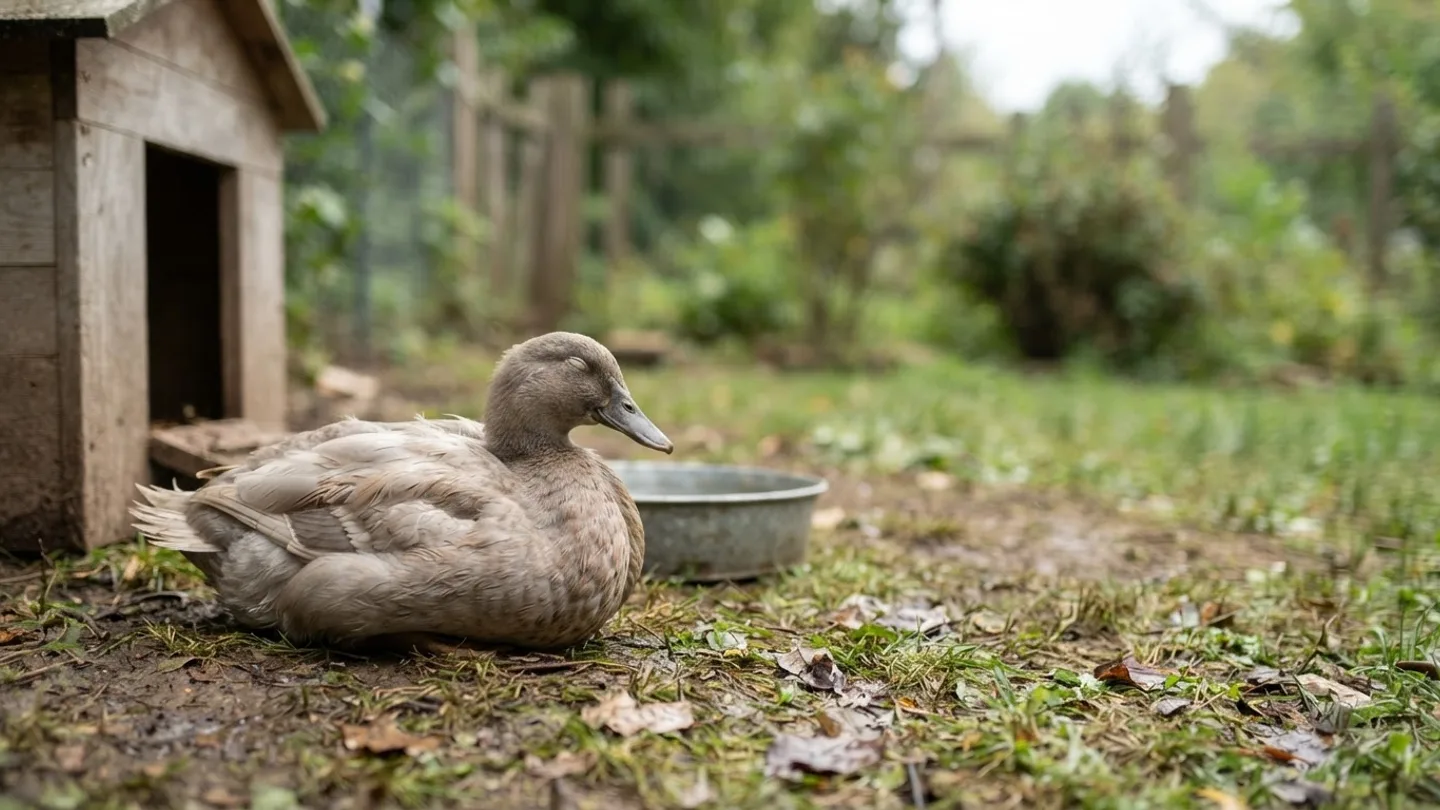
Start with the whole bird, not just one symptom. A healthy duck usually moves, eats, drinks, swims, preens, and responds to you. A sick duck often shows a change in energy first. It may sit apart, keep its eyes closed, puff up for a long time, or refuse to join the others.
Tail bobbing can mean several things. In some birds it is normal while laying, but in a duck that looks off it can signal discomfort, a respiratory problem, or nerve trouble. If tail bobbing comes with labored breathing, discharge, or imbalance, treat it as a warning sign.
Watch food and water. A duck that ignores food for most of a day may be stressed, ill, or blocked. If you have recently changed feed, check the basics in what do ducks eat. If the bird also stops drinking, that is more urgent because dehydration can worsen quickly.
Look at droppings without touching them. Normal duck droppings can be loose and green because ducks eat grass, so a single odd pile is not a crisis. The warning signs are repeated watery or bloody droppings, droppings that smell sharply wrong, or a wet, messy vent, the rear opening, where feces stick to feathers.
Legs and feet matter. Limping can come from a stone, a rough floor, or a foot sore. If a duck holds a foot up, has a swollen pad, or avoids swimming, that needs attention. Bumblefoot is a sore on the foot that can get worse fast if the surface is dirty or sharp.
Wings can mislead you. A bent or outwardly angled wing in a growing duckling may be angel wing, a developmental problem. It is not usually the same as a sudden limp in an adult, but it can make a bird look off balance. See angel wing if you are seeing this in young birds.
Listen for breathing changes. A duck that stretches its neck up, breathes with open mouth, makes clicking sounds, or seems tired after a short walk may have a respiratory problem. Do not keep it in a dusty coop or near smoke from a heater.
Check the head and eyes. Puffy eyes, crusty feathers around the vent, discharge from nostrils, or a swollen face can indicate infection or irritation. Keep your hands gentle. Do not probe deep into a nostril or force water into a duck's mouth unless a vet tells you how.
A quick plan for a sick duck
Observe before you touch
Sit nearby and note posture, breathing, droppings, feet, wings, and whether the duck eats when others do. A short phone video of a wobbly gait or tail bobbing can help an avian vet more than your memory after a busy day.
Isolate the sick duck
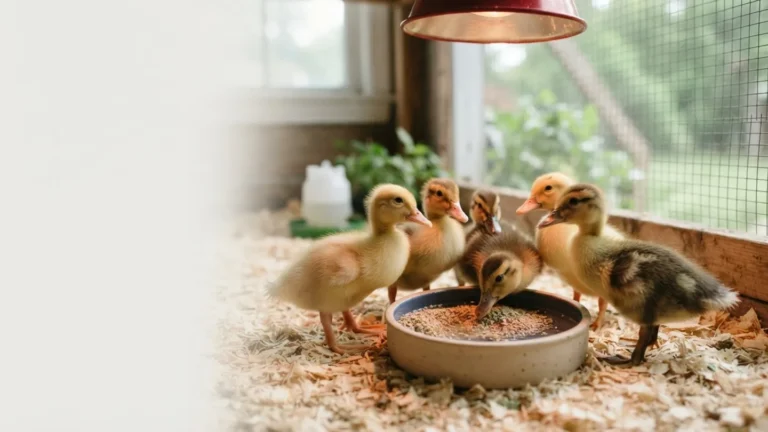
Move it to a clean pen, carrier, or separate run that healthy birds cannot enter. If it is a duckling, keep the brooder warm and dry; follow the [heat lamp](heat-lamp-for-ducklings) guide for safe temperature, but remember heat is supportive care, not treatment.
Remove risk, not warmth
If the duck is outside in rain, wind, or heat, bring it under cover. Give shade if hot, dry straw or paper if wet. Do not put a soaking bird in a cold draft, and do not leave it in a bucket with no footing.
Offer easy food and water, but do not force it
Fresh water shallow enough to drink, not drown in, is the priority. Plain feed and easy greens are safer than guessing with human medicines. Do not pour liquid into the bill, because it can enter the air passages instead of going down the throat. If the duck will not drink, call an avian vet before trying more.
Write down what you saw
Make a simple note: date, number of birds affected, symptoms, feed change, recent weather, pond access, new birds, and any injuries. This list helps the vet or state veterinarian decide what may be going on.
Call early
If signs are serious or last beyond a day, contact an avian vet. For ducklings, call sooner. If many birds are sick, stop visitors, separate groups, and follow the flock-wide steps below.
Isolation and biosecurity
A sick duck can be isolated without fancy equipment. A dog crate, stock tank, storage tote, kiddie pool pen, or a small corner of a dry garage can work for a short time. The key is a clean, dry area with easy water, good footing, and no access to the main flock. Use hardware cloth if you need to make a temporary barrier.
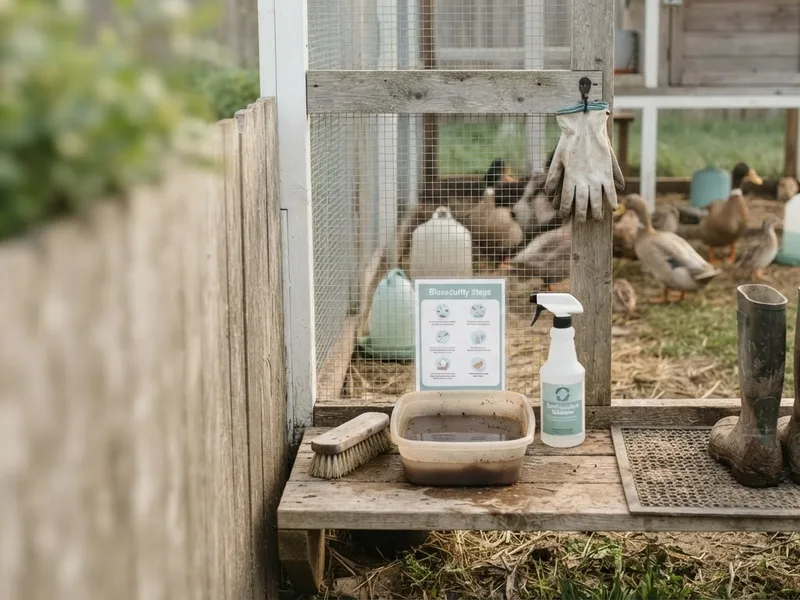
Do not use the same waterer, feeder, or net for sick and healthy birds. Germs move on hands, boots, droppings, and shared surfaces. If you touch the sick duck first, then handle healthy ducks, you may have spread the problem.
Biosecurity is a calm set of habits: keep shoes used in the run out of the house, put spare boots by the door, wash hands before eating, and do not move equipment between groups. It is not a fancy lab word. It is what stops one sick bird from becoming a messy weekend.
If you recently added birds, treat it as part of the problem. A new duck should be kept separate until it is clearly healthy, and any bird that shows signs should not rejoin the flock without a vet check. Quarantine means keeping birds separate while you watch for illness.
If the duck is a young bird, keep brooding simple. A duckling may need warmth around 90 degrees Fahrenheit in the first week, but do not raise the temperature just because the bird looks cold. Do not drape a blanket over a heat lamp, do not place bedding where it can touch the bulb, and do not leave a duckling unsupervised near a hot waterer.
When the sick duck recovers or is removed, clean the area. Dry it out, rake wet droppings, and replace bedding. If you use a storage tote brooder or a kiddie pool, rinse it and let it sun dry.
Sudden deaths or many sick birds
- If one bird dies suddenly, keep the body cold in a sealed bag or box if your state veterinarian or avian vet asks you to save it. Do not compost, feed to pets, or let other animals reach it.
- If more than one duck dies, or several show the same symptoms, call your state veterinarian or an avian vet before you move birds between flocks.
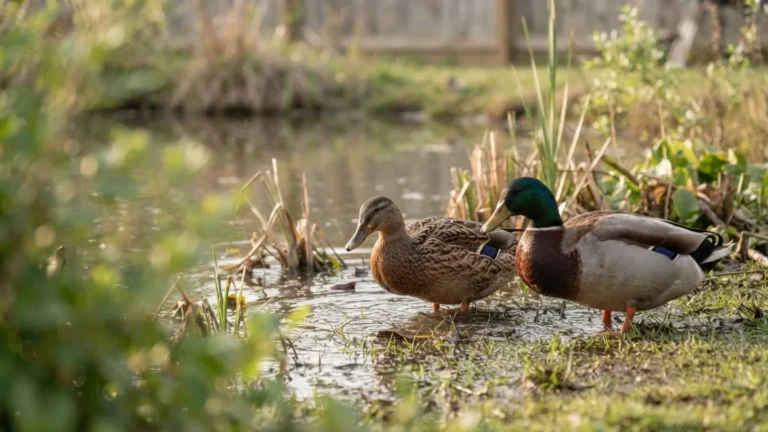
- If a sick duck has been near wild ducks, ponds, or a neighbor's flock, mention that. Wild water can carry disease, and local reporting rules may matter.
- If you cannot reach your state veterinarian quickly, contact your city hall or local cooperative extension for the right poultry health contact. Do not guess from internet forums about notifiable diseases.
- If deaths continue, pause introductions, clean shared waterers, and keep all birds from crowded water until someone tells you what to do.
Questions keepers ask when a duck is sick
My duck sat in water and looks tired. Is that normal?
Ducks do rest near water, but a sick duck often looks different. If it is wet, puffed up, and not coming out when the others eat, check breathing, droppings, and feet. If you cannot get it to warm, dry, or drink, call an avian vet.
Can I give a sick duck leftover antibiotics from the neighbor?
No. Antibiotics for one bird may be wrong for another, may be the wrong type, may be the wrong dose, and may harm eggs or meat safety. Do not medicate without a vet diagnosis.
Should I put a sick duck in a heat lamp all day?
Heat can help a chilled duckling, but it can overheat an adult and cause a fire. Use a safe heat source only if the bird needs warmth, keep the distance correct, and make the brooder so the duck can move away if too hot.
When should I report deaths to the state veterinarian?
Report sudden deaths, especially more than one, flock-wide illness, neurological signs, or deaths in birds that had contact with wild waterfowl. The state veterinarian can tell you if testing or reporting is required.