Duckling Brooder Setup: Space, Heat and Water
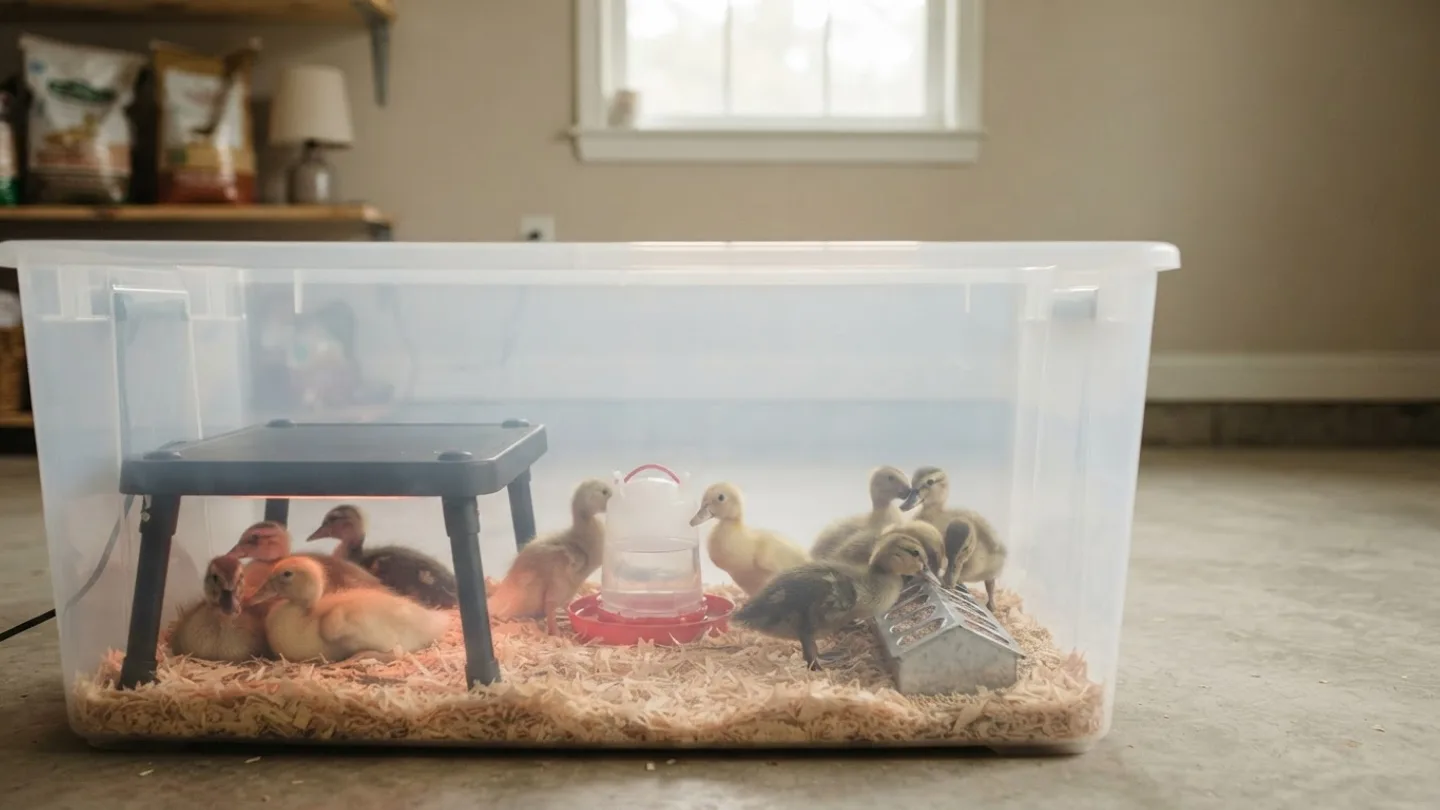
Most duckling losses in the first weeks come from wet bedding, not bad luck. A brooder for ducklings needs to keep heat in, water up, and feet dry. Start with a tote or stock tank, a heat source set near 90°F at duckling height, and a raised water station. If those three things are right, the rest is daily observation.
Ducklings are not just noisy chicks. They dunk, stir, and splash. If water sits on the floor, bedding gets damp, ammonia builds, and cold starts to steal heat faster than your lamp can give it. This guide covers the parts that matter: brooder type, heat, water, space per duckling by age, and the checks that keep a small backyard batch on track.
At a glance
- Heat: about 90°F at duckling height in week one.
- Space: about 1 square foot per duckling in week one, then add space as they grow.
- Feed: duck starter, or a poultry starter that is not medicated, with 18 to 20 percent protein.
- Water: put the water station on a raised platform, not on bare bedding.
- One mistake to avoid: letting water soak the bedding.
Ducklings need a drier brooder than chicks
A brooder is the temporary home for young birds while they still cannot keep themselves warm. For ducklings, the floor is the problem. They need water to dip their bills, but they also need dry bedding to stay warm. That is a narrow path to walk in week one.
If the floor gets wet, the ducklings chill, even if the heat source is on. If the floor is too dry and the water is too deep, they may soak their feet and bodies trying to drink. The setup should make both mistakes hard to happen.
Feed matters, but it does not fix a wet brooder. A duck starter, or a poultry starter that is not medicated, with 18 to 20 percent protein, is the usual starting point for backyard ducklings. If your store only stocks chick starter, ask whether it is safe for ducks and whether your ducklings need extra niacin. The feed detail is covered in What Do Ducklings Eat? Feed by Age.
| Option | Why it works | What to watch |
|---|---|---|
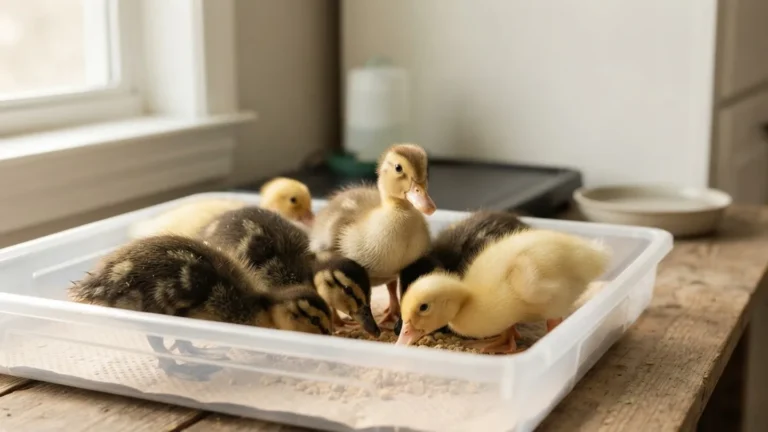
| Plastic storage tote | Cheap, sides hold bedding, easy to clean | Needs height so ducklings cannot climb out. Watch for rough edges and poor ventilation. |
| Metal stock tank | Roomy, dry sides, survives a hose | Can be noisy and bright. Make sure it is safe for animals and free of harmful coatings. |
| Kiddie pool | Low cost, wide space, easy to hose out | Sides can be low. It may become a swimming setup if water is left inside. |
| Cardboard box | Good for the first few days if bedding stays dry | Fails fast once splashing starts. Ducklings can chew walls and climb out. |
| Store bought brooder | Built with a lid, ramp, and places for heat and feed | May still be too small as ducklings grow. Check ventilation and water tightness. |
Set heat near 90°F at duckling height
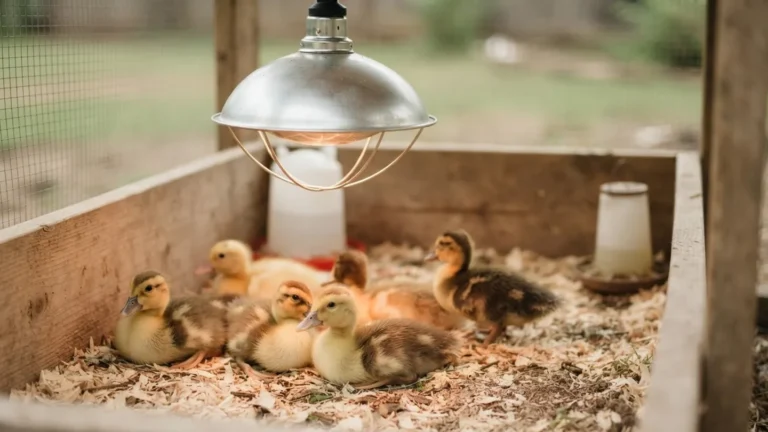
Place a thermometer at the height ducklings stand under the heat source, not at lamp height. In week one, aim for about 90°F there. That spot should be close to, but not touching, the heat source.
The brooder needs a warm spot and a cooler spot. Ducklings choose where they feel best. If they huddle directly under the lamp and chirp loudly, they are cold. If they spread to the far side and press against walls, they are hot. If they pant, the brooder is too hot.
Reduce heat slowly as feathers come in. A common backyard habit is to lower the target about 5°F each week until the brooder is near room temperature. Do not rush it if they are still bare and damp. By weeks four to five, many ducklings can live outdoors in a dry, draft free setup if nights are not cold, but your state changes the answer fast. March in Georgia is not March in Minnesota.
Build the brooder in six moves
Clean the brooder
Wash with warm water and mild soap, rinse well, and let it dry before bedding goes in.
Add bedding
Use pine shavings or straw deep enough to soak up splashes. Avoid slick paper, which can cause leg problems.
Set the heat source
Secure the lamp or brooder plate so it cannot fall, tip, or hang in loose wire. Keep a thermometer at duckling height.
Raise the water station
Put the waterer on bricks, a crate, or a stable tray so spilled water lands on the platform, not the bedding.
Separate feed and water
Put the feeder on the opposite side from water. If ducks dunk feed, it clumps and gets wasted.
Make a dry zone and a warm zone
The warm zone should be under the heat source. The cool zone should stay dry and allow ducklings to move away if they are too hot.
Build a raised water station that survives splashing
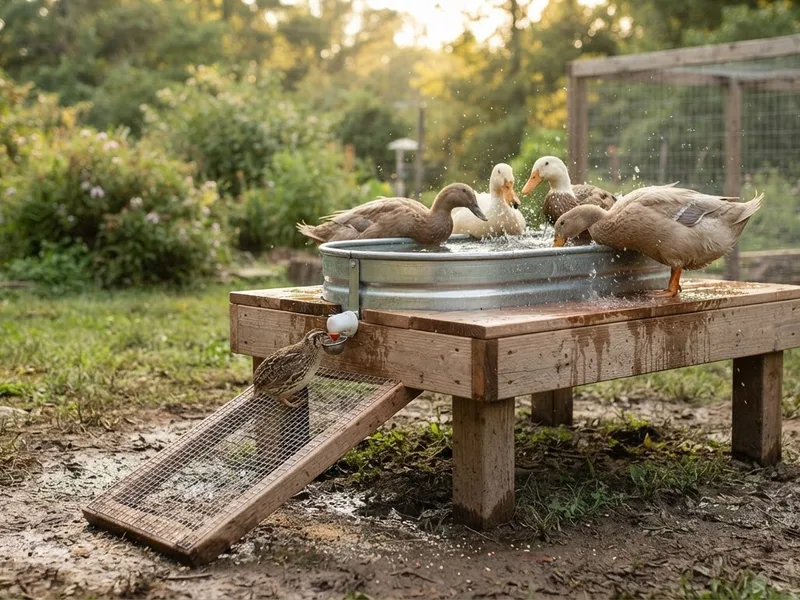
Ducklings need to dip their bills, not swim in week one. They need a shallow edge they can reach, not a bowl deep enough to soak. Use a small pie plate, a shallow lid, or a low waterer dish, then put it on a raised platform.
The platform is the part many people skip. Bricks, a milk crate, or a stable tray all work. Add marbles, gravel, or a screen over the water if the ducklings climb in and soak. The goal is simple: they drink, they step back, and the floor stays dry.
Change water often. Ducklings dirty water fast, and warm water with feed in it turns into a smell by afternoon. Clean the dish daily. If the dish gets wet and slides, add a rim or a heavier base.
For the first week, keep a close eye on how they act near water. If one goes in too deep, lift it out, dry it, and lower the water level. A young duckling that stays wet can chill quickly, even in a warm brooder. For the bigger week by week picture, read How to Care for Ducklings Week by Week.
Space per duckling by age
Plan for the duckling you will have, not the cute bird in the box. Pekin ducklings, especially, grow fast and take up more room than you expect. Crowding early is a false economy because wet feet, heat stress, and poor air quality arrive sooner.
For a small backyard brooder, start with about 1 square foot per duckling in week one. Add space as they grow, aiming for roughly 1 square foot per duckling for each completed week through week eight. That means eight ducklings need about 8 square feet in week one, and closer to 64 square feet by week eight. If you have bigger breeds, messy drinkers, or weather swings, give more.
Height matters too. By week two or three, ducklings can climb better than people expect. A low tote becomes a climbing tower. If they start hanging on the rim or landing on top of each other, raise the sides or move them into a larger, safe setup.
Brooder floor area calculator
Estimated square feet of floor space sq ft
Daily checks that catch trouble early
Check the bedding at the water line twice a day. If it is damp, move the water station, add more dry bedding, or reduce splash depth. Do not wait for smell to know the floor is wet.
Feel the warm spot and read the thermometer. Ducklings change fast, and a lamp placed too high one day can feel different after the wind picks up. If they look too hot, lower the heat or raise the source. If they huddle, raise the temperature or block drafts.
Count heads and look for weak birds. Ducklings that sit apart, have droopy eyes, or cannot stand steady need help. Bumblefoot is a bacterial foot infection that can start with rough, wet floors. Keep feet clean, check for swelling, and speak with an avian vet or your state veterinarian if birds look sick. Do not guess with health.
When to move ducklings out of the brooder
Most backyard ducklings can leave a tight indoor brooder when they are fully feathered and nights are mild. That is often around six to eight weeks, but breed and weather matter. Muscovy ducklings and slower growing birds may need longer.
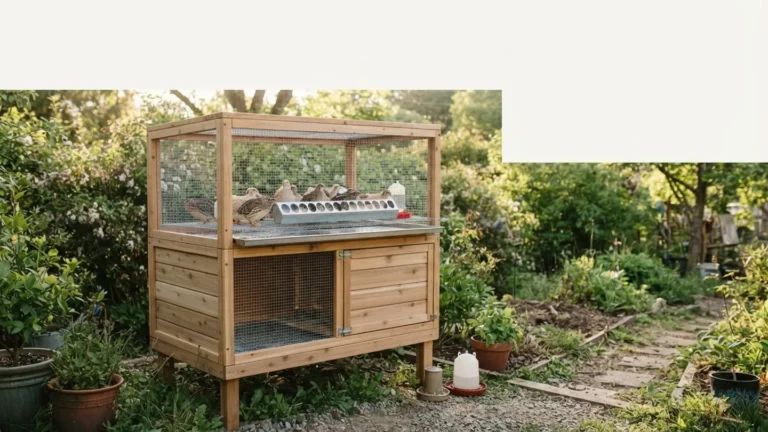
The next home needs a dry floor, enough space, and protection from predators. If you are moving from brooder to coop, plan for more room than chickens usually need, because ducklings are messier drinkers and they track water. A hardware cloth run or a secure outdoor pen can help, but watch bedding and waterers as the weather changes.
If you are still deciding on breed size and adult needs, start with Raising Backyard Ducks: The Complete Beginner's Guide.
Common duckling brooder questions
Can I use a cardboard box for ducklings?
A box can work for the first few days if bedding stays dry. It is a poor choice for ducklings once splashing starts because water soaks the walls, corners soften, and ducklings climb or chew. Move to a tote, tank, or stable setup quickly.
Do ducklings need a pool in the brooder?
No. Young ducklings need shallow water for dipping their bills, not a swimming pool. Put water in a small dish with marbles or a screen so they can drink without getting soaked. Add supervised bath water later, once they are bigger and dry off fast.
How warm should the brooder be?
Start near 90°F at duckling height in week one. Then lower the target slowly as feathers grow, often by about 5°F per week. Let the ducklings tell you if they are too hot or too cold by watching where they stand.
How much space do ducklings need?
A practical backyard starting point is about 1 square foot per duckling in week one, then increase as they grow. Use the calculator above as a rough figure, and add more space for bigger breeds, wet weather, or messy drinkers.
Should I keep the brooder closed or open?
It needs secure sides and airflow, not a sealed box. Ducklings can climb and jump surprisingly well. Keep the top covered enough for safety, but make sure ventilation is steady so ammonia does not build up.