Building a Duck Pond: Size, Liners and Cleaning
A duck pond can be the thing that makes ducks look like ducks. It is also the thing that makes a backyard look like a pond. You can build a good one without heavy labor or a landscape crew. The trick is to keep the size, depth, entry and cleanup plan in front of you before you dig.
A backyard duck pond does not have to be a big water feature. A stock tank, a kiddie pool or a small liner pit can be enough if it lets ducks dunk their heads, wash their bills and rest at the edge. If it becomes a sludgy hole, or if ducklings can climb in and get trapped, it fails.
This guide walks through size per duck, flexible liner versus preformed basin, drainage and filtration, mud proof edges, duckling safety, a biosecurity note on wild waterfowl and cost bands.
Key takeaways
- Ducks need shallow entry, enough depth to dip their heads and enough surface area to spread out.
- Small pools can work, but they need frequent cleaning and a safe exit.
- Flexible liners give more shape freedom, while preformed basins are easier to install and clean.
- Drainage matters more than fancy filtration because ducks make water dirty faster than plants can clear it.
- Mud proof edges protect the pond from slumping and help keep feet and pavers from turning into slip hazards.
- Wild waterfowl can be interesting to watch, but they also raise biosecurity risk for your domestic flock.
- Cost is mostly labor, liner or tank quality, drainage, edging and regular cleaning time.
How much space each duck needs at the water
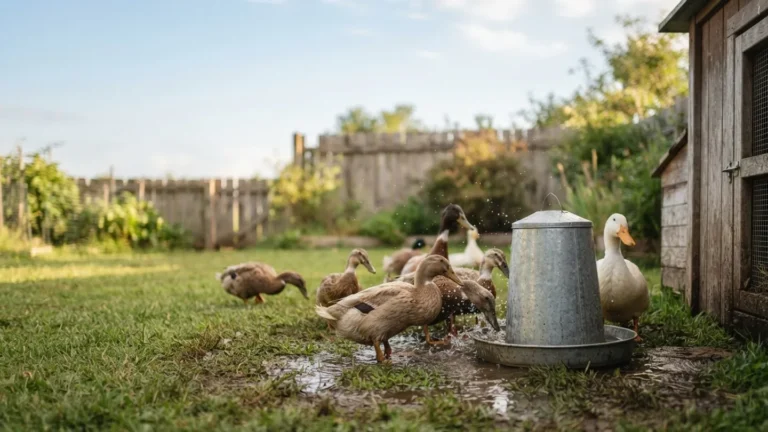
Ducks need water deep enough to dip their heads, rinse their bills and wash their nostrils. A bowl of water is not enough for happy ducks, though a small flock can live without a full swimming pond if you provide a larger dunk basin. A backyard pond should be sized for the birds you have now, not for a future flock you hope to build. The pond is a wet playground, not a replacement for a duck coop or a dry run.
For a pond that is the main swimming area, plan on about 8 to 12 square feet of water surface per duck. If ducks also have a run with a shallow splash zone, 4 to 6 square feet per duck may be enough for short dips. These are targets you can use before buying a liner or tank, not legal minimums.
Depth matters as much as area. A pond that is only 4 inches deep lets ducks wet their heads, but it does not let big ducks swim. A 10 to 18 inch zone works for standing and splashing. A 24 inch or deeper zone lets Pekins and other large ducks float. Keep one long shallow entry at 2 to 4 inches so young ducks, older ducks and clumsy males can get out.
Flexible liner, preformed basin or stock tank
You have three common routes: a tank pool, a rigid preformed basin, or a flexible liner set in a dug hole. The right one depends on your flock size, how much labor you want and how often you will clean.
The tank pool is the easiest to win with. A stock tank or a heavy plastic tub can be moved, drained, scrubbed and refilled in an afternoon. It may look like a water trough instead of a pond, but ducks do not care. It also avoids most liner problems.
A preformed basin is a molded plastic or rubber pond shell. It is faster to install than a flexible liner and has smoother surfaces, which makes cleaning easier. The downside is size and rigidity. If you want a larger pond or want to shape a beach yourself, the shell may not fit.
A flexible liner gives you the biggest shape freedom and often the lowest material cost. The catch is that it is also the easiest thing to tear, buckle and hide dirt behind. If you choose a liner, plan a solid edge and a drain that you can reach without crawling into the hole.
| Choice | Best for | Watch out for | Cleaning |
|---|---|---|---|
| Stock tank or plastic tub | Small flocks, beginners, moving water easily | Looks industrial, edges can be steep, small water volume | Best, drain and rinse |
| Preformed rigid basin | Neat backyard ponds and cleaner surfaces | Fixed size, can be heavy, may crack if flexed | Good, smooth walls |
| Flexible liner in a dug hole | Larger ponds and custom shape | Punctures, folds, bank collapse, muddy edges | Harder, folds trap muck |
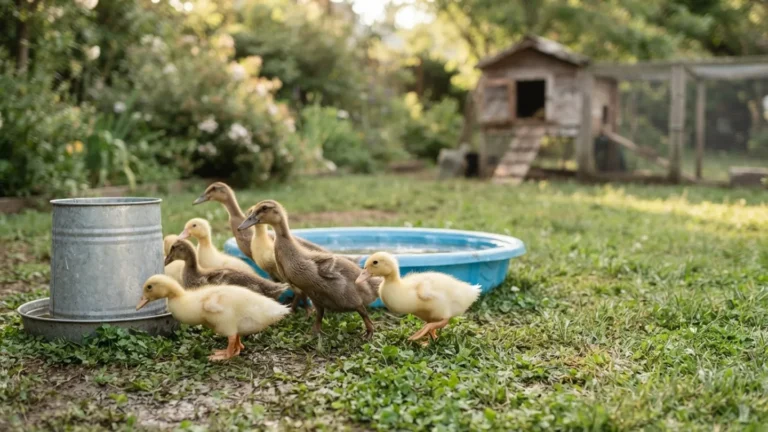
| Kiddie pool or splash pan | Ducklings and supervised summer water | Shallow, tips easily, becomes smelly fast | Quick but daily |
Drainage, filtration and green water
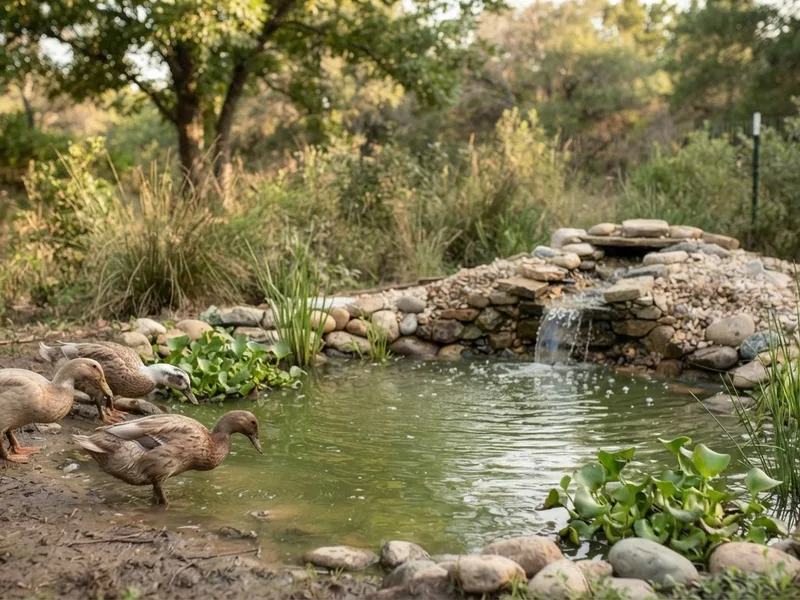
A duck pond goes green or brown for one simple reason: ducks put droppings, feed crumbs and feathers into the water faster than the water can be cleared. You can slow the mess, but you cannot out filter a flock that lives on the pond.
Drainage is more useful than fancy filtration. If the pond can be drained by gravity, you will clean it more often and enjoy it more. A bottom drain is nice, but a siphon, a bucket and a hose can work for a tank. For a dug pond, leave a way to pump or siphon out water and pull muck from the low point.
Filtration should stay simple: a pump that moves water through coarse foam, a little biological media and, if the water is very cloudy, a UV clarifier for green water. Plants can compete with algae, but ducks will trample them, eat them and shade them out. Do not rely on a handful of water lilies to solve a duck mess.
Build the pond in a way that survives the ducks
Choose the site
Pick a place with some afternoon shade, stable ground and easy access to a hose or drain. Keep it away from steep runoff channels. A pond in a mud pit becomes a dirty duck pit.
Shape the shelves
Design a gradual entry. Start with a 2 to 4 inch shelf, then a 10 to 18 inch swim zone, then a deeper pocket if you want large ducks to float. Wide shelves keep ducks from crowding one narrow edge.
Prepare the ground
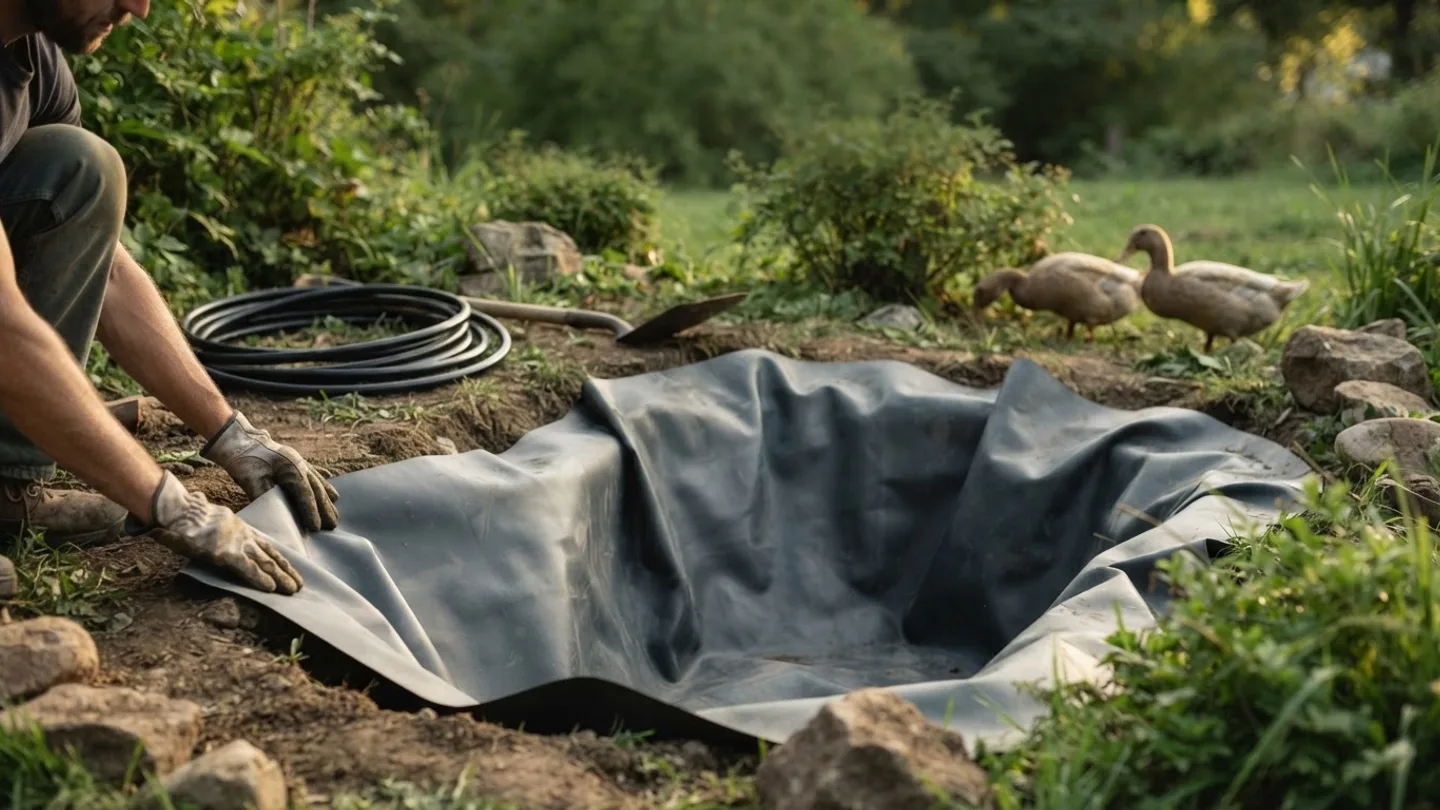
Remove sharp stones, roots and old concrete. Lay a sand pad, old carpet or landscape fabric under a flexible liner. Do not skip this step. Rocks are one of the main ways a liner gets cut.
Set the liner or basin
Put a flexible liner or a preformed basin in place, then weigh the edges with smooth pavers, sandbags or gravel. For a liner, pull folds out where you can reach, but do not stretch it so tight that it can tear when filled.
Fill slowly and check edges
Fill the pond while you inspect the sides, the drain plan and any ramp. Look for places where the liner can slide, where ducks can crawl underneath and where water can spill into soft bank dirt.
Add the duckling safe details
If ducklings will use the water, make a long slope they can climb, not a vertical wall. Keep the first swim area shallow enough that they can stand and get out fast.
Mud proof edges and duckling safety
The edge is where duck ponds go wrong. Ducks scratch, splash, walk off the bank and drag mud into the water. A muddy edge also becomes slick, and slick edges make people and birds slip. Paver bands, coarse gravel, concrete pads or a timber curb can keep the bank stable. Put smooth, rounded material on the shelves where feet land. Sharp gravel can damage feet and may contribute to bumblefoot, a painful foot infection that can start from a small wound.
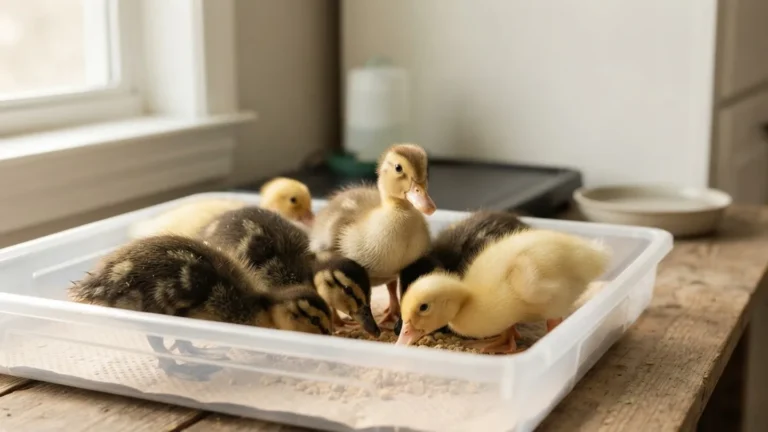
Ducklings need a different level of care. They are not little waterproof adults. Their down can soak, and cold wet ducklings can get into trouble quickly. Use a shallow pan or tray, 2 to 3 inches deep, under direct supervision. Give them a ramp, a perch or a dry island so they can climb out without help. When they grow and have adult feathers, their swimming gets safer, but you still want an easy exit.
Do not leave ducklings near a full size pond while they are young, weak or unsupervised. If you are raising a spring box of ducklings from the farm store, the duckling brooder setup guide has the heat, space and water basics. A pond is a later project, not a substitute for a good brooder.
Pros
- Wild ducks and geese can make the yard feel alive
- A pond may attract birds without you having to feed them
- It can teach children to watch wildlife from a distance
- It adds sound and natural interest if you like water features
Cons
- Wild waterfowl can bring parasites, bacteria and viruses into your water
- They add droppings and muck without needing a filter
- They may compete for food and space if they settle in
- A pond that is too appealing can draw raccoons, skunks, foxes and herons
- If birds get sick, diagnosis and treatment need a vet or state veterinarian, not a guess
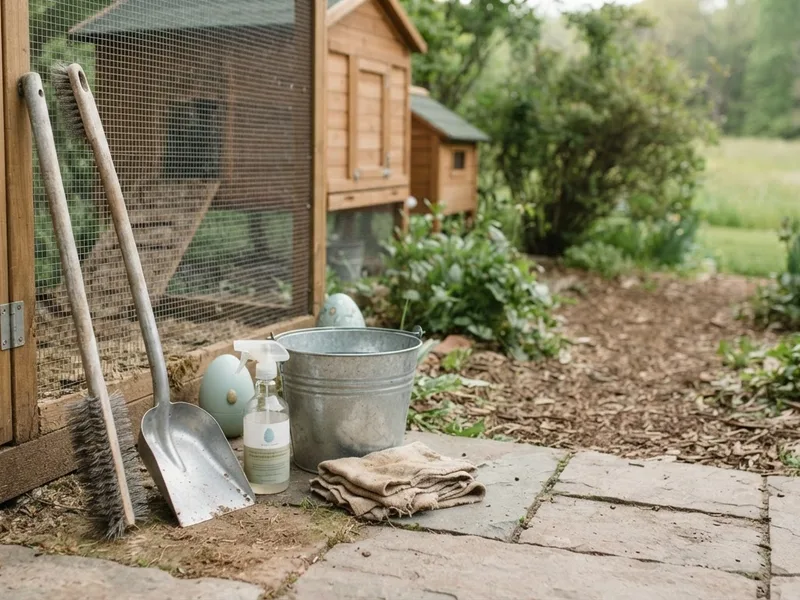
A simple cleaning schedule
A schedule beats a miracle. For small tanks and kiddie pools, plan on checking daily and refreshing often. In hot weather, 50 to 100 gallons of water can smell in two days. A large excavated pond with a pump and drain can go longer, but it still needs muck removal.
Do the easy tasks daily: pull out feed crumbs, scoop floating feathers and check that ducklings can get out. Do the weekly work: scrub algae from the sides, rinse the pump or siphon, and clear debris from the bottom if you can reach it. Do seasonal work: drain and scrub a tank thoroughly, pump down a liner pond if safe, remove sludge, inspect the liner and edge, and refill.
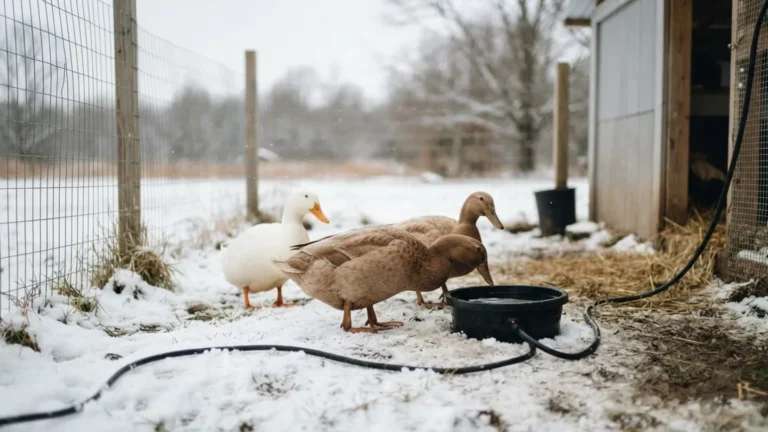
If your winters freeze, do not assume a duck pond is safe just because it is open. A small heater or deicer can keep an opening, but the water still needs to be accessible to birds that drink it. Never break ice hard enough to shock birds or crack a tank.
Water surface estimate for a small flock
Estimated total water surface area square feet
Cost bands in real terms
A duck pond is not one expense. It is upfront materials, the cost of getting the shape and edges right, and the ongoing cost of water, energy, pump time and cleaning. Here is how most backyard builds line up.
Low cost band: tote, tub or kiddie pool. This route has the lowest upfront cost and almost no excavation. The cost shows up in time. You will move water, scrub surfaces, replace cheap plastic that cracks and keep an eye on ducklings.
Medium cost band: stock tank or preformed basin. This is more stable and often easier to clean than a liner pit. Expect costs for the tank or basin, a ramp, a pump or drain, edging and a place to hide equipment.
High cost band: dug liner pond. Material can be cheap, but labor is real. Costs rise with excavation, liner quality, pump and filter, drainage, edge work and later repairs if banks slump or folds collect muck.
Common duck pond questions
Do ducks really need a pond?
Not every flock needs a formal pond. They need enough water to dip heads and wash bills. A large dunk basin can work for a few ducks. A swimming pond is a luxury for the birds and a chore for you.
Can a kiddie pool work as a duck pond?
Yes, if the edge is safe and you clean it often. It becomes green or smelly fast, and ducks can tip a thin pool. Put it in a stable spot, add a ramp and plan to drain and scrub it.
How deep should a duck pond be?
Keep an entry at 2 to 4 inches deep, a splash and dunk zone at 10 to 18 inches, and a deeper pocket of 24 inches or more if large ducks need to swim freely.
Can ducklings use the pond?
Start with shallow, supervised water. Ducklings can soak, chill and get trapped if the exit is too steep. When they have adult feathers, they get safer, but they still need an easy way out.
How do I stop green water?
Reduce feed crumbs, shade the pond if you can, remove muck often, and use simple mechanical or biological filtration. A UV clarifier can help with floating algae, but it does not fix duck droppings.
Is municipal water okay for a duck pond?
Fresh city water is often fine for backyard ducks. If the smell is strong, let it sit or aerate it first. Do not use chemically treated pool water without a plan for chlorine levels and monitoring.
What if wild ducks visit?
Treat the visit as a biosecurity risk. Remove water they have fouled if possible, do not crowd sick birds and keep food away from wild flocks. If domestic birds look ill, contact an avian vet or your state veterinarian instead of guessing.
What should I do in winter?
In freezing climates, prevent ice from trapping ducks or cracking a tank. Keep water available with a safe deicer or by refreshing, and check the edge and drain often.