Bird Flu and Backyard Ducks: Biosecurity Basics
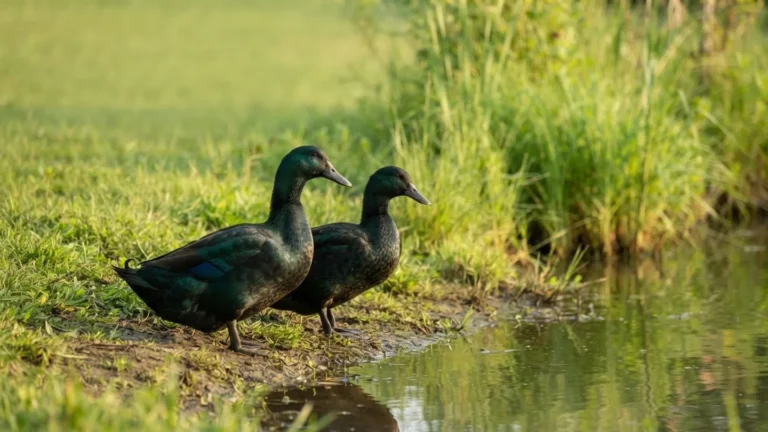
If you keep backyard ducks, bird flu usually starts as a neighbor question. Wild mallards, geese, and other waterfowl may share the same pond, ditch, feed bin, or muddy corner you use every day. You are not trying to eliminate nature. You are trying to keep your flock from meeting it in the water.
The USDA APHIS Defend the Flock approach says ducks can carry avian influenza with few signs, so biosecurity, the work of keeping disease away from birds, should happen before a bird looks obviously sick. Keep wild waterfowl from water and feed, set footwear and visitor rules, and report sick or dead birds to the state veterinarian.
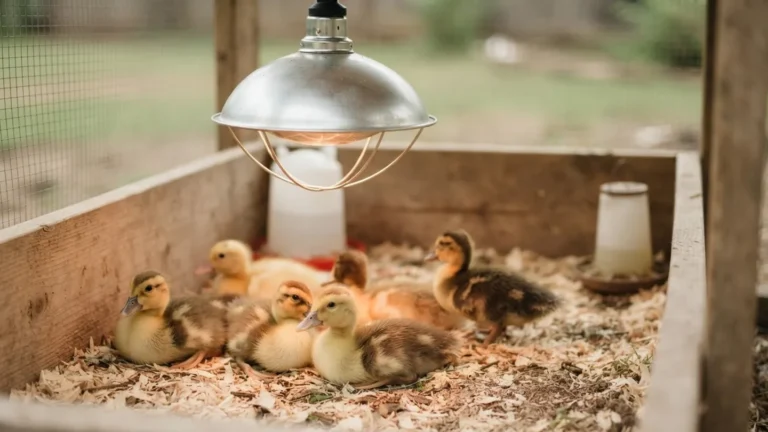
At backyard scale, that does not require a commercial facility. A tarp roof, covered feed, a dedicated pair of flock boots, and a few minutes of daily checking can lower the risk a lot. The goal is a quiet, practical routine that protects the flock you already love.
In this guide: bird flu biosecurity for backyard ducks
Key takeaways
- Bird flu in backyard ducks can be quiet, so judge the flock by behavior changes, not just appearance.
- Wild waterfowl often pass avian influenza through droppings, so keep ponds, pools, and feed away from their reach.
- Dedicated boots, handwashing, and visitor rules matter because mud, feed, and contact move disease.
- If many ducks are sick or dying, contact your state veterinarian before moving birds or treating at home.
- Simple backyard options, like tarp covers, lidded feed bins, and a daily walk, fit the same rules.
Wild birds, backyard ducks and a quiet risk
If you keep a few backyard ducks, the risk comes less from the ducks you own and more from the waterfowl that stop for a drink. Wild ducks, geese, and shorebirds can carry avian influenza and shed it in saliva, nasal discharge, and droppings. When a wild flock lands on your pond, that same water, mud, and feed can reach your flock.
This is why USDA APHIS Defend the Flock focuses on blocking contact instead of waiting for obvious illness. Ducks can carry bird flu with few signs, so a bird may look only mildly off or seem like it is just having a muddy week.
Watch for changes that are not normal for your flock, such as a sudden drop in egg laying, swollen face, watery eyes, balance problems, trembling head, weak legs, or sudden death. If you need a checklist of everyday duck illness signs, signs of a sick duck is the next place to start.
| Risk area | Cheap DIY option | Product you can buy | What to watch for |
|---|---|---|---|
| Water and pools | Kiddie pool or pond section covered with tarp, hardware cloth, or a screen top | Covered run, roofed pool cover, or screened duck house | Large gaps can still let small birds in, so check mesh size |
| Feed and bedding | Lidded plastic storage bin, raised feeder, or pallet under the feed pile | Closed bird feed bin, covered feeder, or rodent proof storage bin | Droppings, feathers, and spilled grain near the base are signs the setup is leaking |
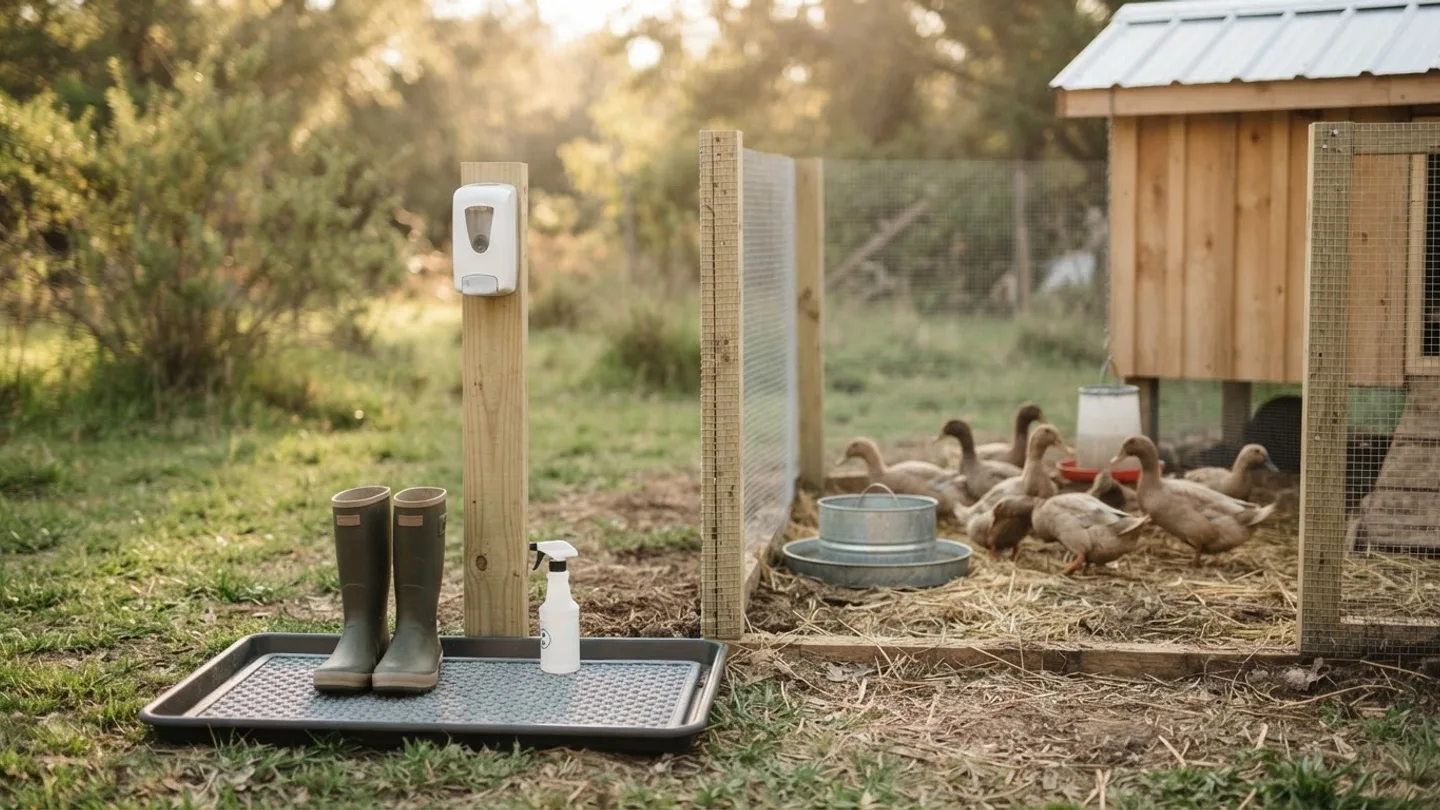
| Boots and entry | One pair of rubber boots, boot scrub, and disinfectant option near the door | Boot dip tray, boot scrub brush, or mat disinfection station | Mud can block disinfectant, so clean visible dirt first |
| Visitors and youth projects | Simple sign on the gate, hand soap near the run, and a no entry rule for guests who handled wild birds | Guest log, coop entry schedule, and handwashing station | Ask visitors about other birds they touched before they enter |
| New ducklings or quail | Temporary separated pen, crate, or spare cage away from the main flock | Quarantine pen, separate brooder, or isolation crate | Ask your state veterinarian or extension office how long to separate new birds |
Keep wild waterfowl from water and feed
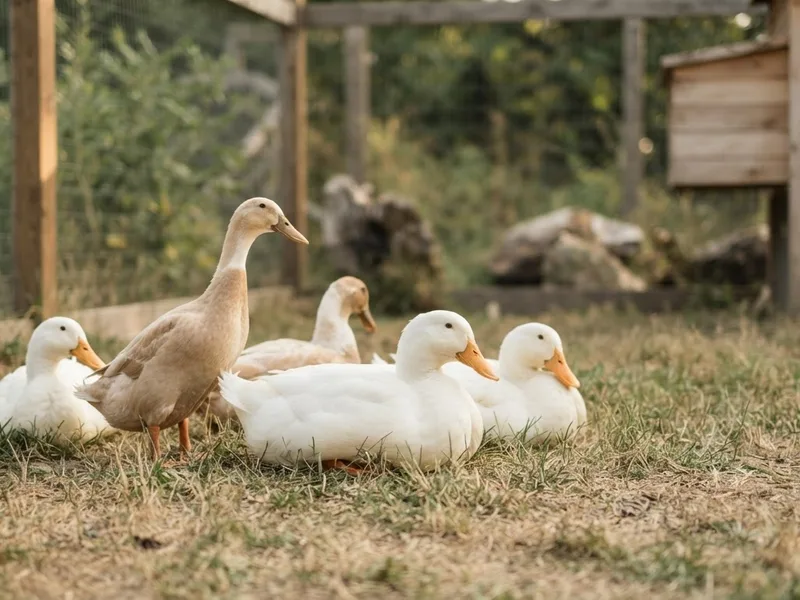
Water is usually the first place bird flu can jump from wild flocks to backyard ducks. Your birds need drinking water, shallow pools, and space to dabble, but that does not mean leaving the pool open all day. Put a roof over the pool, use a covered run, or change open water daily. A kiddie pool with a tarp roof or hardware cloth cover is a cheap option that makes the yard less inviting to wild waterfowl.
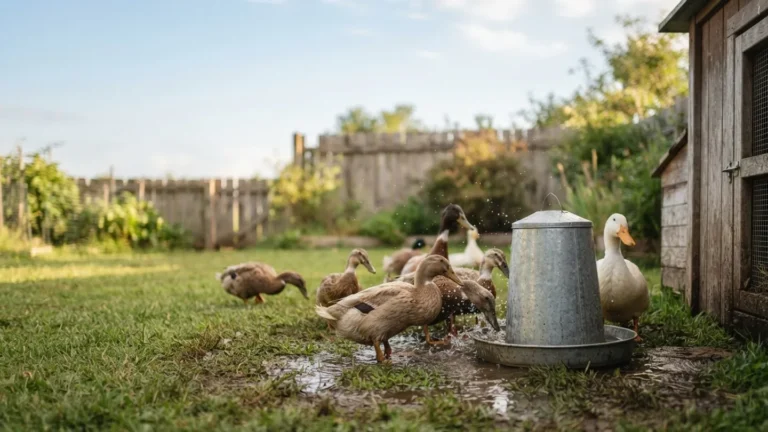
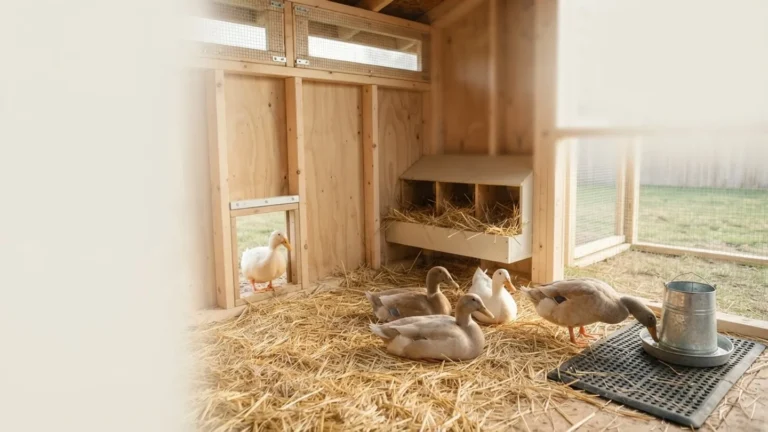
Feed is the second quiet route. Wild birds can drop contaminated litter into grain bags, feeder trays, or bedding piles. Store feed in bins with secure lids, keep feed off bare ground, and avoid leaving open trays where sparrows, starlings, or wild ducks can stand overnight. The same covered area that improves your duck coop setup also helps keep droppings out of the run.
If you have a bigger flock or a pond, do not assume your birds need natural water access. Keep the pool clean, move feeding away from the pond edge, and watch for wild birds roosting on roofs, fences, or stacked pallets. A few minutes of observation each morning tells you where your real risk line is.
A short daily check you can do before coffee
Walk the fence line
Look for wild waterfowl droppings, feathers, or a wet pond edge leading into the yard.
Check waterers and pools
Look for feathers or droppings. Scoop debris, then rinse or drain if the water is murky.
Look under feed bins and feeders
If feed spilled overnight, remove it and move feeding to a covered or cleaned surface.
Inspect the run roof, tarp, or hardware cloth
Small gaps can let sparrows, starlings, or ducks in, so repair them before rain makes mud worse.
Reset hands and boots
Wipe hands after handling birds and keep flock work boots near the entry, not in the house.
Stop if illness shows up
If you see more than a few sick birds, stop and call before moving, mixing, or selling anything.
Set footwear, hand and visitor rules
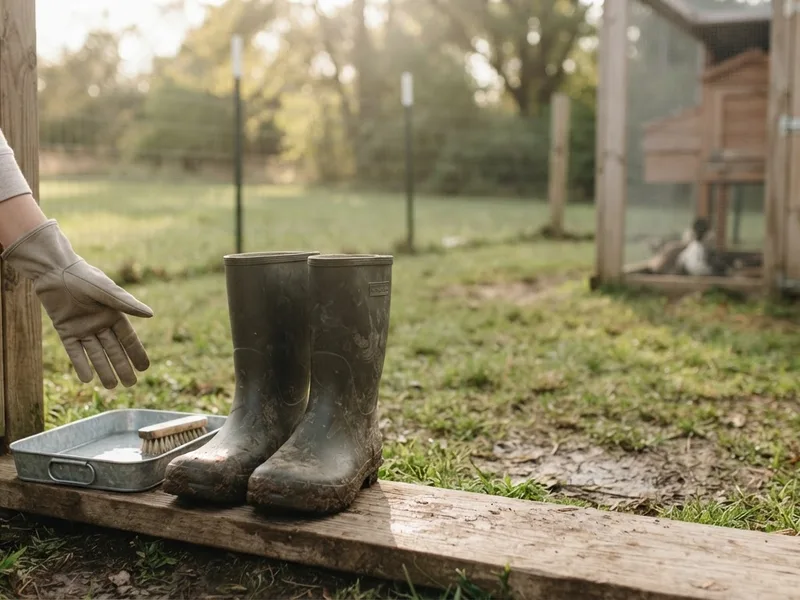
Boots are a simple control because mud moves disease in ways most owners never see. Keep one pair of rubber boots for flock work only, and do not wear them to a wetland trail, a neighbor's chickens, or a feed store.
Place a boot scrub and a disinfectant option near the coop entrance. Clean visible mud first, then disinfect if your surface instructions say the product needs it. You do not need a hospital setup. You need one place where everyone entering the flock area washes hands and uses the same rules.
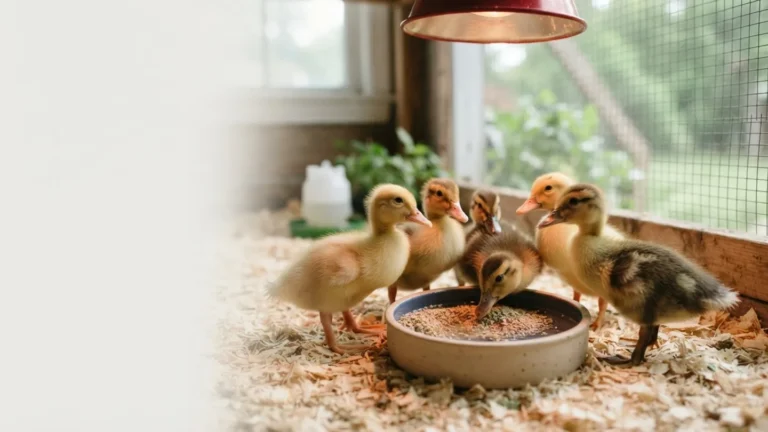
Visitors and new birds need boundaries too. Do not let guests pet your ducks after handling wild birds or another flock without hand washing and a change of outer shoes. If you bring home ducklings in spring or start a school hatching project, keep them separated from established birds for a period set by your state veterinarian or local extension office.
Common questions about wild birds and backyard flocks
Can wild ducks give bird flu to my backyard ducks?
Yes. Wild waterfowl are the main source for many flocks. The virus can move through droppings, contaminated water, mud, and feed. Blocking access to water and feed is the practical way to lower that risk.
Do backyard ducks always look sick if they have bird flu?
No. USDA APHIS says ducks can carry avian influenza with few signs. Some birds may only lay less, sit quietly, lose balance, swell around the face, or die suddenly. Trust patterns across the flock, not one bird's appearance.
Should I keep my ducks inside all the time?
For most backyard flocks, the answer is no. USDA APHIS guidance focuses on keeping wild birds away from water and feed, not on sealing birds in forever. A covered run, roofed pool, and controlled entry are usually enough unless your state veterinarian or local authorities tell you otherwise.
What if I have quail as well as ducks?
The same contact control matters. Keep wild birds from quail feed and water, use clean boots between species areas if practical, and report sick or dead birds early. Quail are smaller and may hide illness differently, so check daily and ask your state veterinarian if you see deaths.
Can I vaccinate my ducks against bird flu?
Vaccination is not a simple backyard product choice. Ask your state veterinarian or the official animal health authority in your area about availability, rules, and whether it fits your flock.
Do I need to call when only one duck seems off?
If one duck is limp, bleeding, injured, or unable to stand, start with local vet advice. If more than a few ducks have the same signs, sudden death appears, or you suspect contact with wild waterfowl, call your state veterinarian or local animal health authority before moving birds.
Report sick or dead ducks before guessing
If several ducks are sick, if balance problems or trembling heads appear, or if a duck dies suddenly, call your state veterinarian. Do not wait for a social media group to decide what it looks like.
Before the call, note how many birds are affected, which ages, symptoms, deaths, recent purchases, new birds, and any contact with wild birds or other flocks. If you can safely keep sick birds separated, do that, but do not move suspect birds to another flock or another property.
Follow official instructions. You may be asked to isolate birds, keep records, restrict visitors, disinfect certain areas, or wait for guidance before cleaning. If you want a fuller routine for everyday flock care, see the raising backyard ducks guide.
Make one rule before the next wild bird lands
Pick one control today, such as covering the pool, moving feed under cover, or keeping a dedicated pair of flock boots. If ducks are sick, dying, or showing balance problems, call your state veterinarian or local animal health authority before moving birds or mixing flocks.