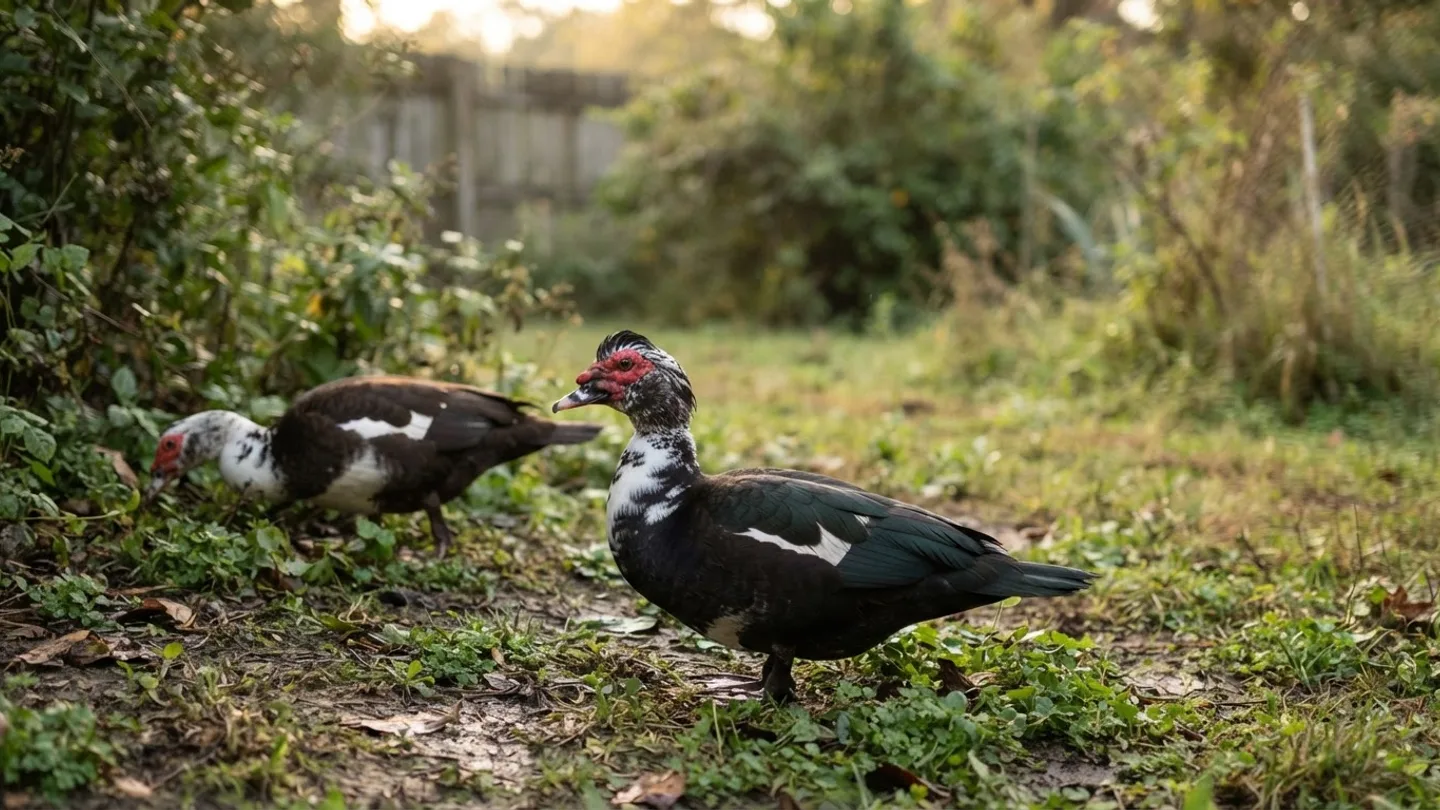
Muscovy Ducks: Breed Guide, Quiet Habits and the Rules
Muscovy ducks are the duck people consider when they want a backyard waterfowl that is less noisy than Pekins or Khaki Campbells. They are often called the quiet duck, and they have red or dark face skin on many birds.
If you are thinking about Muscovies, start with two facts. Most common domestic ducks trace back to the mallard, while the domestic Muscovy comes from a different species. That difference affects voice, growth, flight, breeding and how you set up housing.
This guide covers breed habits, drake size, brooder and incubation basics, and the local rules to check before a spring impulse duckling becomes a long commitment.
At a glance: Muscovy ducks
- Species: Muscovy ducks are not mallard-derived, while Pekins and many common domestic ducks are.
- Voice: Muscovies are usually nearly silent. Hens may peep softly, and drakes, male ducks, may hiss or grunt.
- Incubation: Muscovy eggs take about 35 days to hatch, longer than the 28 days common for many duck eggs.
- Brooder: start ducklings at about 90 degrees Fahrenheit in week one, then lower the heat as feathers arrive.
- Space: plan about 8 to 10 square feet of coop space per adult and 15 to 20 square feet of run space.
- Feed: use a duck starter or all-flock feed at 18 to 20 percent protein for ducklings, then move to 15 to 18 percent for many adults and laying hens.
- Flight: Muscovies are strong fliers for domestic ducks, so roofed runs or wing management matter.
- Mistake: do not keep one duck alone, and do not assume quiet birds can live without clean water, shade and social companions.
Why Muscovy ducks are different from ordinary domestic ducks
If you have mostly seen white Pekins, the Muscovy looks different from the start. Dark or pied feathers, bare face skin and sometimes a crest set it apart. The bigger reason to slow down is history. Many common domestic ducks trace back to the mallard, while the domestic Muscovy comes from a different species. That means its habits, voice and growth are not just a color change.
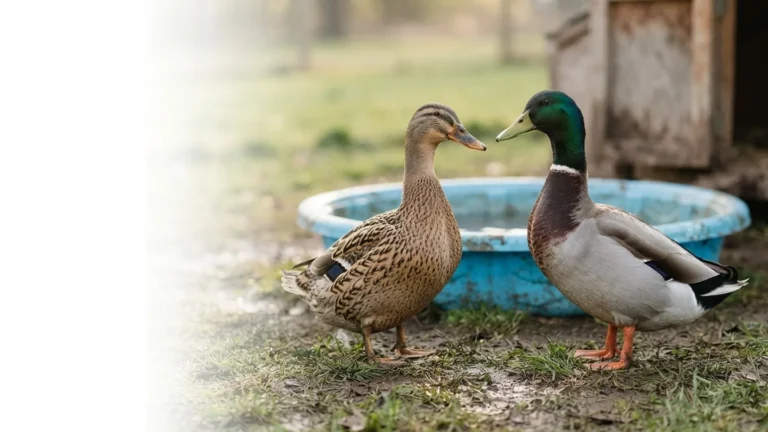
The practical difference is useful. Muscovy drakes, which are male ducks, grow large, but they often do not put on weight like a fast-growing Pekin meat duck. Muscovy hens, female ducks, are lighter, more compact and often more willing to sit a nest. If you want a bird that feels calmer in hand, a Muscovy hen can be a good match for a small backyard. If you want a noisy alarm duck, or a fast white meat bird, a Muscovy may frustrate you.
Their breeding also breaks from the ordinary. Most duck eggs hatch around 28 days, while Muscovy eggs usually take about 35 days. That matters if you are hatching at home. It also means you need patience with turning, candling and lockdown. Candling is shining a light through the egg to check development, and lockdown is the final days when you stop turning and wait for hatching. If you are starting from hatching eggs, review incubating duck eggs before you set your first batch.
Because Muscovies are social, keep two or three birds rather than one. A single duck can get lonely, stressed and noisy in a different way. If you plan to keep drakes and hens, keep a careful eye on the male to female balance. Too many drakes can stress hens.
| Trait | Muscovy duck | Mallard-derived domestic duck | Backyard takeaway |
|---|---|---|---|
| Origin | Not mallard-derived | Many common breeds are mallard-derived | Expect different voice and breeding habits. |
| Voice | Nearly silent, with hisses and soft peeps | Often quack, honk or chatter, depending on breed | A quiet coop is not a silent farm. |
| Flight | Strong fliers for domestic ducks | Many breeds fly less, though some can fly | Use a roofed run or a flight plan. |
| Egg incubation | About 35 days | About 28 days for many duck eggs | Plan for a longer hatch. |
| Meat growth | Leaner and often slower than Pekin meat ducks | Pekins are fast-growing meat ducks | Muscovies suit small flocks better than heavy meat programs. |
| Broodiness | Hens often sit nests and raise ducklings | Some breeds go broody, many do not | Good for natural hatching if space is safe. |
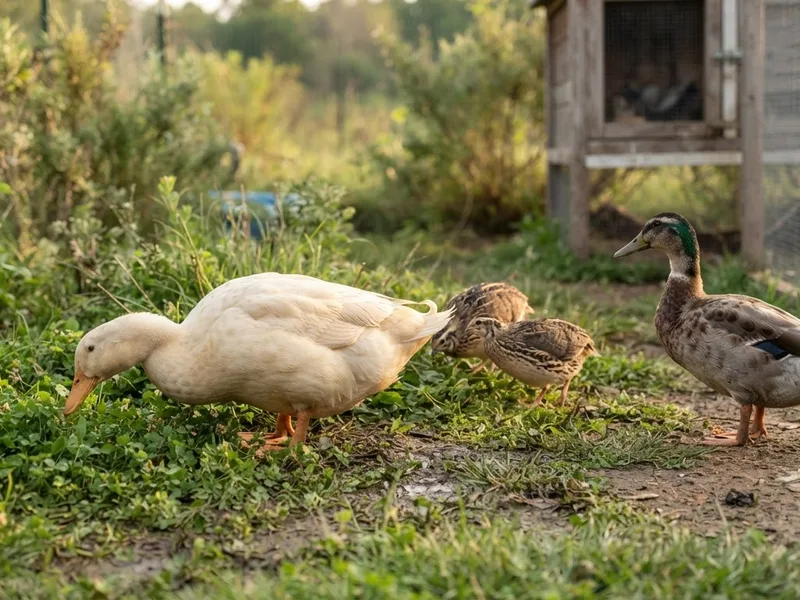
Quiet habits, flight risk and the drake size gap
Quiet is the headline, but it is not the whole job. Muscovies are not chatty, so they fit places where you cannot tolerate constant quacking. They still need dust, shade, clean water and a dry sleeping area. You may get less noise from a Muscovy flock, but you do not get less mess.
Flight is the other surprise. Muscovy ducks can fly more confidently than many mallard-derived ducks, especially when they are young, fit and not kept on a diet heavy enough to slow them down. If you live near water, a Muscovy with a full set of flight feathers may leave the fence line. Many keepers use a roofed run, wing clipping by a knowledgeable person, or birds that are started from ducklings in a closed yard. A roofed run is usually less work than chasing a drake from a neighbor's pond. If you plan to keep adults, the duck coop details will shape the run height and nesting area.
The drake size gap matters because Muscovy males and females can look like different animals. Drakes are heavier, broader through the chest and head, and often have more facial skin. Hens are lighter, faster movers and often better at sitting nests. When you buy feed, waterers, fencing height and handling plans, build for the drake, not the smallest hen. This also changes how many birds your coop can hold without stress. If the house is too small, drakes crowd hens, waterers get fouled and the flock's calm falls apart.
Start with duckling space first. For ducklings, use a brooder, which is a heated indoor enclosure, at about 90 degrees Fahrenheit in week one. Lower the heat as they feather out and watch them instead of following a clock blindly. If they pile under the lamp, they are cold. If they move far away and pant, they are hot. For feed choices, see what ducks eat.
Run space calculator for a small Muscovy flock
Estimated run space square feet
Federal and state rules to check before buying Muscovy ducks
Start with local rules
Ask city hall or your HOA whether waterfowl are allowed, how many birds you may keep, whether a pond is banned and if slaughter is permitted. Ask specifically about Muscovy ducks, because their size and habits can blur what a rule meant for chickens or small ducks.
Ask the state department of agriculture
State rules can affect buying ducks, keeping them for eggs, meat or exhibition, and moving birds across county or state lines. Ask how your state classifies domestic waterfowl before you order hatching eggs or adult birds.
Review federal poultry and waterfowl questions
Domestic poultry rules may affect buying and shipping hatching eggs or day-old birds. Wild bird rules are separate, so do not treat a wild duck-like bird as a backyard Muscovy.
Use vet help for health or legal uncertainty
If a bird is sick, injured or from a wild background, talk with an avian vet or your state veterinarian before you decide it is safe or legal to keep.
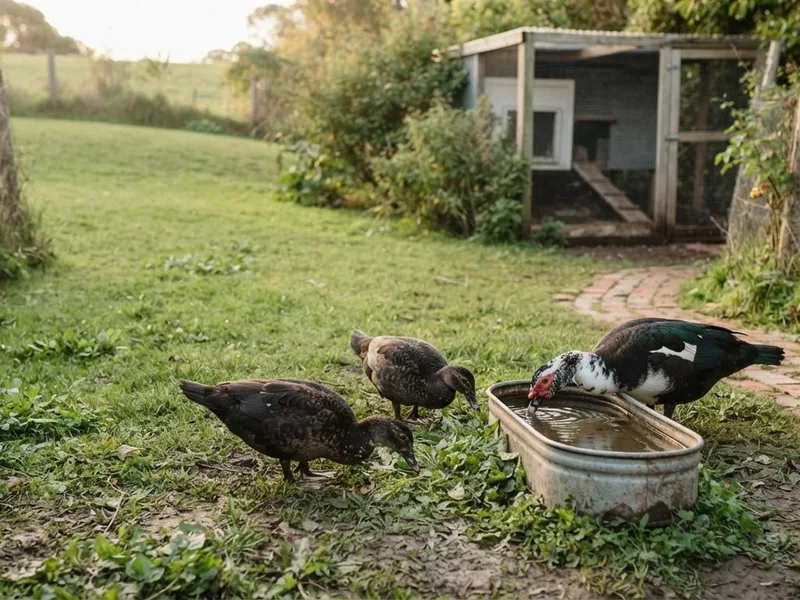
How to decide if Muscovies fit your flock
A good Muscovy flock fits a keeper who wants quiet birds, can manage flight, and can provide two or three companions. It is a poor fit for someone who wants a single duck as a short spring project. A duckling can look like a week of fun and then become a 35-day hatch plan, a large drake, or a bird that needs social contact for years.
If you already keep chickens, adding Muscovies is often easier than adding Pekins, but the run still needs planning. Muscovies are more inclined to fly, and they may not share the same egg schedule as a laying chicken. If you keep ducks, a Muscovy hen's broodiness may change your egg collection, because she may want to sit on a nest instead of laying.
Keep the drake count small and honest. A few drakes can work together, but too many drakes for the hens can lead to chasing, torn feathers, stressed hens and a messy breeding area. If your goal is eggs for the kitchen basket, plan around hens and enough space. If your goal is a quiet pair, choose two hens or two drakes and manage expectations about eggs.
Common questions about Muscovy ducks
Are Muscovy ducks actually silent?
They are near silent, not mute. Hens may make soft peeps, drakes may hiss, and a broody hen may growl. The voice is much quieter than a Pekin or Khaki Campbell.
Do Muscovy ducks need a pool?
They like water, but they do not need a large pond. Provide enough water to dunk their heads and wash their bills, plus a place to swim if you want to offer it. Change the water often, because Muscovies will foul it.
Can I keep one Muscovy duck?
No. Ducks are social, and a lone duck can get stressed. Keep at least two, ideally more.
Are Muscovy ducks good for beginners?
They can be beginner-friendly if you plan for flight, social birds and longer incubation. They are less beginner-friendly if you want an impulse spring project, a very large flock of fast-growing meat ducks or a coop that assumes every bird will stay on the ground.
Will a Muscovy drake hurt my hens?
Too many drakes, or one drake with too little space, can chase and stress hens. Use a sensible male to female plan, enough space and a way to break up chasing if it starts.
Why does the incubation time matter for a small flock?
About 35 days means you need more patience than the usual 28 days for many duck eggs. If your incubator is off by temperature or humidity, the longer time gives a wrong setting more chance to hurt the hatch.